Choosing the right Over and Under Voltage Protector begins with understanding what it needs to protect. Voltage can rise above or fall below a safe operating range because of supply fluctuations, wiring problems, or changing electrical loads. A protector monitors voltage and disconnects power when conditions exceed its settings. Some models reconnect automatically after the supply stabilizes; others require manual reset. That difference matters. A refrigerator restarting too quickly, for example, may need a time delay before power returns. Yet no single model suits every appliance or installation.
Start with the equipment’s rated voltage, current, and phase, then compare these details with the protector’s specifications. Check its adjustable limits, response behavior, reconnection delay, and display or alarm features. For a pump or air conditioner, starting current may be important; for sensitive electronics, a stable supply and appropriate protection deserve close attention. Do not assume that a higher current rating alone makes a unit suitable. The wiring, load type, and installation environment matter too. Small details count.
A careful choice also means checking the manufacturer’s documentation and using a qualified electrician when installation involves fixed wiring or uncertain circuit capacity. A voltage protector is not automatically a surge protector, and it cannot correct every power-quality problem. That distinction is easy to miss. Think about what failure would look like in your setting: a stopped pump, spoiled food, or interrupted work. Then select a device matched to that risk, not just the lowest price. Specifications can look reassuring on a product page, but real installations are less tidy. Reviewing the setup—and questioning assumptions—can prevent an expensive mismatch.
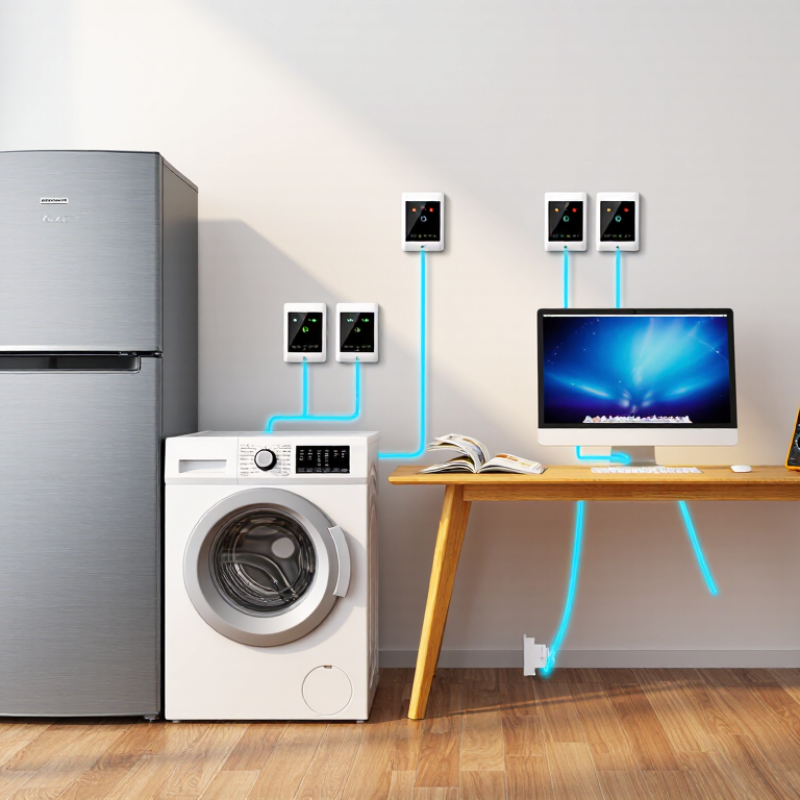
How Over and Under Voltage Protectors Work
An over and under voltage protector monitors the incoming line through a sensing circuit. When voltage exceeds its preset limits, a relay or semiconductor switch disconnects the load. Many units reconnect only after voltage stays stable for a set delay, helping prevent rapid on-off cycling. IEEE Std 1159-2019 classifies a voltage sag as a drop to 0.1–0.9 per unit, lasting from half a cycle to one minute. That distinction matters: a brief dip and a sustained low-voltage condition may need different responses.
The U.S. Energy Information Administration’s Electric Power Annual 2022 reported average customer interruption duration of 5.6 hours, including major events. This measures outages, not voltage fluctuations, but it shows why a protector should not be mistaken for backup power. It disconnects equipment; it does not supply electricity or necessarily regulate voltage. Check the device’s operating range, current rating, and reconnection delay against the appliance specifications. A single “ideal” threshold is not universal. I would still verify it against the actual site conditions.
Tips: Use a true-RMS meter to check voltage at the outlet under normal load. Compare readings with the protector’s trip limits, and have a qualified electrician inspect repeated deviations. Short test. Don’t guess.
How Over and Under Voltage Protectors Work
This illustrative chart shows a 230 V supply fluctuating around example trip thresholds of 180 V and 260 V. When voltage moves outside a protector’s configured limits, it can disconnect the load and reconnect after voltage returns to an acceptable range, often following a delay. Actual limits and timing vary by device and application; check the product specifications and local electrical requirements.
Choosing the best over and under voltage protector starts with the electrical system, not the product label. Confirm the nominal voltage, single- or three-phase supply, and the maximum load current. Note what is connected: a refrigerator motor, workshop pump, and sensitive control board may react differently to the same voltage fluctuation. Check equipment specifications before setting trip limits. A setting that is too narrow can cause needless shutdowns; one that is too wide may offer little protection.
Measure voltage at the point of use during normal operation and busy periods. Record readings when large motors start, since brief dips can look different from a lasting fault. IEEE 1159 classifies short-duration sags as 0.1–0.9 per unit and swells as 1.1–1.8 per unit, across events lasting from half a cycle to one minute. These ranges describe power-quality events; they are not universal protector settings. A neat specification sheet is not the whole story. Site measurements matter.
Tips: Match the protector’s voltage, phase, current rating, trip delay, and reset behavior to the installation. Keep surge protection in mind too: an over/under-voltage protector and a surge protective device address different problems. If readings are inconsistent, have a qualified electrician inspect the supply and connections before choosing thresholds.
| Assessment Factor | What to Check | Selection Guidance | Example or Practical Note |
|---|---|---|---|
| Supply voltage and frequency | Confirm the system’s nominal voltage, frequency, and whether the supply is single-phase or three-phase. | Choose a protector rated for the same supply type and electrical system. Do not assume a device designed for one voltage system is suitable for another. | A single-phase 230 V, 50 Hz installation needs a protector explicitly rated for that supply. A 120 V, 60 Hz system requires a compatible model. |
| Normal operating voltage | Check the permitted supply-voltage range for the location and the voltage requirements of connected equipment. | Set trip thresholds outside normal operating variation, while remaining within the limits of the equipment and applicable local requirements. | For a nominal 230 V supply, the thresholds should be selected using the local supply specification and equipment documentation—not a universal preset. |
| Over-voltage threshold | Find the protector’s adjustable or fixed upper trip point, its measurement tolerance, and the conditions for disconnecting the load. | Use a threshold that can detect sustained excessive voltage without causing unnecessary trips during normal supply variation. | Compare the stated trip value and accuracy with the acceptable input-voltage range of sensitive equipment. |
| Under-voltage threshold | Check the lower trip point and whether the device disconnects the load when voltage falls below it. | Set the limit to protect the connected load while accounting for normal voltage dips and the supply characteristics at the site. | Motors and compressors may be affected by low voltage; follow the equipment manufacturer’s voltage limits when setting protection. |
| Time delay and reconnection | Review the trip delay, restart delay, and whether reconnection is automatic or manual after voltage returns to an acceptable range. | Choose a delay appropriate for the load. Equipment with a compressor may need a restart delay to reduce rapid cycling. | Some protectors provide a selectable delay, for example a short delay for general loads or a longer delay for compressor-based equipment. Follow the load manufacturer’s guidance. |
| Load current and switching capacity | Check the rated current, voltage, switching method, and suitability for the load’s starting or inrush current. | The protector and any associated switching device must be suitable for the circuit and load. Do not select solely by comparing nominal running current. | A motor can draw substantially more current at startup than during normal operation. Have a qualified electrician verify the required rating. |
| Single-phase or three-phase protection | Identify the number of phases and whether protection is needed for phase loss, phase sequence, or phase imbalance. | For three-phase equipment, use a device specifically designed for the system and the required phase-related functions. | A single-phase voltage protector does not provide three-phase phase-loss or phase-sequence monitoring. |
| Installation location and environment | Check whether the device is intended for a distribution board, equipment enclosure, or plug-in use, along with its enclosure and environmental ratings. | Match the installation method, mounting, wiring, and environmental rating to the location. Ensure installation complies with local electrical rules. | Outdoor, damp, dusty, or high-temperature locations may require a suitably rated enclosure and installation method. |
| Protection functions and status indication | Confirm which faults are detected and whether indicators or alarms show supply status, a trip, or a fault condition. | Select only the functions needed for the electrical system and load; check that the indicators are understandable and accessible. | Voltage monitoring and disconnection address sustained over- or under-voltage conditions. They do not necessarily detect every wiring or equipment fault. |
| Surge protection needs | Assess whether the installation also needs protection against short-duration transient voltage surges. | Do not assume an over/under-voltage protector replaces a surge protective device. Consider suitable surge protection separately where required. | Over/under-voltage devices generally respond to sustained voltage conditions; surge protective devices are designed to limit transient surges. |
| Standards, documentation, and maintenance | Review the applicable conformity markings, installation instructions, operating limits, and test or replacement guidance. | Use a product appropriate for the jurisdiction and have a qualified electrician confirm compatibility, wiring, and settings. | Local standards and supply conditions vary. This table is a selection checklist, not a substitute for electrical design or professional advice. |
Choosing an over and under voltage protector starts with the supply your equipment actually uses. Check the nominal voltage, phase, and operating range on the appliance label or installation documents. A protector set too narrowly may trip during ordinary fluctuations; one set too broadly may leave equipment exposed. Small numbers matter. Compare the stated upper and lower trip thresholds with the voltage conditions at your site, not just a general household specification.
Response time deserves careful reading. A fast trip can limit exposure to a sudden voltage change, but the published figure may describe sensing time, not the full time needed to disconnect the load. Look for both trip behavior and any restart delay. That delay can help prevent rapid cycling after power returns, especially with refrigerators or pumps. I have found these details easy to overlook, and I would verify them against the equipment manual.
Current capacity must match the connected load, with room for starting surges where motors are involved. Compare the protector’s rated current with the circuit and appliance requirements, and confirm whether the rating applies continuously. A unit that handles a lamp may not suit a compressor. If several devices share one protector, add their expected loads and consider which may start together. When specifications seem unclear, ask a qualified electrician to check the installation conditions before purchase.
A good over and under voltage protector should meet recognized safety standards for the market where it will be used. Check the product label and documentation for the applicable certification, rated voltage, current capacity, and operating limits. These details matter more than a long list of features. A protector that is undersized for the circuit may trip repeatedly or fail to provide the intended protection. Small details matter.
Installation affects safety and performance. Follow the device instructions, and use a qualified electrician when work involves fixed wiring or a distribution panel. The protector should match the supply type and circuit rating, with secure connections and enough space for ventilation. Keep it away from damp areas, direct heat, and heavy vibration unless its enclosure is rated for those conditions. A neat-looking installation is not automatically a safe one; wiring and grounding must also be checked.
Reliability is harder to judge from appearance. Look for clear status indicators, understandable fault signals, and documented operating limits. An indicator light can be useful, but it does not prove that every protective function remains effective. Review the instructions for inspection and replacement guidance, especially after a severe surge or repeated trips. It is tempting to install the unit and forget it. That assumption deserves a second look. Records of inspections and unusual shutdowns can help reveal problems before they become routine.
How to Choose the Best Over and Under Voltage Protector?
Choose a Protector for Your Application and Budget
Start with the equipment you need to protect, not the price tag. A refrigerator, water pump, and workshop control cabinet place different demands on a protector. Check the supply voltage, phase, and the load’s rated current. Then compare the protector’s operating range, response time, and reset behavior with the equipment manual. Small details matter.
A basic unit may suit a modest home circuit, while sensitive electronics or motors may need tighter voltage limits and a suitable current rating. If a pump draws a high starting current, a protector rated only for its running load could trip repeatedly. Look for clear specifications and indicators that show whether power is normal, delayed, or disconnected. A low-cost model can be adequate, but missing ratings make comparison difficult.
Budget for installation, too. A properly rated device installed in an accessible enclosure may be more useful than a feature-rich unit that is difficult to inspect. Check whether the protector is designed for the installation point and whether its terminals accept the conductor size used. It is tempting to choose the widest feature list; I would pause over that. Extra functions do not compensate for a poor rating match, and the right choice may still involve a trade-off between cost and monitoring.
Check the appliance label for nominal voltage, phase, and operating range. Compare its limits with conditions at your site. Small numbers matter.
Choose thresholds that suit the equipment and local supply. Settings that are too narrow may trip during ordinary fluctuations. Wider settings may leave equipment exposed.
Not necessarily. Check whether the listed time covers sensing or the full disconnection process. Also review any restart delay.
A delay can help prevent rapid cycling after power returns. Check that the delay suits the appliance manual. Easy to overlook.
Compare the protector’s rated current with circuit and appliance requirements. Confirm whether the rating applies continuously. Leave room for motor starting surges.
Add their expected loads and consider which devices may start together. A unit suitable for a lamp may not suit a compressor.
Check the safety certification, rated voltage, current capacity, and operating limits. Follow the instructions, and use a qualified electrician for fixed wiring.
Look for clear status indicators and documented inspection guidance. A light does not prove every function works. Keep records of unusual trips; I might forget otherwise.
Choosing the right Over and Under Voltage Protector begins with understanding how it works: it monitors the incoming voltage and disconnects or limits power when levels move outside a safe range, helping reduce the risk of damage to connected equipment. Before selecting one, assess your electrical system, the devices you need to protect, and the voltage fluctuations that may occur in your location. This helps determine the appropriate protection range and whether you need a solution for a single appliance, a circuit, or a larger installation.
Compare voltage ratings, response time, and current capacity to ensure the protector suits both your supply and the connected load. Also review relevant safety standards, installation requirements, and product reliability, and consider whether professional installation is appropriate. Finally, balance the level of protection and features against your budget. A well-matched protector can provide dependable protection without paying for capacity or functions your application does not require.