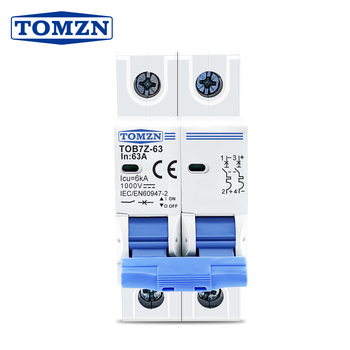
TOB1Z-63 2P 1000V DC MCB
Optimized for 1000V DC solar PV string combiner boxes. Features calibrated thermal-magnetic trip units, 6kA/10kA breaking capacity, C curve protection, and high-dielectric polycarbonate housing.
Datasheet & Details
As utility-scale photovoltaic arrays, commercial Battery Energy Storage Systems (BESS), electric vehicle fast-charging hubs, and decentralized DC microgrids proliferate worldwide, electrical engineers and international procurement officers face critical safety and operational questions. Direct current presents severe arcing challenges because DC current has no natural zero-voltage crossing, meaning an electrical arc does not extinguish on its own as it does in alternating current networks.
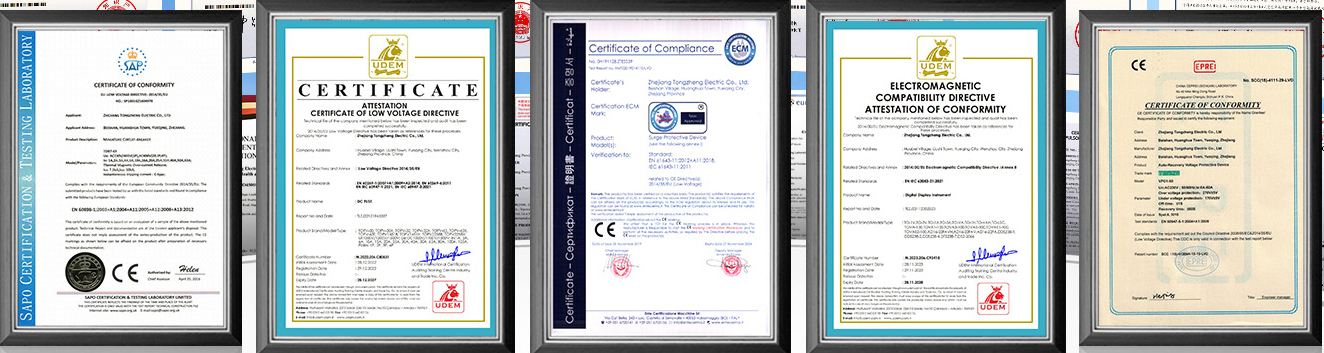
Zhejiang TMB Electric Co., Ltd. delivers engineered, TÜV Rheinland verified DC Miniature Circuit Breakers (DC MCBs) rated from 12V to 1000V DC and 1A to 125A. Designed with permanent magnetic blowout assemblies, multi-plate arc chute deionizers, and premium Silver Tin Oxide (AgSnO2) contacts, our products prevent thermal runaway, eliminate catastrophic contact welding, and guarantee dependable fault isolation under extreme load regimes.
Discover our best-performing DIN-rail DC protection models designed for solar photovoltaic strings, battery storage energy management, and telecom equipment rooms.
Optimized for 1000V DC solar PV string combiner boxes. Features calibrated thermal-magnetic trip units, 6kA/10kA breaking capacity, C curve protection, and high-dielectric polycarbonate housing.
Datasheet & Details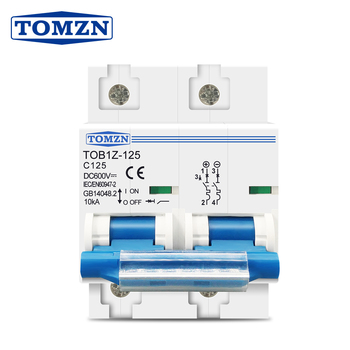
Engineered for lithium-ion battery banks, hybrid off-grid inverters, and EV DC sub-circuits. Delivers continuous current carrying from 80A to 125A at 600V DC with reinforced arc-splitting plates.
Datasheet & Details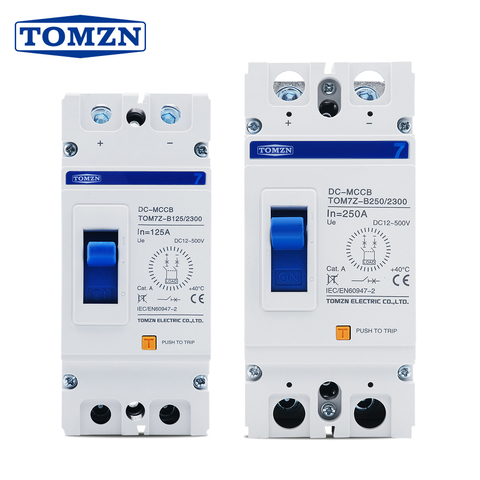
Tailored for telecom 48V/96V rectifiers and mid-voltage solar arrays. Available with fast-acting B curve (3–5 In) and standard C curve (7–10 In) to protect sensitive semiconductor electronic loads.
Datasheet & Details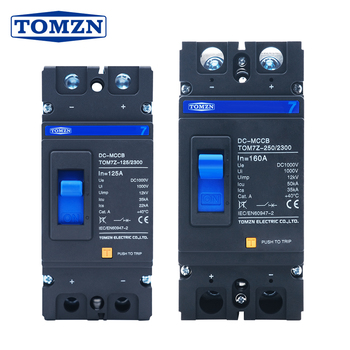
Heavy-duty molded case breaker rated from 100A to 250A at 1000V DC. Serves as master circuit disconnect and overload trip device for central inverter inputs and high-capacity battery racks.
Datasheet & DetailsCompare rated current, pole configurations, system voltage, and breaking capacities across our standard DIN rail production models.
| Series Model | Pole Number | Rated Voltage (Ue) | Rated Current (In) | Breaking Capacity (Icu/Ics) | Tripping Curve | Standard Compliance | Primary Application |
|---|---|---|---|---|---|---|---|
| TOB1Z-63 1P | 1 Pole | 250V DC | 1A, 3A, 6A, 10A, 16A, 20A, 25A, 32A, 40A, 50A, 63A | 6 kA / 6 kA | B (3-5 In) / C (7-10 In) | IEC 60947-2, IEC 60898-2, CE | Telecom power supply, DC auxiliary control circuits |
| TOB1Z-63 2P | 2 Poles | 500V / 600V / 1000V DC | 3A, 6A, 10A, 16A, 20A, 25A, 32A, 40A, 50A, 63A | 6 kA / 10 kA | C Curve (7-10 In) | IEC 60947-2, CE, RoHS | Residential rooftop solar strings, 600V PV combiner boxes |
| TOB1Z-63 4P | 4 Poles (Series) | 1000V / 1200V DC | 10A, 16A, 20A, 25A, 32A, 40A, 50A, 63A | 10 kA / 7.5 kA | C / D Curve | IEC 60947-2, CE | High-voltage commercial PV arrays, ground-mount solar arrays |
| TOB1Z-125 | 1P, 2P | 250V / 500V / 600V DC | 80A, 100A, 125A | 10 kA / 10 kA | C Curve (7-10 In) | IEC 60947-2, CE | Low-voltage lithium battery banks (48V/51.2V), DC inverter mains |
| TOM7Z (DC MCCB) | 2P | 1000V DC | 100A, 125A, 160A, 200A, 250A | 20 kA / 15 kA | Thermal-magnetic fixed | IEC 60947-2, CE | Central battery ESS containers, multi-string commercial combiner hubs |
*All breakers undergo 100% full-current thermal calibration and dielectric withstand testing before leaving Zhejiang TMB Electric Co., Ltd. custom factories.
Get a QuoteHow global energy transitions, evolving technical standards, and supply chain shifts are reshaping international purchasing decisions for DC switchgear.
To minimize I²R transmission power losses and reduce cable cross-sectional copper weights, photovoltaic and BESS architectures are rapidly shifting from 600V toward 1000V and 1500V DC. Sourcing demands have correspondingly elevated the standard requirement from simple 1-pole/2-pole devices to multi-pole series breakers and compact 1000V DC MCBs engineered to suppress longer, hotter plasma arcs without ballooning enclosure footprint dimensions.
Battery Energy Storage Systems inevitably require bidirectional current: power flows inward during battery charging and outward during discharging. Traditional polarized DC MCBs, which rely on a unidirectional magnetic blowout field, fail catastrophically if current reverses. Procurement managers at leading solar EPCs and ESS integrators now insist on non-polarized DC MCBs to eliminate installer wiring error risks and guarantee foolproof operation under bidirectional energy flows.
Modern industrial DC switchboards and unattended microgrid containers no longer operate as passive protection stations. Sourcing contracts frequently mandate built-in auxiliary micro-switches (OF), fault indicator contacts (SD), shunt trip coils (MX), and under-voltage releases (MN). These enable SCADA monitoring systems, programmable logic controllers, and IoT gateways to detect tripped statuses instantly and execute remote power-down sequences during fire alarm triggers.
Global purchasers are moving away from middle-tier trading brokers, opting instead to establish direct relationships with established factory facilities in Liushi, Wenzhou—China's low-voltage capital. Sourcing directly from verified manufacturers like Zhejiang TMB Electric Co., Ltd. ensures tight component traceability, shorter tooling turnaround for custom current steps, certified lab testing, and significant pricing resilience against raw metal volatility.
Behind the exterior plastic shell lies a fierce engineering struggle against electromagnetic heat and plasma degradation. Here is how modern DC breaker technology has evolved.
In an AC breaker, the arc naturally dies as voltage drops to zero at every half-cycle (50 or 60 Hz). A DC fault arc, conversely, acts like a continuous plasma flame reaching temperatures above 5,000 K. To overcome this, Zhejiang TMB Electric Co., Ltd. incorporates permanent neodymium rare-earth magnets positioned beside the primary arcing contacts. When the contacts separate, the magnetic field exerts an intense Lorentz force ($F = I \times B$) that accelerates the electric arc away from the precious metal contacts directly into a 13-plate deionizing arc chute.
Inside the chute, the extended arc is split into a series of short micro-arcs, multiplying the overall arc voltage until it surpasses the system’s open-circuit source voltage, effectively collapsing the current in under 10 milliseconds.
DC breaking cycles cause asymmetrical electrical erosion and material transfer from anode to cathode. While older designs utilized Silver Cadmium Oxide ($AgCdO$), modern environmental mandates (RoHS/REACH) and endurance testing favor Silver Tin Oxide ($AgSnO_2$). Our contacts provide exceptional resistance against contact welding during high-inrush capacitor bank charging, reduce contact resistance below 0.5 milliohms, and guarantee stable trip thresholds over thousands of mechanical operations.
Breaker housings are molded from reinforced, halogen-free, glow-wire tested PA66 nylon rated UL94 V-0 for flammability. Even under extreme internal arc-fault plasma release, the exterior enclosure maintains structural rigidity, prevents flame blowouts into neighboring DIN rail components, and exhibits exceptional tracking resistance (CTI > 600V).
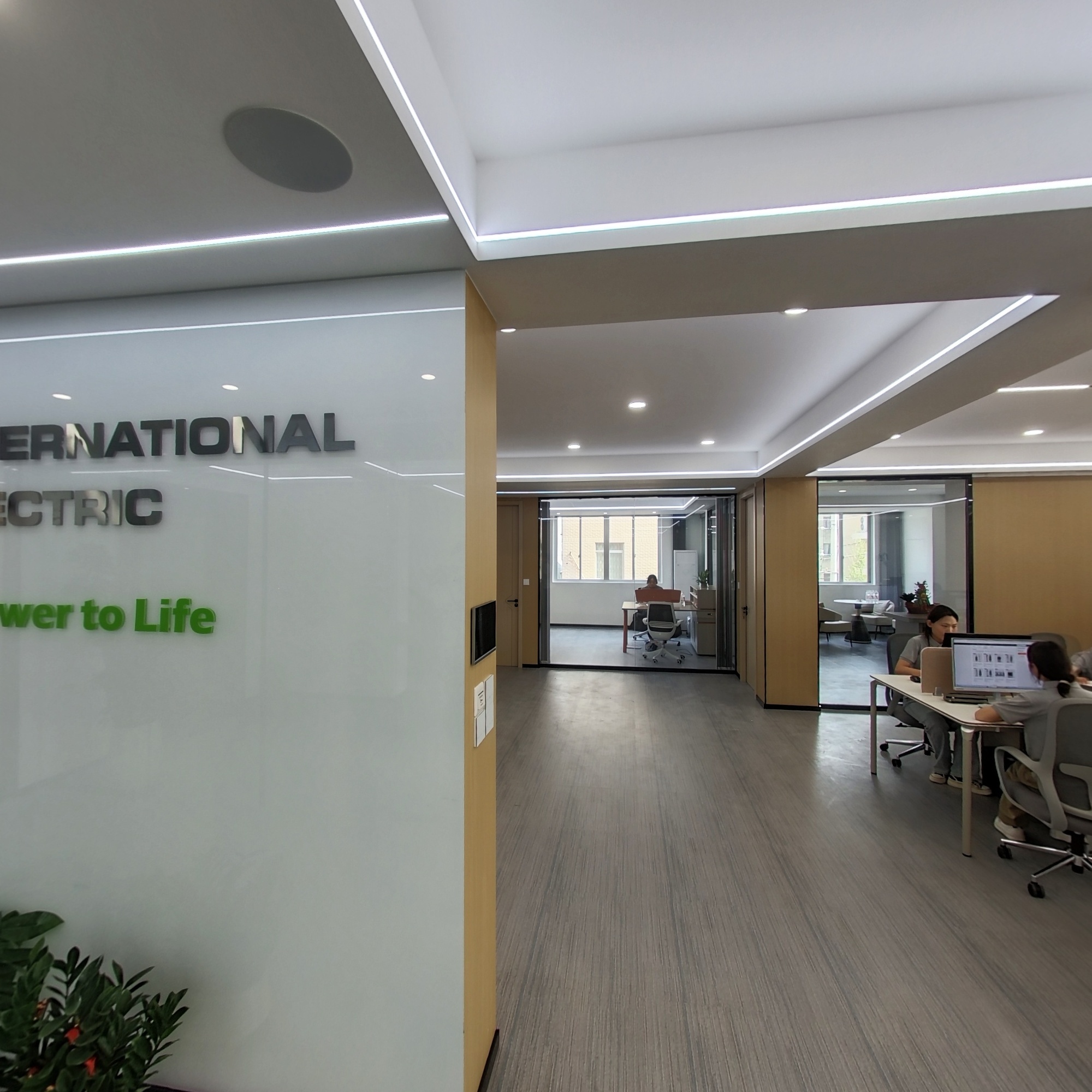
Headquartered in Huabei Village, Liushi Town, Wenzhou—China’s epicenter for low-voltage electrical switchgear—Zhejiang TMB Electric Co., Ltd. combines 24 years of manufacturing heritage with modern lean fabrication practices. Over two decades of specialized focus in circuit breaker mechanics enables us to deliver unmatched reliability, technical precision, and commercial flexibility to buyers in more than 100 countries.
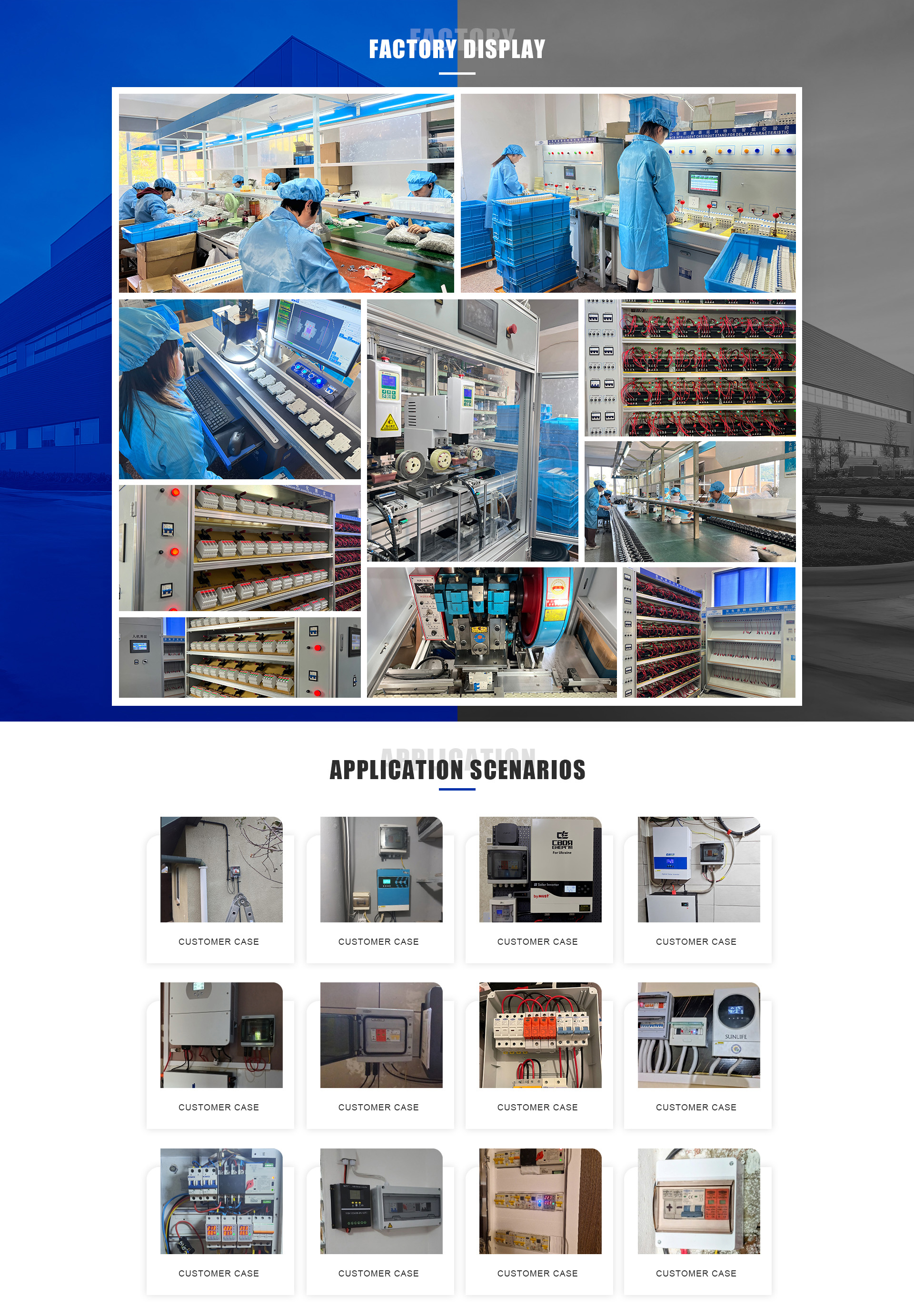
Our 5,700 m² production base and 92-member specialized workforce have undergone on-site verification by TÜV Rheinland.
Located in Liushi, we source high-precision silver contacts, copper bimetals, and flame-retardant housings within minutes.
Custom trip curve calibration (B, C, D), brand laser etching, special voltage steps, and tailored multi-pole DIN assemblies.
Order trial batches starting from 5 pieces to verify physical samples, thermal response curves, and lab tests before mass rollout.
DC applications demand uncompromising safety. Every batch of miniature circuit breakers produced at Zhejiang TMB Electric Co., Ltd. passes through 6 mandatory inspection gates before shipment packaging.

Spectrographic verification of bimetal thermal sheets, pure copper terminal lugs, and silver alloy contact rivets.
Precision calibration of internal spring release latches and permanent magnetic arc blowout positioning.
High-current pulse testing to verify instant magnetic tripping points within prescribed curve boundaries (B/C/D).
Prolonged 1.05 In and 1.30 In current immersion tests inside temperature-stabilized calibration baths.
2,500V AC dielectric breakdown check across open contacts and between pole housings to ensure zero leakage.
Automated pneumatic toggling verifies smooth switch action for up to 20,000 mechanical operations.
Clear, definitive answers to the most common technical questions posed by global procurement managers, solar installers, and system integrators.
Submit your electrical parameters, single-line diagrams, or OEM requests. Our senior electrical engineering team will deliver a comprehensive proposal with matching models, test certificates, and competitive direct factory pricing within 24 hours.
[email protected]