The global shift toward solar power, battery storage, electric vehicles, and data centers is increasing demand for dependable DC protection. The International Energy Agency reported that renewable capacity additions reached approximately 510 gigawatts in 2023, with solar power leading the expansion. IEA PVPS also recorded continued growth in global photovoltaic installations. Each new array, battery cabinet, and control panel needs carefully selected protection. A DC Miniature Circuit Breaker helps interrupt overloads and short circuits before damaged conductors create greater risks. Small device. Serious responsibility.
As IEA Executive Director Fatih Birol has stated, “Renewables are the only source of energy that is growing strongly today.” That growth makes product selection more technical, not simpler. This guide examines ten DC Miniature Circuit Breaker options for global buyers, considering rated voltage, breaking capacity, pole configuration, trip characteristics, installation space, and certification evidence. IEC 60898-1 and IEC 60947-2 provide important reference points, but buyers should confirm each product’s actual DC performance. AC ratings cannot automatically be transferred to DC systems. That mistake still appears in purchasing decisions.
The ranking is not absolute. A compact breaker may suit a rooftop combiner box, yet fail a high-current battery application. Field experience also matters, especially in dusty enclosures, hot climates, and installations with long cable runs. Product datasheets are useful, but verified test reports, traceable manufacturing information, and responsive technical support offer stronger assurance. Buyers should compare the details, not only the price.
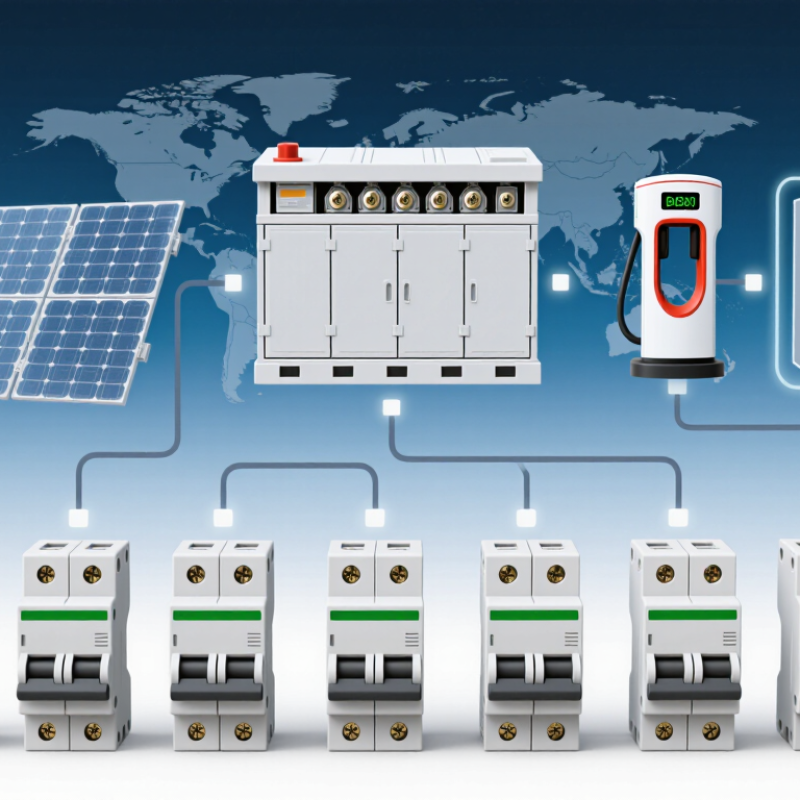
DC Miniature Circuit Breaker Basics and Global Application Scenarios
DC miniature circuit breakers protect direct-current circuits from overloads and short circuits. Unlike AC systems, DC arcs do not naturally cross zero, so interruption requires suitable contact spacing and arc-control design. Key specifications include rated voltage, continuous current, breaking capacity, pole arrangement, and trip characteristics. A breaker rated for 250 V DC may not safely protect a 500 V battery string.
Global applications vary widely.
Solar combiner boxes often need reliable protection between panels and inverters. Battery cabinets require careful coordination with fuses and disconnect devices. Telecom shelters, electric vehicles, marine panels, and industrial control cabinets also use DC breakers. Temperature, altitude, humidity, and cable length can affect performance. A dusty outdoor enclosure is not equivalent to a clean indoor panel.
Tips:
Check the actual system voltage, not only the nominal label. Confirm polarity and installation direction where required. Match the breaker’s breaking capacity with the available fault current. Review local electrical standards and test documentation before shipment. Keep wiring torque within the manufacturer’s stated range. Small errors matter.
In field work, engineers should verify selective coordination between upstream and downstream protection. A breaker that trips too quickly may interrupt normal motor startup. One that trips too slowly may overheat conductors. Performance can also change in cold climates or at high elevations. Datasheets help, but real installation conditions deserve another review. Mistakes are possible, especially when similar AC and DC products are stored together.
Key Specifications for Comparing the Top 10 DC Circuit Breakers
For global buyers, comparing the top 10 DC miniature circuit breakers requires more than checking voltage and price. Rated voltage must match the system’s maximum open-circuit voltage. Rated current should reflect continuous load, cable size, and ambient temperature. A 20A label can mislead when the enclosure reaches 50°C.
The IEA PVPS Trends in Photovoltaic Applications 2024 report recorded more than 400 GW of new solar capacity worldwide in 2023. This growth increases demand for reliable DC protection in strings, batteries, and control cabinets. Compare each breaker’s DC interrupting capacity, pole configuration, trip curve, and voltage rating. IEC 60947-2 provides a useful reference for low-voltage circuit-breaker performance. For North American projects, buyers should also verify applicable certification requirements, such as those aligned with UL 489.
Small details matter. Check terminal compatibility, tightening torque, insulation voltage, and mechanical endurance. Thermal derating is often overlooked. So is the breaker’s ability to interrupt current under realistic fault conditions. Independent test reports are stronger evidence than catalog claims. One comparison gap remains: many published tables omit altitude and enclosure temperature. That omission can affect field reliability. Ask for test conditions, not just headline ratings. Arc-control design, clear status indication, and dependable isolation also deserve attention. A cheaper device may fit the rail, yet fail the project’s coordination study.
Safety Standards, Certifications, and Regional Compliance Requirements
For global buyers, a top-ten DC miniature circuit breaker list should begin with compliance, not price. The IEA PVPS Trends 2024 report recorded more than 400 GW of new solar capacity in 2023. That expansion increases demand for reliable DC interruption in combiner boxes, battery cabinets, and charging equipment. A breaker’s DC rating must match system voltage, prospective fault current, polarity, and wiring arrangement. AC performance data cannot be quietly substituted. It is a common, costly mistake.
IEC 60947-2 is a key reference for industrial circuit breakers, while IEC 60898-2 addresses household and similar DC applications. North American projects commonly require evaluation under UL 489, with supplementary protection treated differently under UL 1077. European buyers should check the Low Voltage Directive, CE documentation, and the exact harmonized standard listed in the Declaration of Conformity. Australia, New Zealand, Canada, and other markets may require national adoptions or certification marks. “IEC compliant” alone is not enough.
For each candidate, request a current certificate, test report, production address, and certificate scope. Verify short-circuit capacity at the actual DC voltage, trip curve, temperature derating, altitude limits, and terminal torque. Check whether the device provides true isolation and whether polarity restrictions are clearly printed. NFPA’s Home Structure Fires report identifies electrical distribution and lighting equipment as recurring fire sources. Installation quality matters as much as the label. I would also audit sample units, not only PDFs. Paper can age. A ranking becomes unreliable when regional approvals, accessories, or replacement availability are ignored.
Top 10 DC Miniature Circuit Breaker Compliance References
The chart ranks commonly referenced international and regional standards by direct relevance to low-voltage DC circuit-breaker evaluation.
A score of 3 indicates a primary product standard, 2 indicates a supplementary or closely related standard, and 1 indicates a supporting regional or installation reference.
The applicable edition, certification route, marking requirements, and local authority rules must be verified before market entry.
Performance, Installation, and Maintenance Factors for International Buyers
Choosing among the top 10 DC miniature circuit breakers requires more than comparing rated current. International buyers should examine performance, installation, and maintenance together. The IEA’s Electricity 2024 report expects global electricity demand to grow by about 4% in 2024 and 2025. This growth increases pressure on reliable protection in solar arrays, battery systems, control cabinets, and telecom equipment.
Performance begins with DC voltage, breaking capacity, trip curves, and polarity requirements. A breaker rated for AC may not interrupt DC safely. Buyers should verify compliance with IEC 60947-2 or IEC 60898-2, depending on the application. Temperature also matters. In a sealed cabinet under direct sunlight, heat can reduce continuous current capacity. A catalogue rating is not a site result. This is where many purchasing decisions remain too optimistic.
Tips: Confirm the maximum fault current at the installation point. Check conductor size, terminal torque, and clearance before energizing. Keep installation photos and test records for future maintenance. The International Renewable Energy Agency reported more than 1.4 terawatts of global solar capacity added by the end of 2023, showing how quickly DC protection is entering field applications. Dust, vibration, and repeated switching still deserve attention. Monthly visual checks may be excessive for some clean cabinets, yet annual inspection may be too weak for harsh environments. Technicians should inspect discoloration, loose terminals, nuisance trips, and mechanical stiffness. Testing should follow the equipment maker’s instructions and local requirements.
How to Select the Right DC Miniature Circuit Breaker for Your Project
Selecting the right DC miniature circuit breaker starts with the circuit, not the product list. Check the system’s maximum DC voltage, continuous current, and available fault current. The breaker’s voltage rating must exceed the highest operating voltage. Its interrupting capacity must also handle the prospective short-circuit current safely.
Small details matter. A 48 V battery system may need a two-pole device to isolate both conductors, depending on the installation design. Photovoltaic strings often require DC-rated switching, correct polarity, and protection suited to reverse currents. Never assume an AC breaker will perform properly on DC. DC arcs are harder to extinguish.
Review the trip curve, ambient-temperature limits, terminal size, and conductor compatibility. A breaker beside a warm inverter may carry less current than its label suggests. Derating tables deserve attention. I have seen selection errors caused by reading only the amperage marking. That shortcut is risky. Check whether the device complies with the project’s required standard, such as IEC 60947-2 or another accepted local requirement. Standards differ by application and region, so certification documents should be verified, not merely mentioned by a seller.
Mechanical endurance, clear status indication, and secure terminal clamping improve maintenance work. For remote sites, vibration and condensation may influence the enclosure choice. Leave room for inspection. A compact breaker is not always the best breaker. Review the wiring diagram with a qualified professional, especially when batteries, solar arrays, or multiple DC sources share one panel. Recheck the calculations before ordering. Mistakes are cheaper on paper.
FAQS
It protects direct-current circuits from overloads and short circuits. DC arcs do not naturally cross zero. Suitable spacing and arc control are essential.
Not reliably. Never assume an AC device works on DC. DC arcs are harder to extinguish.
Check the system’s highest actual DC voltage. Include the maximum open-circuit voltage. A 250 V device may not protect a 500 V battery string.
Rated current must suit the continuous load, cable size, and ambient temperature. A breaker marked 20 A may carry less at 50°C.
Its breaking capacity must exceed the available prospective fault current. A high current system needs stronger interruption capability. This point is easy to miss.
Two poles may isolate both conductors in a battery system. Confirm the required arrangement from the wiring design. Polarity and installation direction may also matter.
Common locations include solar combiner boxes, battery cabinets, telecom shelters, vehicles, marine panels, and control cabinets. Conditions differ greatly.
Review temperature, altitude, humidity, dust, vibration, and condensation. A dusty outdoor enclosure is not like a clean indoor panel.
Compare trip curves, pole configuration, terminal size, insulation voltage, tightening torque, and mechanical endurance. Request test conditions, not only catalog ratings.
Upstream and downstream devices should coordinate properly. A fast trip may stop motor startup. A slow trip may overheat conductors. I might overlook coordination without a full diagram.
Conclusion
This guide introduces the fundamentals of the DC Miniature Circuit Breaker and explains its role in protecting direct-current systems used in solar energy, battery storage, telecommunications, transportation, and industrial control applications. It outlines the key specifications international buyers should compare, including rated voltage and current, breaking capacity, pole configuration, trip characteristics, electrical endurance, operating temperature, and compatibility with different DC system designs.
The article also reviews essential safety standards, certification expectations, and regional compliance considerations, helping purchasers evaluate products for different markets. In addition, it discusses installation conditions, wiring practices, environmental performance, inspection, and maintenance requirements that influence long-term reliability. By balancing electrical parameters, safety credentials, installation needs, lifecycle performance, and project-specific conditions, buyers can select a suitable DC Miniature Circuit Breaker that provides dependable protection and supports safe, efficient operation.