Featured PV String Protection & Industrial Timing Devices
Export-ready modular DIN-rail solutions built for PV combiner integration, automated grid control, and fail-safe overcurrent isolation.

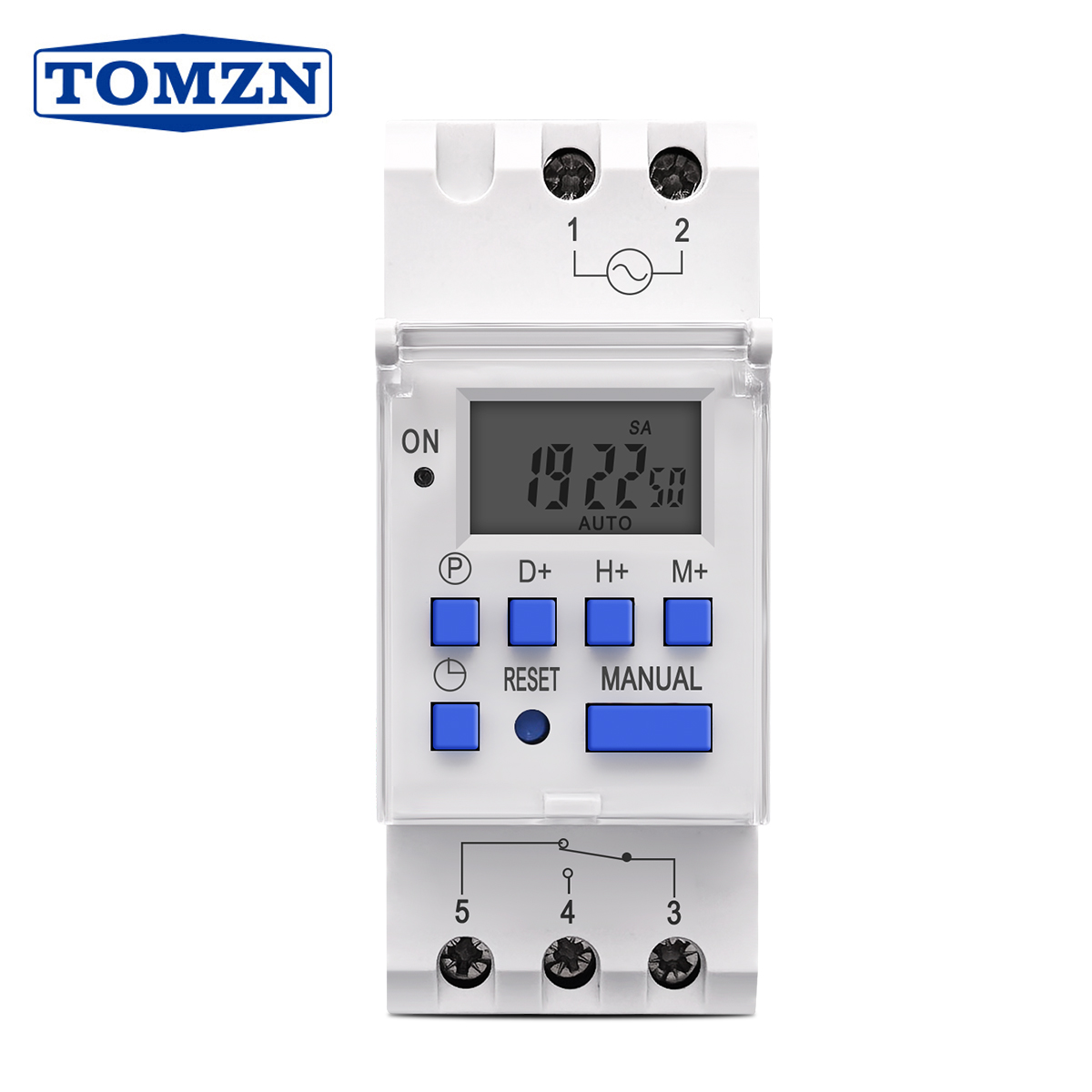
TOMZN 1NO 1NC DIN Rail Weekly 7-Day Digital Time Switch
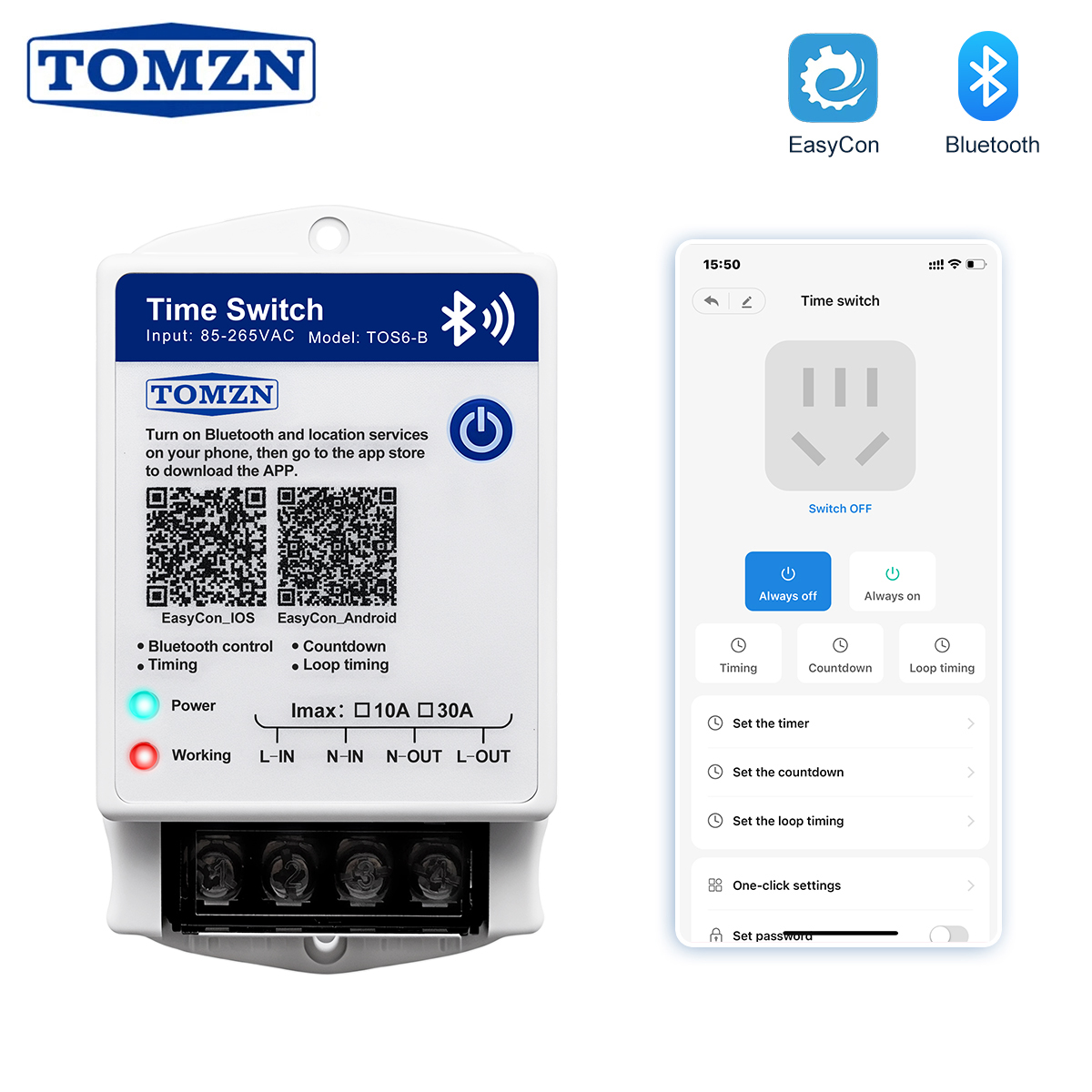

TOMZN TOS7-B Bluetooth Timer Switch 40A 63A DIN Rail

TOMZN New Type Single Phase Digital Time Relay Switch

TORT7 Series 10-in-1 Asymmetric Delay Time Relay
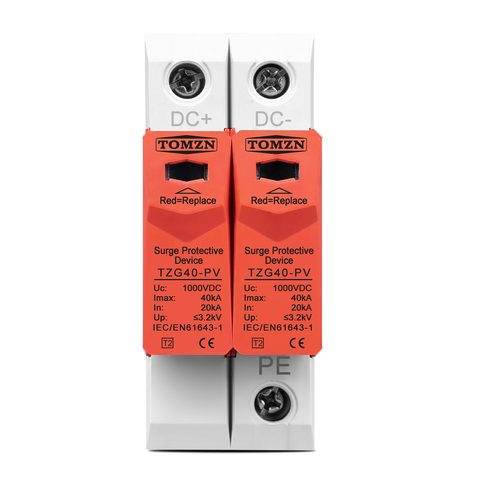
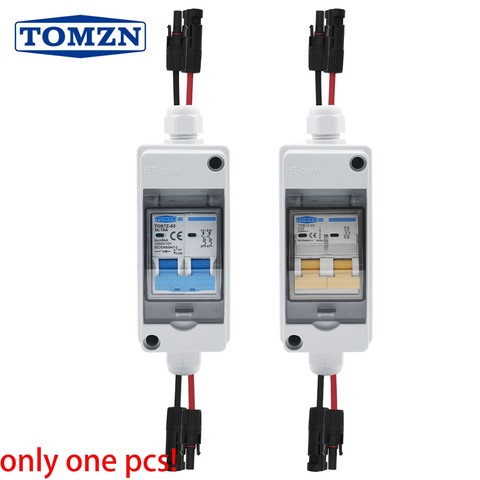
IP65 Pre-Wired Solar Combiner Box With DC Fuse Enclosure
Engineering Standards for CE Certified Solar PV Fuse Holders
A technical guide on arc dissipation, thermal throttling, and dielectric insulation in utility and commercial PV installations.
In utility-scale and commercial rooftop photovoltaic (PV) systems, overcurrent protection operates under severe electrical environments that differ fundamentally from standard AC systems. Direct Current (DC) does not exhibit a natural zero-crossing point. When a fault occurs—such as a line-to-line short circuit, string ground fault, or reverse current event driven by paralleled string arrays—the resulting DC electrical arc is continuous and destructive. Solar fuse holders engineered in accordance with IEC 60269-6 and EN 60269-6 standards serve as the frontline defense. They house 10x38mm, 10x85mm, or 14x51mm gPV cylindrical fuse links, ensuring rapid arc containment and galvanic disconnection without thermal runaway or catastrophic flashover.
As a CE-certified manufacturer and global exporter based in Liushi, Wenzhou—China's electrical engineering epicenter—Zhejiang TMB Electric Co., Ltd. integrates specialized raw materials into the production of solar fuse holders and disconnect mechanisms. Standard nylon compounds quickly fail when exposed to prolonged 1000V to 1500V continuous DC voltages inside unventilated, high-temperature IP65 combiner boxes. To mitigate risk, our fuse holder housings utilize UL94-V0 flammability-rated, fiber-reinforced polybutylene terephthalate (PBT) and polyamide (PA66). This provides a Comparative Tracking Index (CTI) exceeding 600V and an ambient thermal operational range between -40°C and +90°C.
Arc Containment Chambers
Specially contoured internal extinguishing channels isolate plasma gases generated during fuse link rupture, preventing phase-to-phase short-circuits up to a 33kA breaking capacity.
Silver-Plated Copper Contacts
T2-grade copper alloy contact jaws with high-micron electrolytic silver plating eliminate high-resistance micro-welding, maintaining low contact resistance across 25 years of thermal cycling.
LED Blown-Fuse Indication
Integrated micro-watt neon or optoelectronic indicator circuits bridge the fuse link terminals, illuminating instantly upon circuit clearance to streamline rapid O&M fault diagnosis.
Future Procurement Trends in Solar DC Protection (2025–2030)
Strategic procurement considerations driven by the transition toward 1500V architecture, bifacial high-power modules, and distributed smart monitoring.
| Architecture Shift | Legacy Baseline | Next-Gen Trend (2025+) | Engineering Impact on Fuse Holders |
|---|---|---|---|
| System DC Voltage | 1000V DC String Baseline | 1500V DC Utility Standard | Creepage distances increased to ≥25mm; upgraded arc chute chamber tolerances. |
| Module Wafer Size & Isc | 166mm / 182mm (8A - 11A Isc) | 210mm / N-Type TOPCon (>17A Isc) | Fuse holders must dissipate heat for 25A - 32A gPV links without derating past 50°C. |
| O&M Strategy | Manual Multimeter Inspection | Sensor-Embedded Telemetry | Auxiliary micro-switches incorporated to feedback blown-fuse status directly to SCADA. |
| Combiner Ingress Safety | IP20 Finger-Safe Enclosures | IP65 Enclosure Integration | Flammability rating UL94-V0; halogen-free thermal housing with non-hygroscopic resins. |
Solar EPCs, original equipment manufacturers, and overseas distributors are optimizing their supply chains by consolidating component procurement directly with verified tier-1 manufacturing hubs. Procuring fully coordinated protection packages—combining 1000V/1500V fuse carriers, DC surge protective devices (SPDs), DC miniature circuit breakers (MCBs), and automatic transfer switches (ATS)—eliminates electrical cross-derating discrepancies and simplifies customs clearance through unified CE and RoHS documentation.
Transition to 1500V DC Systems
Increasing string voltages from 1000V to 1500V lowers Balance of System (BOS) wiring losses by up to 30%, mandating fuse holders with enhanced dielectric clearances to avoid tracking breakdown.
Dynamic Thermal Dissipation
Large-format cell designs generate sustained continuous currents near nominal limits. Modern fuse enclosures utilize vented structural ribbing to maintain steady airflow and stable contact pressure.
Integrated IoT Protection
Smart PV enclosures now converge with communication modules and IoT programmable time switches (such as our Bluetooth and EasyCon systems) for scheduled grid tie-in and remote isolation.
Why Choose Zhejiang TMB Electric as Your Global PV Exporter
Combining 24 years of manufacturing heritage in Liushi, Wenzhou with rigorous third-party TÜV Rheinland verification.
5,700 m² Manufacturing Facility
Situated in Huabei Village, Liushi Town, our plant operates optimized production lines for stamping, injection molding, mechanism assembly, and precision calibration with 92 verified technicians.
TÜV Rheinland On-Site Assessed
Our quality control management systems, production capacity, and export reliability have undergone strict on-site assessment by TÜV Rheinland, guaranteeing auditable compliance for international EPCs.
Over US$3.3M+ Annual Export
We export to over 100 countries across Europe, South America, the Middle East, and Southeast Asia. We support flexible MOQs (from 5 pcs) and full OEM/ODM branding for private label distribution.
Frequently Asked Questions on Solar Fuse Holder Sourcing
Essential technical and logistical answers for project managers, solar engineers, and wholesale electrical importers.
What sizing formula should be used to select solar gPV fuse ratings and fuse holders?
Can standard AC modular fuse holders be used in DC solar photovoltaic installations?
How do ambient combiner box temperatures influence fuse holder derating factors?
What are the differences between 10x38mm and 10x85mm DC fuse holder specifications?
What customization and OEM/ODM options are available for overseas B2B orders?
Connect With Our Solar Electrical Engineers
Looking for competitive factory pricing, customized combiner designs, or verified CE technical documentation? Contact our technical sales team for immediate project support.