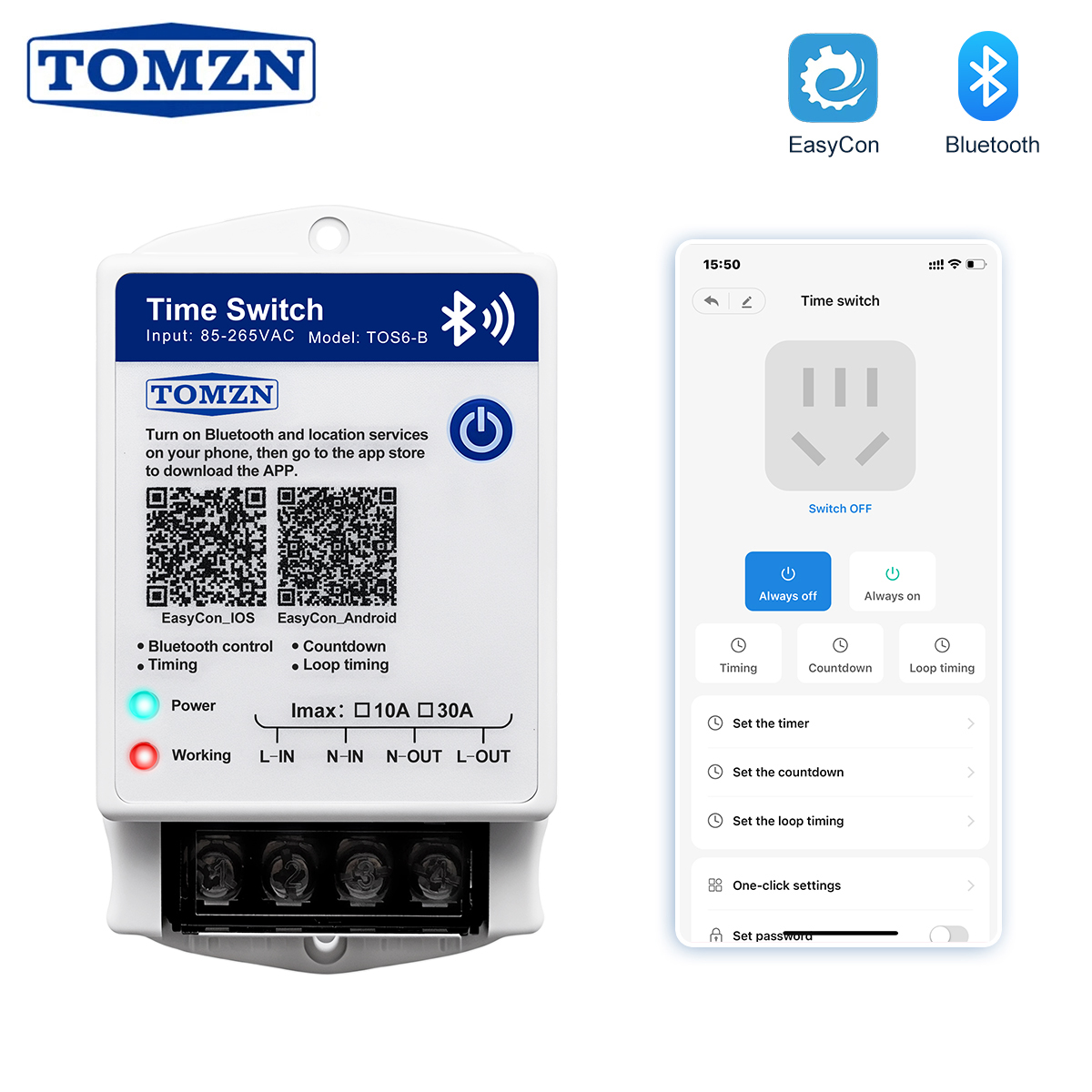
TOMZN Bluetooth Smart Timer Switch 85-265VAC 10A 30A Wall-Mounted
85-265VAC
28 Groups Timing
Bluetooth IoT
Engineered to deliver high mechanical endurance, instantaneous arc extinguishment, and smart digital integration across industrial distribution panels.
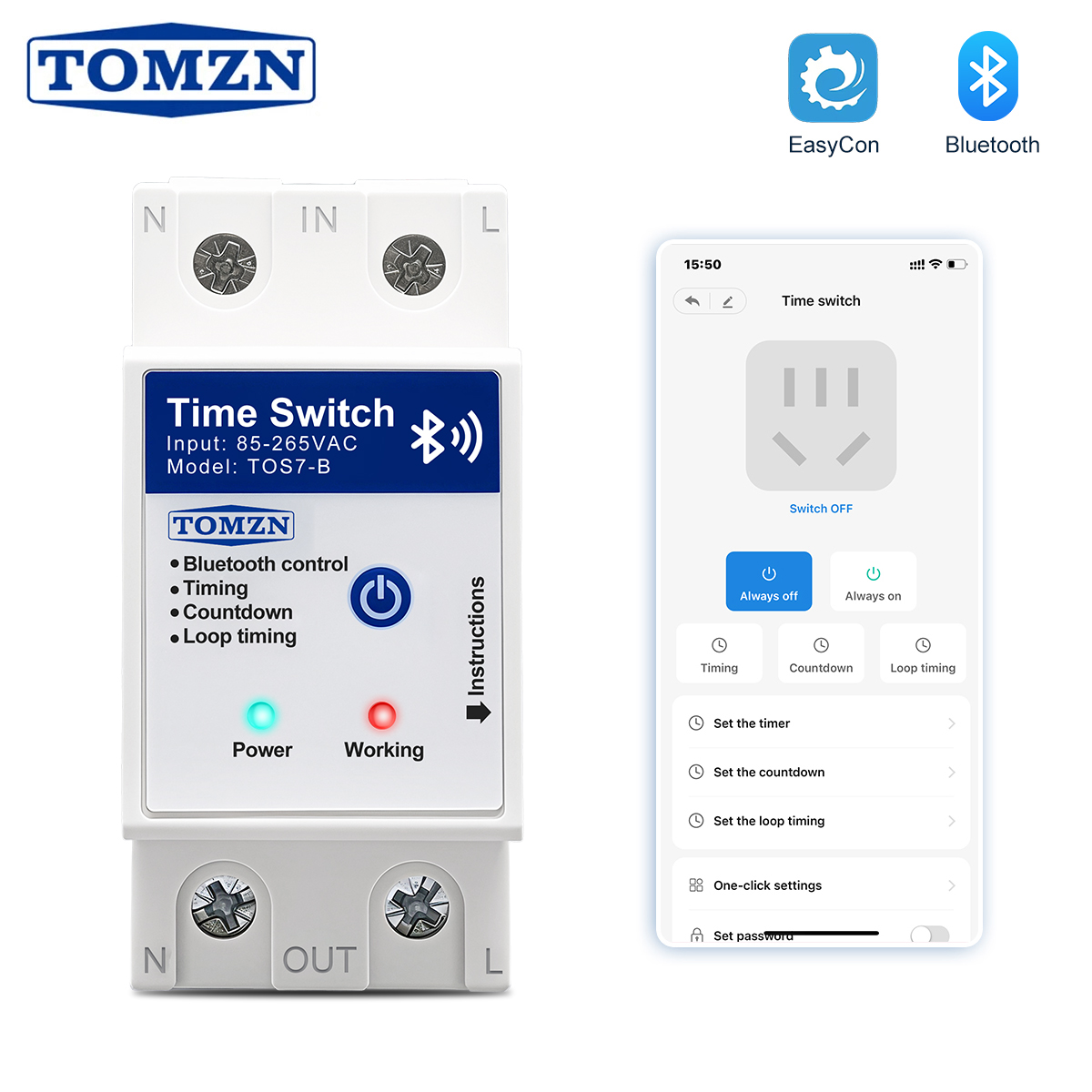
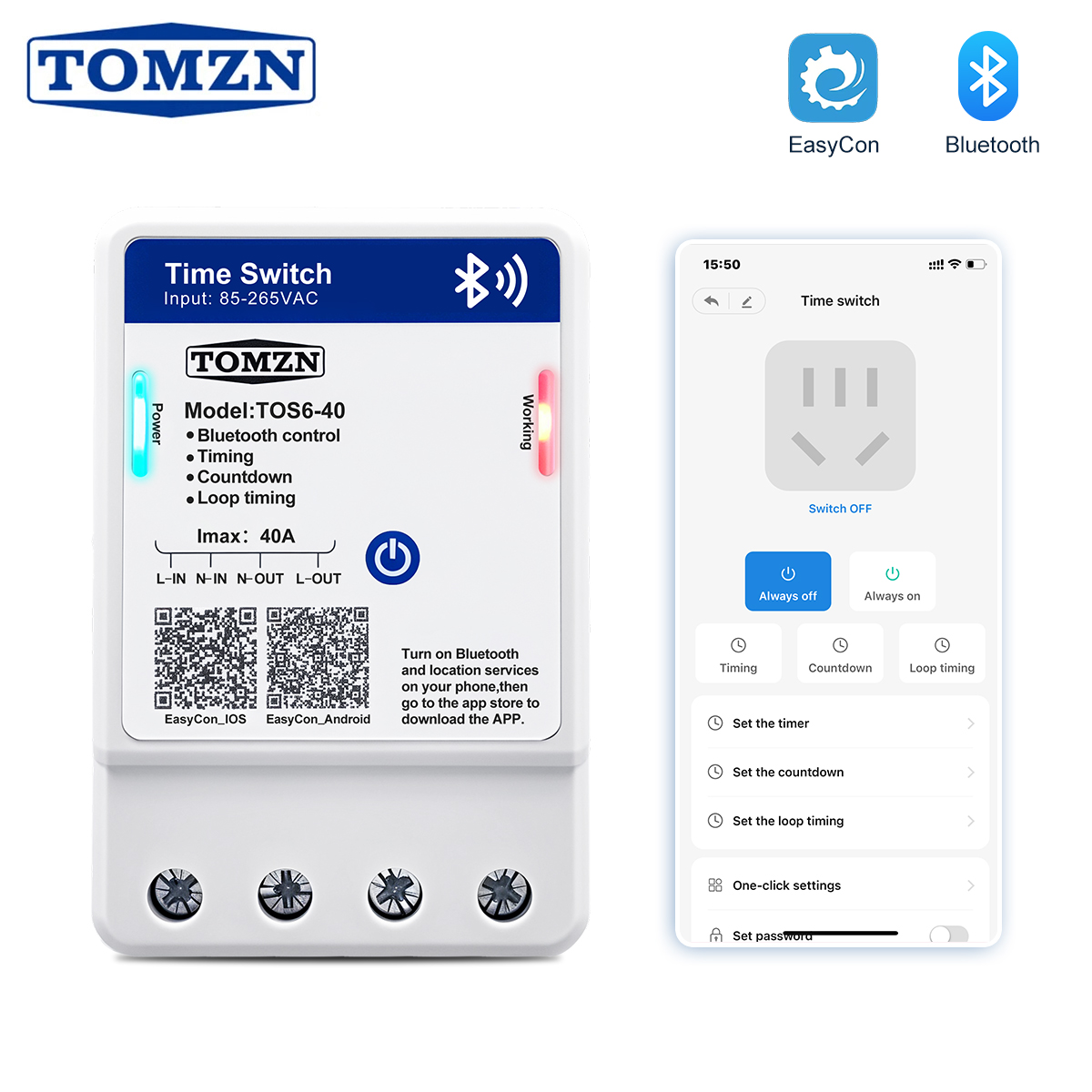
The medium and high-voltage electrical distribution paradigm has radically shifted over the past decade. Industrial facilities, utility substations, renewable photovoltaic arrays, and critical microgrids increasingly discard older oil-immersed and sulfur hexafluoride (SF6) gas-insulated systems in favor of solid-dielectric, vacuum-based interruption technology. A CE-certified Vacuum Circuit Breaker (VCB) represents the pinnacle of electrical safety, mechanical endurance, and thermal arc suppression. Engineered to operate reliably between 12kV, 24kV, and up to 40.5kV systems, modern VCB architectures satisfy both the European Union's Low Voltage Directive (LVD 2014/35/EU), Electromagnetic Compatibility Directive (EMC 2014/30/EU), and rigorous IEC 62271-100 standards.
At the center of every certified VCB is the hermetically sealed ceramic vacuum interrupter (VI). Within this envelope, an ultra-high vacuum level maintained below 10-5 Pa serves as both the primary insulating medium and the arc extinction zone. When moving contact electrodes separate under load or during short-circuit faults (often exceeding 25kA to 40kA symmetrical breaking capacity), the current initiates an electrical metal vapor arc derived exclusively from copper-chromium (CuCr) contact alloy surfaces.
Unlike air or SF6 breakers where arc energy dissociates toxic gaseous molecules, the metal vapor in a vacuum interrupter diffuses instantaneously to surrounding condensation shields at the first AC current zero. The dielectric strength across the contact gap recovers at rates exceeding tens of kilovolts per microsecond. This rapid recovery prevents reignition, restrikes during capacitive cable charging, and transient overvoltages that destroy sensitive downstream equipment such as dry-type transformers, solar inverters, and industrial variable frequency drives.
| Performance Metric | Vacuum Circuit Breaker (VCB) | SF6 Gas Circuit Breaker | Air Circuit Breaker (ACB) |
|---|---|---|---|
| Arc Quenching Medium | Ultra-High Vacuum (<10-5 Pa) | Electronegative SF6 Gas | Atmospheric Air / Arc Chutes |
| Environmental Impact | Zero GWP / Non-Toxic | High GWP (~23,500 CO2 eq) | Zero GWP |
| Dielectric Recovery Rate | Extremely Fast (~20-40 kV/µs) | Moderate (~5-10 kV/µs) | Slow (~1-2 kV/µs) |
| Mechanical Lifespan | 20,000 to 30,000 Operations | 5,000 to 10,000 Operations | 10,000 Operations |
| Maintenance Overhead | Maintenance-Free Sealed Bottle | Leak Monitoring & Recycling | Frequent Contact Dressing |
Modern electrical engineering applications have pushed medium-voltage switchgear far beyond predictable steady-state municipal networks. Our OEM/ODM manufacturing lines serve specialized sectors experiencing intense transient operational cycles:
Global decarbonization directives and the proliferation of IoT-integrated substations are transforming technical specifications for vacuum switchgear.
With the European Union tightening F-gas regulations (Regulation EU 2024/573), medium-voltage installations up to 24kV must eliminate SF6 installations by 2026-2030. Solid-insulated vacuum circuit breakers with environmentally neutral clean-air insulation represent the sole compliant, future-proof procurement standard for industrial infrastructure.
Substation operators require digital telemetry. Modern vacuum breakers integrate real-time optical travel sensors, primary contact temperature sensing via SAW (Surface Acoustic Wave) transponders, and electromagnetic coil current signatures to project contact wear and forecast maintenance windows years in advance.
Traditional mechanical spring mechanisms incorporate hundreds of high-wear springs, latches, and dampers. Procurement is pivoting toward Permanent Magnetic Mechanisms (PMA) that cut the number of moving parts by over 70%, yielding field service lifespans exceeding 100,000 switching operations without mechanism failure.
Operating from China's electrical capital, Zhejiang TMB Electric Co., Ltd. consolidates 24 years of manufacturing heritage into rigorous process controls and flexible B2B fulfillment.
Situated in Huabei Village, Liushi, our factory sources precision copper stamping, silver brazing, and high-dielectric BMC housings within minutes, minimizing lead times and production volatility.
Every assembly line, testing protocol, and quality control workstation has undergone on-site physical auditing by TÜV Rheinland, assuring international procurement teams of operational transparency.
From sample batches of 5 pieces for prototyping and field type-testing to high-volume custom labeling, bespoke voltage configurations, and integrated PV combiner enclosures.
Components undergo 100% dielectric insulation testing, contact resistance measurement via micro-ohmmeters, and thermal dynamic trip calibration prior to container staging.
Essential guidance to support project specifications, compliance reviews, and purchasing workflows.
CE marking confirms total compliance with the Low Voltage Directive (LVD 2014/35/EU) and Electromagnetic Compatibility Directive (EMC 2014/30/EU). For medium-voltage apparatus, compliance is validated via third-party type test reports aligned with harmonized standard IEC/EN 62271-100 covering short-time withstand current, mechanical endurance, and temperature-rise limits.
Fixed VCB configurations are ideal for compact ring main units (RMUs) and cost-optimized distributed substations where isolating switches isolate the busbar. Withdrawable (draw-out) types are required in heavy industrial and utility switchgear panels (such as KYN28A) to allow safe, rapid racking out for inspection without shutting down adjacent line bays.
Never. Direct current (DC) contains no natural sinusoidal zero-crossing point. An AC circuit breaker cannot extinguish a high-energy DC arc, resulting in catastrophic chamber burn-through or fires. DC applications require dedicated DC MCBs or DC MCCBs (such as our 1000V TOM7Z series) fitted with permanent magnetic arc-deflection blowouts.
Before commissioning, field technicians execute a 1-minute power frequency withstand voltage test across the open contacts at the rated test voltage (e.g., 42kV for a 12kV rated VCB). Alternatively, portable magnetron condition testers quantify remaining chamber pressure without disassembling the pole structure.
Copper-Chromium (CuCr) alloys, specifically CuCr25 to CuCr50, provide the optimum balance between high interrupting capacity, low contact welding propensity during inrush currents, and minimal chopping current (under 3-5 Amperes) to prevent inductive surge voltages during motor or transformer disconnections.
Standard catalog samples dispatch within 3-7 business days, while volume OEM container runs typically require 20-30 days. We provide comprehensive documentation packages including Declaration of Conformity (DoC), routine factory test certificates, terminal dimensional schematics, and bilingual wiring manuals.