State of the Art in Industrial Motor Soft Starter Engineering
Across modern process engineering—encompassing municipal wastewater aeration, centrifugal slurry pumping, heavy bulk material conveyance, and industrial chilling—three-phase squirrel cage induction motors represent over 70% of total mechanical electrical load consumption. Historically, these inductive machines were placed online using Direct-On-Line (DOL) electromechanical starters or Star-Delta (Wye-Delta) contactor schemes. However, DOL starting induces catastrophic transient mechanical shocks: rotor inrush currents routinely surge between 600% and 800% of full-load ampacity ($I_n$), accompanied by severe peak starting torques that generate excessive shear stress on motor drive shafts, fluid cavitation, gear degradation, and transmission belt snap.
As China's leading low-voltage electrical apparatus manufacturer, Zhejiang TMB Electric Co., Ltd. addresses these systemic mechanical and power quality failures through cutting-edge solid-state Reduced Voltage Soft Starters (RVSS). By modulating back-to-back anti-parallel Silicon-Controlled Rectifiers (Thyristors / SCRs) on each phase, our soft start systems smoothly ramp the terminal voltage from an initial programmable pedestal (typically 30% to 70% $U_n$) up to full nominal line potential, achieving linear rotor acceleration and eliminating downstream hydraulic water hammer phenomena.
Comparative Topology: Soft Starter vs. VFD vs. Star-Delta Starters
A persistent design compromise in conventional solid-state starter deployments is thermal management during steady-state continuous operation. Because forward-biased thyristors dissipate approximately 1.2 to 1.5 Watts per Ampere per phase across their $P$-$N$ junction barriers, an unbypassed 200A soft starter continuously discharges nearly 900 Watts of thermal energy inside the electrical enclosure. Over time, high cabinet temperatures degrade sensitive control PCBs, dry out electrolytic smoothing capacitors, and shorten equipment life.
Zhejiang TMB Electric engineers solve this challenge through proprietary Synchronous Micro-Bypass Contactor Architecture. Once the internal DSP detects zero phase angle displacement—signaling the motor has reached nominal sync speed ($n_r$)—an auxiliary trigger fires high-endurance vacuum or silver-alloy mechanical bypass contacts that route the continuous running current around the SCR stack. This drops steady-state heat losses by over 97%, elevates system operational efficiency to >99.6%, and eliminates the need for expensive cabinet air-conditioning units.
Closed-Loop Current Limit Ramping
Maintains instantaneous peak currents strictly below factory-configured ceilings (150% - 400%), preventing transformer tap brownouts and utility penalty tariffs.
Programmable Soft Deceleration
Controlled thyristor phase backoff extends pump deceleration times up to 60 seconds, systematically dissipating shockwaves and avoiding water hammer pipe bursts.
Integrated Class 10/20 Electronic Overload
Calculates dynamic $I^2t$ thermal modeling to provide phase-loss protection, unbalance protection, underload detection (dry pump run), and locked-rotor shutdown in under 100ms.
Next-Gen Technology Roadmap
Motor Soft Starter Industry Trends & Smart Automation Trajectories
The motor starting landscape is undergoing rapid digital modernization driven by the convergence of Industry 4.0, green carbon abatement mandates, and industrial IoT (IIoT) protocols. Industrial operators are no longer satisfied with isolated electromechanical hardware; the contemporary specification demands actionable asset intelligence.
Traditional maintenance methodologies rely on reactive dispatch following an over-temperature or overload trip. Next-generation soft starters manufactured in our Wenzhou base integrate high-frequency voltage and current sensing algorithms. By sampling raw wave profiles at microsecond intervals, the controller monitors bearing wear patterns, winding insulation deterioration (via subtle phase-angle leakage variations), and mechanical load binding before physical failure takes place.
While standard silicon thyristors remain the undisputed workhorse for heavy power electronics, early adoption of hybrid Silicon Carbide (SiC) switching elements is emerging in niche high-frequency switching environments. SiC devices offer vastly superior junction temperature thresholds (>175°C) and reduced switching losses, paving the way for ultra-compact starters capable of severe cyclic duty ratios without thermal derating.
3. Decentralized Edge Commissioning & Wireless Field Telemetry
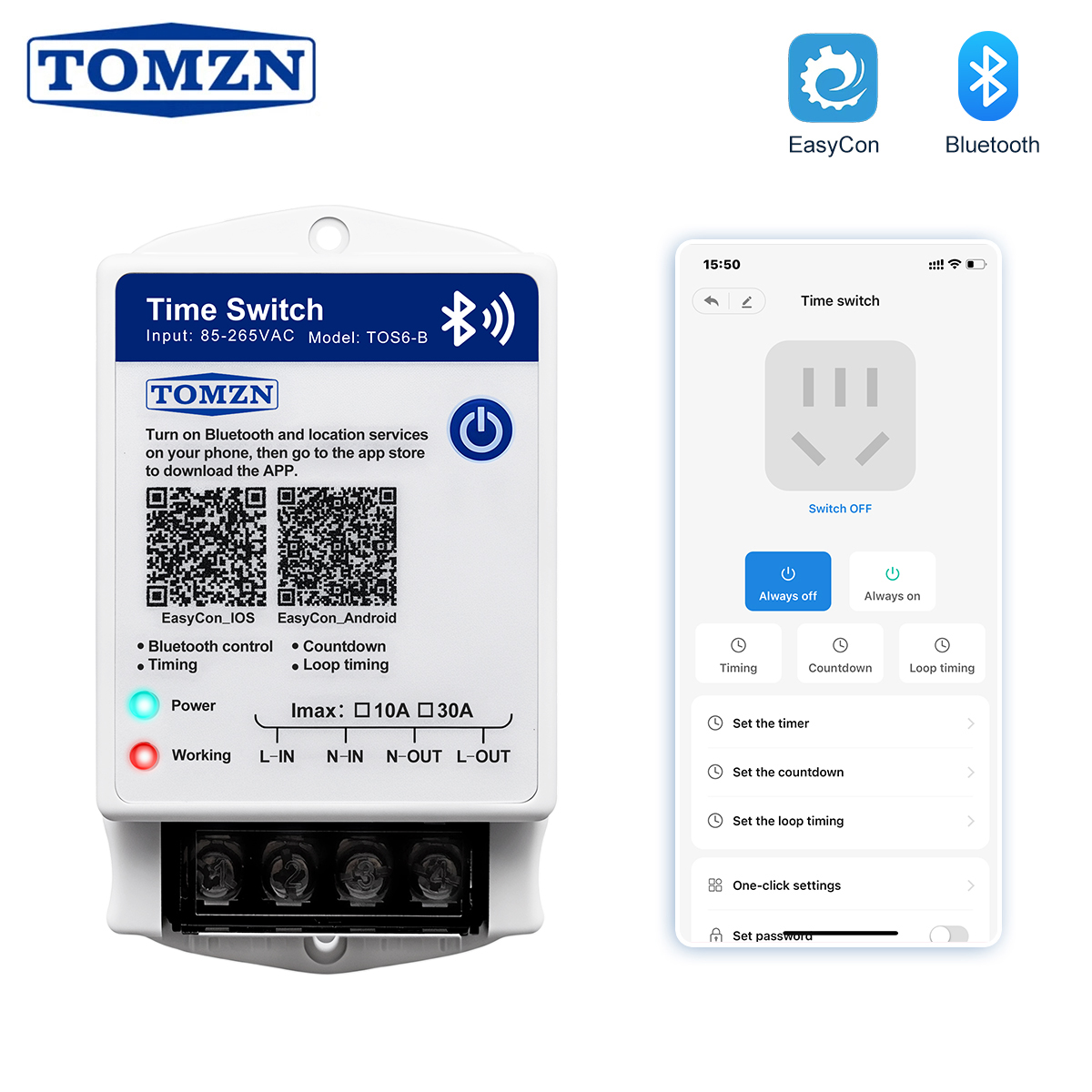
Field technicians often encounter harsh, confined operating conditions inside motor control centers (MCC). Modern procurement policies favor soft-starter models incorporating secure wireless commissioning links (Bluetooth Low Energy and NFC), like those in our TOS/TOMZN series. Maintenance personnel can upload ramp configurations, adjust initial torque thresholds, and review fault logs from a safe distance outside the arc flash boundary.
Procurement & Supply Chain Strategy
Global Procurement Outlook: Maximizing TCO & Vendor Qualification
Procurement directors and EPC project managers are revamping vendor qualification frameworks. In a macro-environment characterized by regional energy volatility, material shortages, and rising labour costs, equipment longevity and modular field repairability are critical to calculating accurate Total Cost of Ownership (TCO).
Holistic Capex vs. Lifecycle Opex
Specifying soft starters over oversized VFDs for constant-speed loads yields up to 60% initial equipment savings and eliminates the continuous 3% parasitic heat loss inherent to inverter filters.
Cluster Density: Liushi, Wenzhou
Sourcing directly from Liushi Town leverages an end-to-end industrial ecosystem where silver-nickel contacts, copper buses, and high-dielectric resins are processed locally, cutting component lead times.
Independent Third-Party Verification
Safeguard procurement contracts by insisting on verified factory audits (such as TÜV Rheinland on-site inspections) and authentic CE conformity documentation before placing volume purchase orders.
Manufacturer Profile
Why Partner with Zhejiang TMB Electric Co., Ltd.
Headquartered in Huabei Village, Liushi Town (Wenzhou, Zhejiang)—China’s recognized epicenter for advanced electrical apparatus—Zhejiang TMB Electric Co., Ltd. combines 24 years of manufacturing heritage with modern high-precision engineering. We support distributors, switchboard manufacturers, and EPC contractors across 100+ global markets.
24+
Years Manufacturing
5,700 m²
Verified Facility Floor
92+
Skilled Technical Staff
$3.3M
Verified Annual Export
TÜV Rheinland Assessed
Our complete factory infrastructure, staff competencies, and quality control systems are inspected and verified on-site by TÜV Rheinland.
Flexible B2B Sourcing (MOQ from 5 pcs)
We lower prototype qualification barriers by accepting low trial orders (from 5 units), scaling seamlessly to high-volume private label OEM/ODM production.
Rigorous 6-Stage QC Protocol
Every soft starter and modular controller undergoes optical incoming inspection, torque calibration, dielectric withstand, thermal imaging, dynamic burn-in, and final audit.
Procurement & Technical FAQ
Frequently Asked Questions by Global Engineering Buyers
Detailed engineering answers to the critical technical queries faced by panel builders, facility engineers, and sourcing directors.
What is the core engineering difference between choosing a Motor Soft Starter versus a Variable Frequency Drive (VFD)?
A soft starter manages voltage and current profiling during the start and stop transition phases (typically lasting 5 to 60 seconds). Once steady nominal RPM is achieved, the motor runs directly across the line, supported by an internal bypass. A VFD, by contrast, rectifies AC to DC and inverts it back to synthesize variable output frequencies continuously, providing continuous process speed control. For applications that require constant synchronous velocity (such as standard industrial pumps, chillers, blowers, and steady crushers), a soft starter is significantly more cost-effective (saving 60-70% in capital costs), eliminates dangerous harmonic distortion (zero THD after bypass engagement), and minimizes cabinet thermal footprints.
Can a solid-state soft starter provide starting torque for high-inertia loads like loaded ball mills or crushers?
Yes, provided the unit is sized appropriately and incorporates an advanced "Current Boost" or "Kickstart" algorithm. Heavy inertia loads often exhibit high static breakaway friction. Our high-tier soft starter models can inject a high-torque pulse (up to 400-500% current for 0.5 to 2 seconds) to break static friction, immediately settling into a linear current limit acceleration ramp. When sizing for heavy start conditions (Class 30 duty), the starter must be derated or upsized by one frame size relative to the motor nameplate rating.
Why is an internal or integrated bypass contactor preferred over an external bypass system?
Integrated bypass designs deliver three primary advantages: (1) Cabinet Footprint Optimization: They eliminate bulky external magnetic contactors, thermal relays, and interlocking wiring, reducing MCC panel space by up to 50%; (2) Thermal Elimination: Shunting line current around the SCR semiconductors drops heat generation by over 97%, eliminating costly cooling fans and enclosure air conditioners; (3) Microprocessor Synchronization: The internal controller precisely times contact closure at the exact millisecond of zero voltage differential, eliminating mechanical contact arcing and extending contact life.
How does Zhejiang TMB Electric ensure product compliance for international electrical markets?
Our production lines adhere strictly to ISO 9001 quality management procedures and international electrical standards, specifically IEC/EN 60947-4-2 (Low-voltage switchgear and controlgear – AC semiconductor motor controllers and starters). Catalog models feature authentic CE conformity, and our industrial facilities in Liushi Town undergo on-site physical auditing by TÜV Rheinland. Full dielectric withstand certificates, electromagnetic compatibility (EMC) test logs, and raw material declarations are available upon project specification.
What environmental derating factors must be considered during overseas project installation?
Solid-state electronics are sensitive to thermal ambient limits and atmospheric density. Standard soft starter ratings assume operating ambients between -10°C and +40°C at altitudes up to 1,000 meters above sea level. For operating temperatures exceeding 40°C (up to 60°C maximum), continuous current capacity should be derated by 1.2% to 1.5% per degree Celsius. For installations above 1,000 meters, thin air reduces heat sink convection efficiency; derate current capacity by 0.5% per 100 meters between 1,000m and 2,000m.
What custom OEM and ODM private label capabilities does the factory offer?
With complete in-house tooling, plastic injection moulding, automated SMT surface-mount lines, and laser engraving systems, Zhejiang TMB Electric delivers end-to-end customization. We support OEM laser-printed branding, customized industrial packaging, tailored voltage tolerances (e.g., 208V, 400V, 480V, 690V systems), customized Modbus/Profibus communication firmware, and specialized IP-rated distribution enclosures matching your exact regional brand guidelines.
Initiate Your Engineering Consultation & OEM RFP
Send our senior engineering team your motor load curves, single-line diagrams, or target procurement specifications. We provide detailed sizing calculations, compliance certificates, and commercial quotations within 24 business hours.