Flagship Surge Protection & Intelligent Circuit Controls
Standardized DIN-rail installations designed for PV renewable strings, industrial control panels, commercial infrastructure, and residential electrical switchboards.
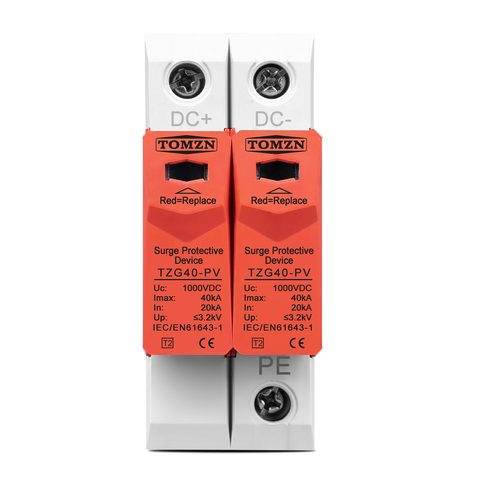
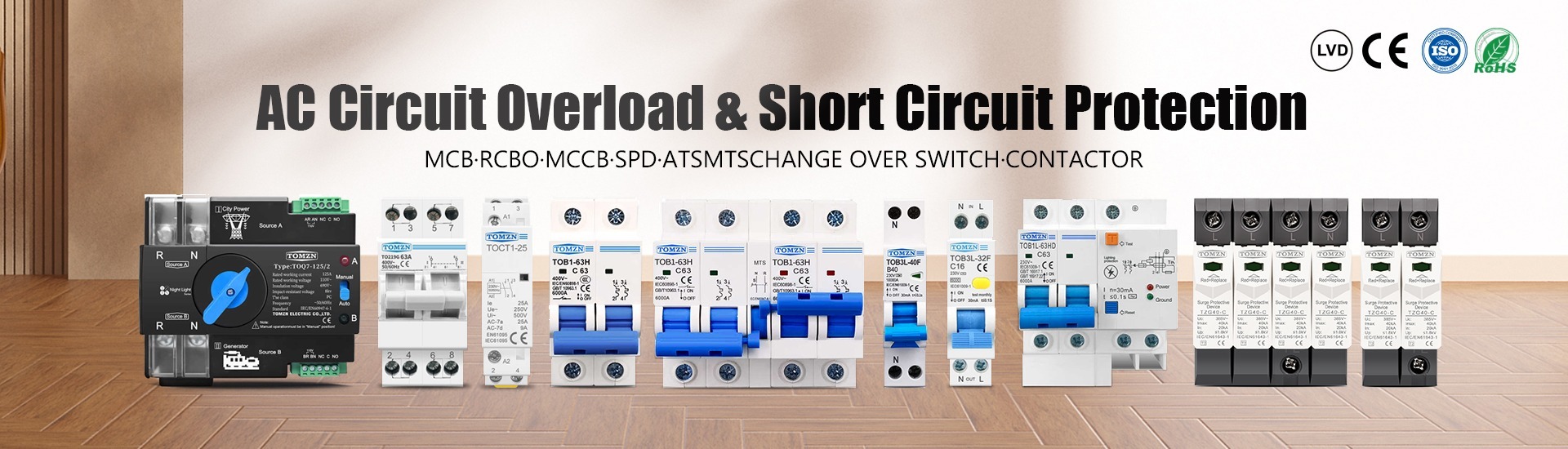
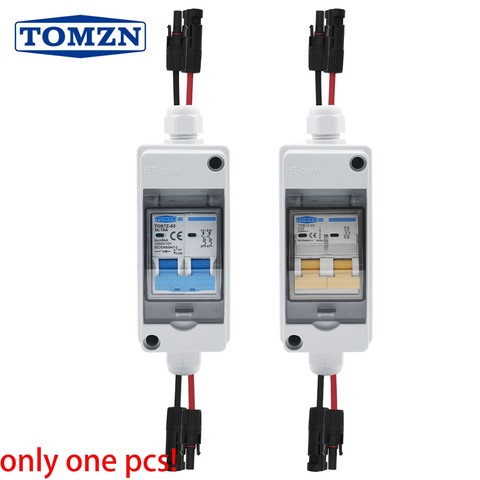
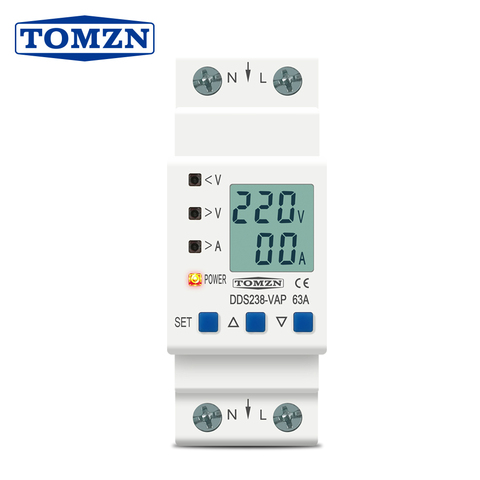



Engineering Whitepaper: Surge Protective Devices (SPD) in High-Transient Environments
In contemporary power distribution architecture, transient overvoltages—caused by indirect atmospheric lightning discharges, utility switching operations, inductive motor load collapses, and grid disturbances—represent the primary cause of premature solid-state hardware failure. Zhejiang TMB Electric Co., Ltd. designs and manufactures high-performance Surge Protective Devices (SPDs) compliant with IEC 61643-11 (low-voltage AC power distribution networks) and EN 50539-11 / IEC 61643-31 (dedicated solar photovoltaic installations).
Our core transient suppression methodology leverages high-energy Metal Oxide Varistors (MOVs) matched with high-discharge Gas Discharge Tubes (GDT). Under normal steady-state operating voltages ($U_c$), the SPD presents an exceptionally high impedance state, minimizing continuous leakage current ($I_{pe} < 20\,\mu\text{A}$). When a microsecond transient surge enters the primary line, the MOV transitions to a low-resistance conduction pathway within 25 nanoseconds, diverting the destructive lightning impulse energy directly to ground while maintaining a clamping voltage protection level ($U_p$) strictly below the dielectric insulation threshold of sensitive downstream terminal controllers, inverter boards, and digital automation electronics.
Thermal Disconnection & Arc Control
Every modular cartridge features a precision spring-loaded thermal release mechanism calibrated to detach the MOV element in the event of persistent end-of-life overvoltage, completely eliminating thermal runaway and fire risks.
DC Zero-Crossing Arc Extinction
Because direct current lacks the natural sinusoidal zero-crossing voltage point found in alternating current, our DC PV SPDs incorporate physical barrier insulation and rapid-break geometries to prevent sustained ionization arcing at up to 1000V DC.
Remote Telemetry Signal Ports
Integrated 3-pin dry contacts (NO/NC) provide centralized PLC and SCADA signaling interfaces, automatically alerting operations managers to surge module degradation or trip conditions across decentralized facilities.
Global Procurement Analysis & SPD Selection Framework
Selecting the optimal surge protective device involves balancing localized lightning stroke probability (isokeraunic level), system configuration (TN-S, TN-C, TT, IT, or floating PV DC), and upstream fault withstand capabilities. Enterprise B2B purchasers must confirm four foundational parameters to prevent catastrophic field misapplications:
| Protection Class / SPD Type | Standard Waveform Target | Nominal Ratings ($I_n$ / $I_{imp}$) | Primary Installation Location | Core Application Systems |
|---|---|---|---|---|
| Type 1 / Class I (Primary) | 10/350 $\mu\text{s}$ (Direct Lightning) | $I_{imp} \ge 12.5\text{kA}$ - $25\text{kA}$ per pole | Main incoming service entrance boards | Structures equipped with external lightning rods |
| Type 2 / Class II (Secondary) | 8/20 $\mu\text{s}$ (Induced Surge) | $I_n: 20\text{kA}$ | $I_{max}: 40\text{kA}$ - $65\text{kA}$ | Sub-distribution boards, combiner boxes | PV solar inverters, residential distribution, HVAC |
| Type 3 / Class III (Terminal) | 1.2/50 $\mu\text{s}$ + 8/20 $\mu\text{s}$ Combination | $U_{oc} \le 10\text{kV}$ | $I_n \approx 3\text{kA}$ - $5\text{kA}$ | Direct terminal socket / control enclosure | Sensors, PLC hardware, medical & telecom racks |
| Photovoltaic DC SPD | 8/20 $\mu\text{s}$ (DC PV Transient) | $U_{cpv}: 500\text{V}$ / $600\text{V}$ / $1000\text{V}$ DC | DC side of inverter, PV string combiner | Utility-scale solar farms, commercial C&I arrays |
Common Procurement Pitfall: Procuring Type 2 surge protectors with an inadequate Maximum Continuous Operating Voltage ($U_c$). In regions characterized by unstable grids or floating neutral returns, nominal AC 230V systems frequently experience temporary overvoltages (TOVs) reaching 280V–300V. Utilizing an SPD rated strictly at $U_c = 275\text{V}$ triggers continuous conduction during TOV events, resulting in accelerated varistor degradation. We advise standardizing procurement specifications on $U_c \ge 385\text{V}$ AC for developing industrial regions to maximize component longevity.
Future Technology Trajectories: Next-Generation Surge Suppression
The global surge protective device manufacturing landscape is shifting from passive sacrificial consumables toward proactive, digitized protection systems. TMB Electric invests directly into ongoing R&D to lead four industry-defining trends:
1. Intelligent Degradation Prognostics
Traditional visual status flags (Green = Normal, Red = Replace) require physical inspection. Next-generation smart SPDs incorporate micro-sensing circuits measuring high-frequency leakage currents ($I_{pe}$) and lightning impulse strike counts, transmitting health metrics via RS-485 Modbus or Zigbee/WiFi to cloud SCADA platforms.
2. Ultra-High Voltage Solar & BESS Architecture
With utility-scale solar farms transitioning to 1500V DC and commercial Battery Energy Storage Systems (BESS) scaling past 1200V, transient protection requirements demand multi-stage dynamic series MOV structures capable of interrupting massive prospective short-circuit currents without collateral catastrophic failure.
3. Eco-Friendly Non-Toxic Ceramic Varistors
Aligning with RoHS and REACH initiatives, our metallurgy team continuously refines lead-free zinc oxide ceramic formulations, improving energy absorption density per cubic millimeter while reducing chemical refining emissions during raw ingot production.
Why Global Buyers Partner with Zhejiang TMB Electric Co., Ltd.
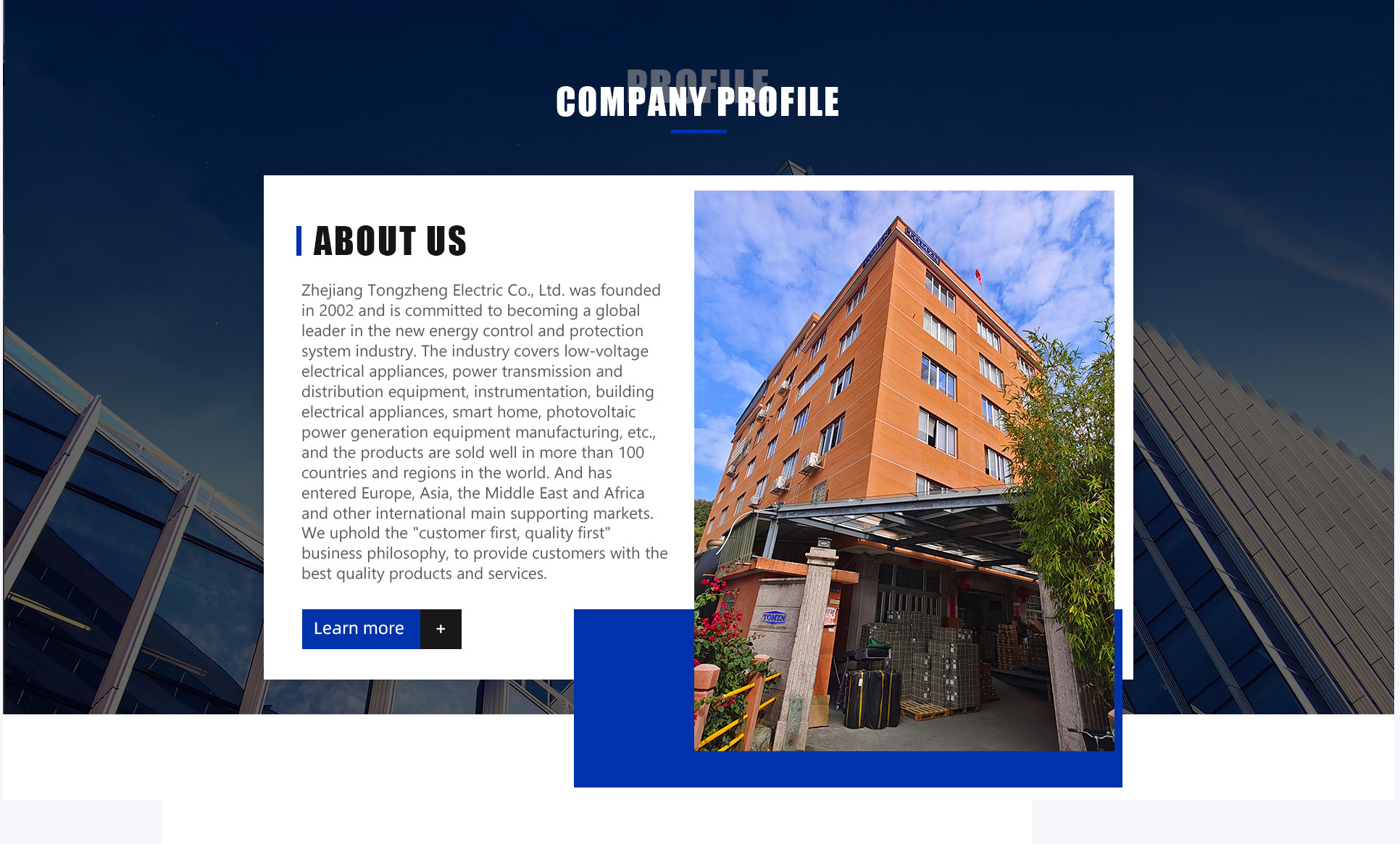
Located in Huabei Village, Liushi Town, Wenzhou—recognized globally as China’s low-voltage electrical manufacturing capital—our factory leverages 24 continuous years of industrial production agility. We manage complete supply chains internally, from tooling stamping and silver-alloy electrical contact welding to flame-retardant PA66 plastic injection molding.
- TÜV Rheinland On-Site Assessed: Rigorously verified facilities, production capabilities, engineering personnel, and export compliance.
- Complete Traceability & Testing: In-house impulse current generators (8/20 $\mu\text{s}$), thermal calibration testing rigs, and automated dielectric breakdown testers.
- Ultra-Low Initial MOQ: Catalog models begin at an accessible 5-piece minimum order quantity, enabling EPCs and distributors to evaluate quality with low risk.
- Bespoke OEM/ODM Customization: Custom enclosure silk-screening, custom $U_c / I_n$ combinations, and tailored solar combiner box internal configurations.
Frequently Asked Questions (Procurement FAQ)
Direct technical answers to common engineering, logistical, and selection queries from international buyers.
Q1: Why is an AC surge protector strictly prohibited on DC solar PV strings?
AC current passes through a zero-crossing voltage point 100 or 120 times every second, which facilitates arc self-extinction when an internal MOV disconnects. Direct current possesses continuous voltage without zero-crossing. If an AC-rated SPD attempts to disconnect on a 600V or 1000V DC solar array, a sustained high-energy plasma arc will ignite inside the housing, destroying the combiner box and presenting a major fire hazard. PV strings must solely use specialized DC SPDs conforming to EN 50539-11 or IEC 61643-31.
Q2: What is the technical difference between $I_n$ (Nominal Discharge Current) and $I_{max}$ (Maximum Discharge Current)?
$I_n$ designates the peak crest value of an 8/20 $\mu\text{s}$ impulse wave that the surge arrester can safely conduct at least 15 consecutive times without failure or shifting its clamping voltage. $I_{max}$ represents the singular, ultimate catastrophic surge threshold the device can withstand exactly once before safe end-of-life disconnect. In structural specifications, system designers should reference $I_n$ to evaluate operational lifespan and $I_{max}$ to judge safety headroom.
Q3: Should an external backup fuse or MCB be connected upstream of an SPD?
Yes. When an MOV reaches its end of operational life or is subjected to an anomalous surge exceeding its dissipation capacity, it degrades into a permanent short-circuit fault before thermal disconnection completes. Upstream backup fuses or dedicated miniature circuit breakers quickly isolate the failed SPD branch from the primary distribution busbar, preventing main breaker trips and maintaining continuous system uptime.
Q4: How does lead length impact the actual protection level ($U_{prot}$) during surge events?
Under rapid microsecond lightning impulses ($di/dt$), wire inductance ($L \approx 1\,\mu\text{H}/\text{m}$) generates substantial inductive voltage drops ($\Delta U = L \times di/dt$). Every additional meter of connection conductor can add over 1,000V of residual voltage to the load. To maintain the manufacturer’s stated protection level ($U_p$), international wiring codes mandate keeping the total cumulative conductor loop length (line-to-SPD + SPD-to-earth) below 0.5 meters (the "V-wiring" or 50cm rule).
Q5: Can TMB Electric supply custom-branded OEM surge protection units?
Yes. As a verified direct factory, we provide complete OEM/ODM solutions including custom pad printing of client logos, localized barcode carton packaging, custom modular body colors, and specialized thermal trip calibration matched to extreme climatic environments (e.g., equatorial high-temperature installations).
Q6: What certifications, factory audits, and compliance documentation are provided?
Our production facilities maintain complete on-site supplier verification reports issued by TÜV Rheinland. Catalog products carry authentic CE declarations, RoHS compliance documentation, and type-test reports verifying discharge current limits, insulation resistance, and dielectric withstand capabilities upon buyer request.
Ready to Secure Your System with World-Class Surge Protection?
Consult with our senior low-voltage electrical engineers. We deliver comprehensive single-line diagram reviews, fast-turnaround sample dispatches, and factory-direct volume pricing.
Get a Quote