Precision Power Transfer, Timing & Circuit Protection Systems
Discover our high-reliability DIN-rail manual and dual-power switching controls, digital time switches, and heavy-duty circuit protection engineered for seamless utility-generator interchange.
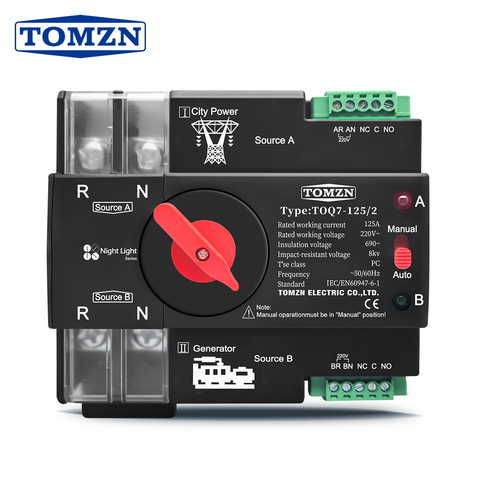
Dual Power DIN-Rail Transfer Switch (Manual / Auto Selector)
- Rated Voltage: AC 220V / 230V
- Current Range: 63A / 100A / 125A
- Pole Options: 2P / 3P / 4P
- Compliance: IEC 60947-6-1 / CE
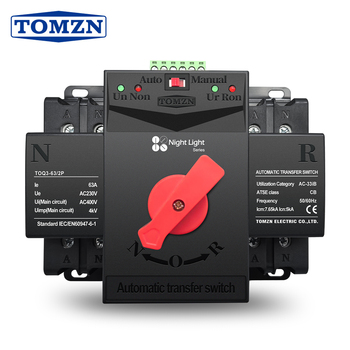
TOQ3 Series 2P Interlocking Changeover Switch (MCB Style)
- System Type: Single Phase AC
- Rated Current: 63A - 125A
- Indicator: Integrated Pilot Light
- Mechanical Life: > 8,000 Cycles
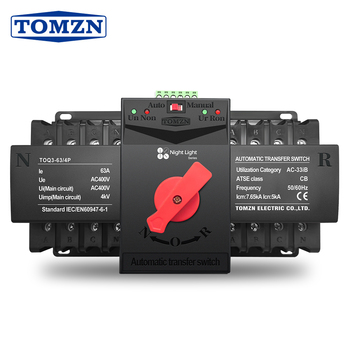
TOQ3 4P 3-Phase Manual / Automatic Transfer Switch 400V
- Neutral Pole: Switched Neutral (4P)
- Rated Insulation: Ui 690V
- Frequency: 50Hz / 60Hz
- Mounting: Standard 35mm DIN-Rail
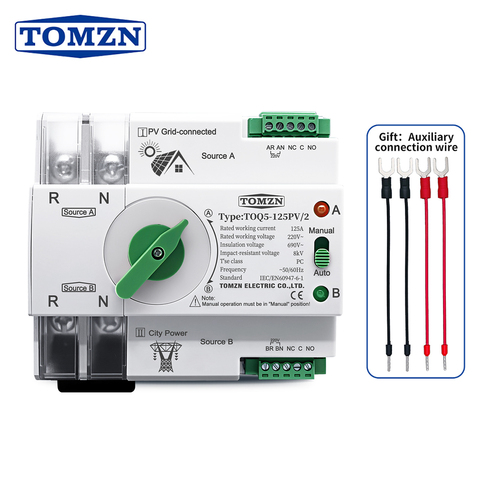
Grid-to-Inverter Manual/Auto Changeover Switch for Solar BESS
- Target Loads: Solar Hybrid / Grid Inverter
- Transition Type: Break-Before-Make (Open)
- Rated Voltage: 110V / 230V Options
- Flame Retardancy: UL94-V0 Housing
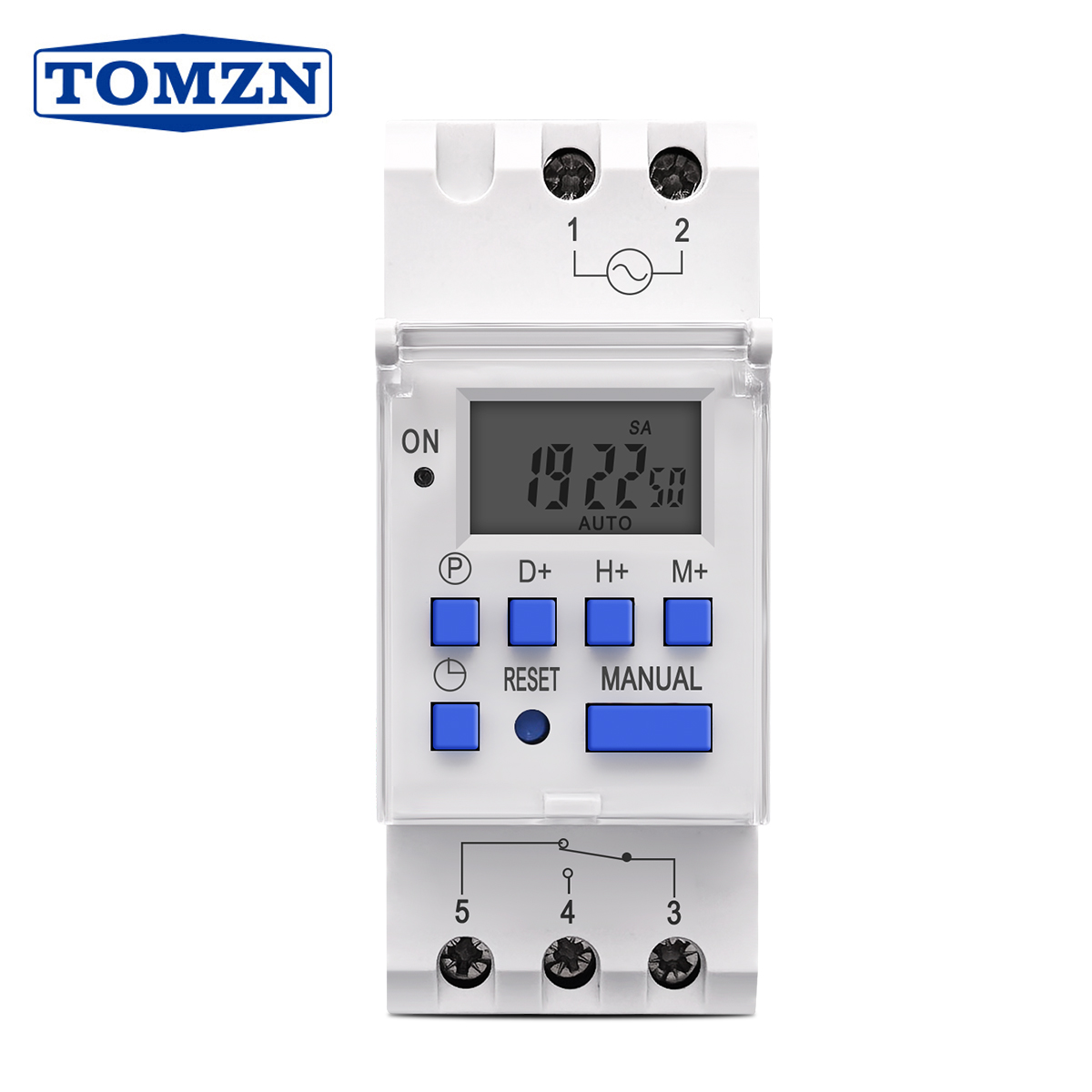
TOMZN 1NO 1NC DIN Rail Weekly 7-Day Digital Time Switch Relay
- Voltage: AC 220V/230V, 12V-48V
- Switching Capacity: 16A Resistive
- Memory Backup: Built-in Lithium Battery
- Contact: 1NO + 1NC Microswitch
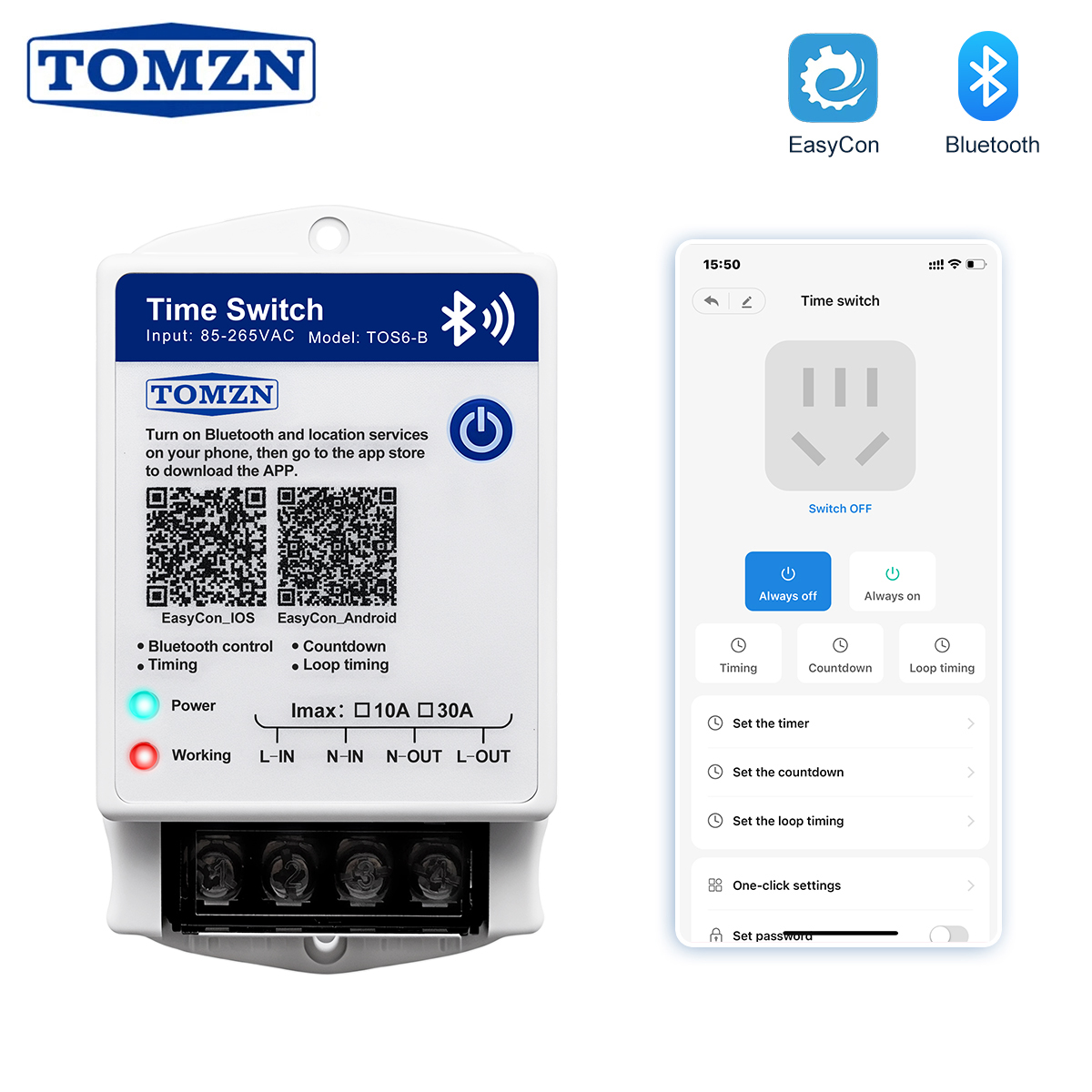
TOMZN Bluetooth Smart Timer Switch 85-265VAC (10A / 30A)
- Connectivity: Bluetooth EasyCon App
- Programs: 28 Group Timing Loops
- Current Range: 10A / 30A Heavy Load
- Installation: Wall-Mount / DIN Rail
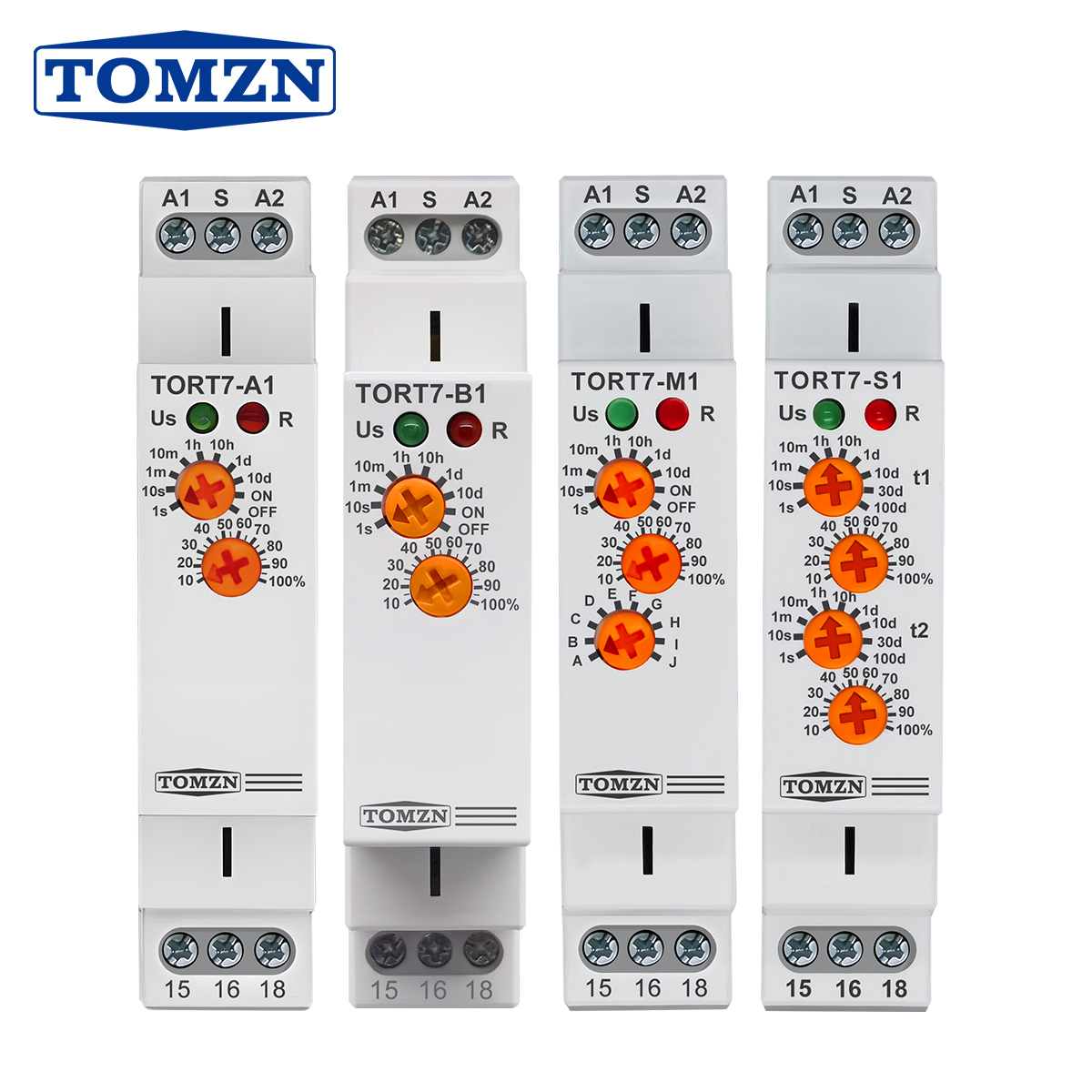
TORT7 10-in-1 Multi-Function Delay Timer Relay (0.1s - 10 Days)
- Functions: 10 Selectable Modes
- Timing Range: 0.1 Second to 10 Days
- Application: Generator Start/Stop Delay
- Mounting: Standard 35mm Rail
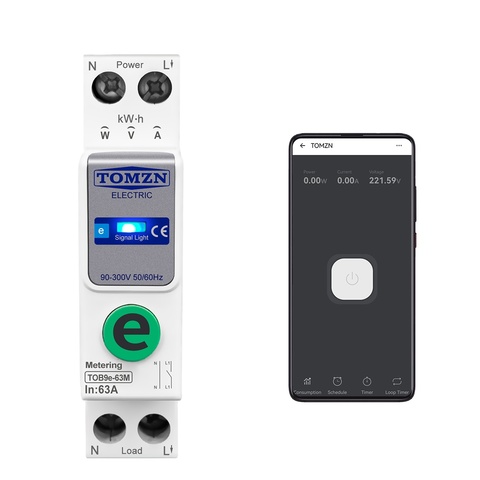
TOB9e-63M Smart Circuit Breaker with Real-Time Energy Metering
- Control: WiFi App Remote Switching
- Telemetry: Voltage, Current, kWh, Power
- Protection: Overload & Short Circuit
- Compatibility: Smart Home & Solar Boards
Comprehensive Technical Sourcing Guide: Manual Transfer Switches (MTS)
In low-voltage electrical distribution, a Manual Transfer Switch (MTS) serves as a life-safety critical power interface, engineered to switch an electrical load between two independent sources—typically primary utility power and an emergency standby source such as a diesel generator, solar photovoltaic (PV) inverter system, or Battery Energy Storage System (BESS). Unlike an Automatic Transfer Switch (ATS) that employs internal microprocessor logic and motorized mechanisms to switch sources autonomously, a manual transfer switch requires human intervention to initiate the transfer process. This physical operational protocol provides absolute operational security, prevents unintended backfeeding, and eliminates phantom tripping caused by momentary voltage transients.
For international procurement directors, electrical EPCs, and panel builders sourcing from China, manual transfer switches represent a strategic balance of cost efficiency, long-term durability, and electrical isolation integrity. By utilizing modular DIN-rail MCB-style interlocking changeover switches or heavy-duty rotary knife-blade transfer switches, installation engineers can guarantee galvanic isolation between grid conductors and backup generation feeds, strictly satisfying international electrical installation regulations including IEC 60947-6-1, IEC 60947-3, and NEC Article 702.
Core Structural Topology: Open Transition (Break-Before-Make) Architecture
The standard topology executed across industrial-grade manual transfer switches manufactured in China is the Open Transition or Break-Before-Make (BBM) architecture. In this design, the switch contacts connecting the primary power source must mechanically open and extinguish any associated electric arc before the secondary source contacts are allowed to close. This critical millisecond interruption window eliminates any possibility of parallel interconnection or out-of-phase cross-conduction between the commercial power utility and an asynchronous localized power generator.
Key mechanical safeguards embedded in top-tier Chinese MTS designs include: Dual-Cam Mechanical Interlocking to physically obstruct simultaneous conduction, Deionizing Splitter Arc Chutes capable of absorbing intense inductive switching arcs, and Silver-Tin-Oxide (AgSnO₂) Contact Rivets that exhibit high welding resistance and minimal thermal erosion over thousands of operational duty cycles under full rated load.
| Switch Technology | Transition Method | Typical Applications | Neutral Conductor Handling | Safety Interlock Mechanism |
|---|---|---|---|---|
| DIN-Rail Modular MTS (MCB Style) | Break-Before-Make (BBM) | Residential boards, small commercial backup, telecom shelters (16A - 125A) | Switched Neutral (2P for 1-phase, 4P for 3-phase) | Sliding toggle interlock bar or mechanical cross-lever preventing dual ON states |
| Rotary Cam Changeover Switch | Break-Before-Make (Center OFF 1-0-2) | Industrial control panels, HVAC motor switching, genset changeover (25A - 630A) | Simultaneous 3P+N switching or advanced overlapping neutral pole | Rotary detent lock with padlockable handle to lock in the OFF (0) position |
| Heavy-Duty MCCB Interlocked MTS | Break-Before-Make with Overcurrent Trip | Commercial distribution centers, microgrid feeds, mining distribution (100A - 1600A) | Dedicated 4-pole fully rated neutral switching | Internal steel cable interlock or rigid steel mechanical linkage between MCCB frames |
| Bypass-Isolation Manual Switch | Dual-path Break-Before-Make | Critical healthcare facilities, tier-3/4 data centers, emergency pumping | Overlapping neutral to eliminate system earth reference float during bypass | Dual key-interlock systems with electrical status interlock microswitches |
Future Sourcing & Technology Trends in Manual Transfer Systems
How distributed renewable integration, microgrid architectures, and global electrification are reshaping the specification of transfer switching equipment.
Hybrid Solar PV & BESS Synchronization
The global surge in residential and industrial photovoltaic energy storage systems (BESS) has transformed transfer switch procurement. Modern buyers no longer specify manual switches purely for diesel generator backup; they demand specialized MTS units engineered for high DC and AC bidirectional inductive switching. As battery inverters operate in off-grid islanding modes, manual switches require high-speed arc chutes and robust mechanical interlocks to handle rapid shifts in reactive load profiles without contact pitting or welding.
IoT Telemetry & Auxiliary Status Monitoring
While the physical actuation of a manual switch remains human-operated for failsafe compliance, modern industrial purchasers increasingly specify integrated auxiliary contacts (1NO + 1NC) and micro-switch telemetry. These embedded sensors interface with building automation systems (BMS), SCADA, or remote IoT gateways via Modbus RS485 or wireless protocols, transmitting real-time switch handle position, line voltage presence on both sources, and operational cycle logging to dispatch maintenance teams promptly.
Stringent Switched Neutral (4-Pole) Standardization
Procurement standards worldwide (especially in Europe, Australia, and Africa) are transitioning strictly toward 4-Pole (4P) switched neutral transfer switches for three-phase installations. In systems utilizing separately derived standby generators or hybrid inverters with localized earth electrodes, switching the neutral conductor is mandatory to eliminate circulating ground currents, neutral harmonic distortion, and spurious tripping of upstream Residual Current Devices (RCDs) and Earth Fault relays.
Direct Factory Manufacturing from China's Electrical Capital
Zhejiang TMB Electric Co., Ltd. is a specialized electrical protection and power switching manufacturer situated in Huabei Village, Liushi Town, Wenzhou—universally recognized as the hub of China’s low-voltage electrical apparatus industry. With over 24 continuous years of precision design and production expertise, we provide global B2B clients with uncompromised engineering quality, full supply chain transparency, and direct manufacturing agility.
- Liushi Cluster Supply Chain Dominance: High-purity electrolytic copper stamping, silver contact alloy brazing, thermosetting flame-retardant moldings, and precision toolmaking sourced within a 5km radius for rapid prototyping and unmatchable unit cost efficiency.
- TÜV Rheinland Assessed Facility: On-site verified 5,700 m² modern manufacturing infrastructure with 92 highly trained assembly technicians and certified quality management systems.
- Agile OEM & ODM Customization: Low trial order thresholds (MOQ starting from only 5 pieces for standard catalog models), custom laser private labeling, multi-voltage coil ratings, and specialized pre-wired IP65 distribution box enclosures.
Verified Supplier Audit Data
- Operating Entity: Zhejiang TMB Electric Co., Ltd.
- Verification Body: TÜV Rheinland (On-site Assessed)
- Manufacturing History: 24 Years (Since Inception)
- Floorspace Area: 5,700 m² Industrial Base
- Annual Export Value: US$ 3,304,733 (Verified)
- Export Experience: 10+ Years Global Distribution
- Compliance Standards: CE Marking, IEC 60947 Series
- Testing Capabilities: Dielectric, Trip Curve & Temperature Rise
Frequently Asked Questions for Sourcing Manual Transfer Switches
Addressing the core electrical engineering, certification, and commercial inquiries raised by international procurement managers before placing volume purchase orders.
1. How does a Manual Transfer Switch (MTS) differ fundamentally from an Automatic Transfer Switch (ATS) in life-safety and microgrid applications?
While an ATS utilizes electronic voltage-sensing relays, timing microcontrollers, and motor/solenoid actuators to transition between sources automatically upon detecting utility failure, a Manual Transfer Switch relies entirely on deliberate physical mechanical actuation by authorized personnel. This fundamental operational difference yields distinct engineering advantages: an MTS has zero standby control power draw, is 100% immune to electronic control board failure during severe lightning surges or EMP events, and prevents an undersized backup generator from being accidentally shocked by massive inductive inrush currents before heavy non-critical loads have been manually shed.
2. Why is a 4-Pole (4P) manual transfer switch required over a 3-Pole (3P) switch in three-phase generator backup systems?
Choosing between 3P and 4P hinges on the system earthing topology (TN-S, TN-C-S, or TT). If the standby generator is configured as a "Separately Derived System" with its own dedicated earth pit and neutral-ground bonding strap, a 4-Pole switch is strictly mandatory. Using a 3P switch maintains a solid uninterrupted neutral connection back to the public utility transformer. This shared neutral condition creates dual neutral-to-ground paths, causing dangerous circulating neutral currents in the earth conductor, invalidating ground-fault protection (GFP) relays, and causing upstream RCD breakers to trip spuriously.
3. What breaking capacity and short-circuit withstand ratings should be specified for DIN-rail modular transfer switches?
When procuring modular DIN-rail MCB-type transfer switches (such as our 63A to 125A ratings), buyers must evaluate both the Rated Ultimate Short-Circuit Breaking Capacity (Icu) and the Rated Short-Time Withstand Current (Icw) per IEC 60947-2 or IEC 60947-6-1. Our MCB-style interlocking switches feature breaking capacities of 6kA to 10kA at 230V/400V AC. In panel locations where prospective fault currents exceed 10kA, back-up overcurrent protection via fast-acting HRC fuses or upstream molded case circuit breakers (MCCB) must be coordinated in accordance with manufacturer cascading tables.
4. What quality controls prevent contact welding and terminal overheating under continuous full-load operating conditions?
Contact welding and high-resistance terminal hotspots are the leading failure modes of sub-standard transfer switches. At Zhejiang TMB Electric, we enforce rigorous component engineering: all current-carrying paths are fabricated from 99.9% T2 electrolytic copper with electro-tin plating to prevent oxidation. Switching contacts utilize Silver-Tin-Oxide (AgSnO₂) composite rivets that resist thermal vaporization under arcing conditions. Furthermore, our terminal clamps are constructed with high-tensile steel frame cages capable of withstanding minimum tightening torques of 2.5 N·m to 3.5 N·m, preventing cable relaxation during thermal expansion cycles.
5. What are the minimum order quantities (MOQ), OEM labeling options, and factory delivery lead times?
To support distributors, system integrators, and testing laboratories, we maintain a flexible trial MOQ starting from only 5 units for standard catalog models (and single sample units for programmable time relays). For volume distribution orders, we provide turnkey OEM services including custom silk-screen or laser logo marking, customized multilingual retail packaging, tailored DIN-rail distribution enclosures (IP65 waterproof combinations), and custom amperage configurations. Standard catalog shipments dispatch within 7-15 business days, while customized OEM production runs generally deliver within 20-30 days FOB Ningbo/Shanghai.
6. Can your manual transfer switches be integrated directly into outdoor IP65 waterproof combiner boxes for off-grid PV installations?
Yes. We engineer factory-assembled, pre-wired HT-series outdoor waterproof distribution boxes (available in 5, 8, 12, 15, 18, and 24-way modular widths) pre-fitted with our manual changeover switches, AC/DC surge protective devices (SPD), and over/under voltage protection relays. These pre-packaged transfer assemblies eliminate field wiring errors, reduce on-site labor overhead for solar contractors by up to 60%, and feature UV-stabilized, impact-resistant ABS/polycarbonate enclosures rated to IP65 waterproof standards.
Ready to Optimize Your Power Transfer Switch Supply Chain?
Connect directly with our engineering sales specialists in Wenzhou, China. Submit your single-line diagram, technical specifications, or custom OEM branding criteria for an instant commercial quotation and complete technical compliance dossier.