Engineered Smart Protection & Precision Timing Modules
Tested under rigorous IEC 60947-2 & IEC 60898-1 international standards. Optimized for residential automation, industrial switchboards, and solar microgrids.
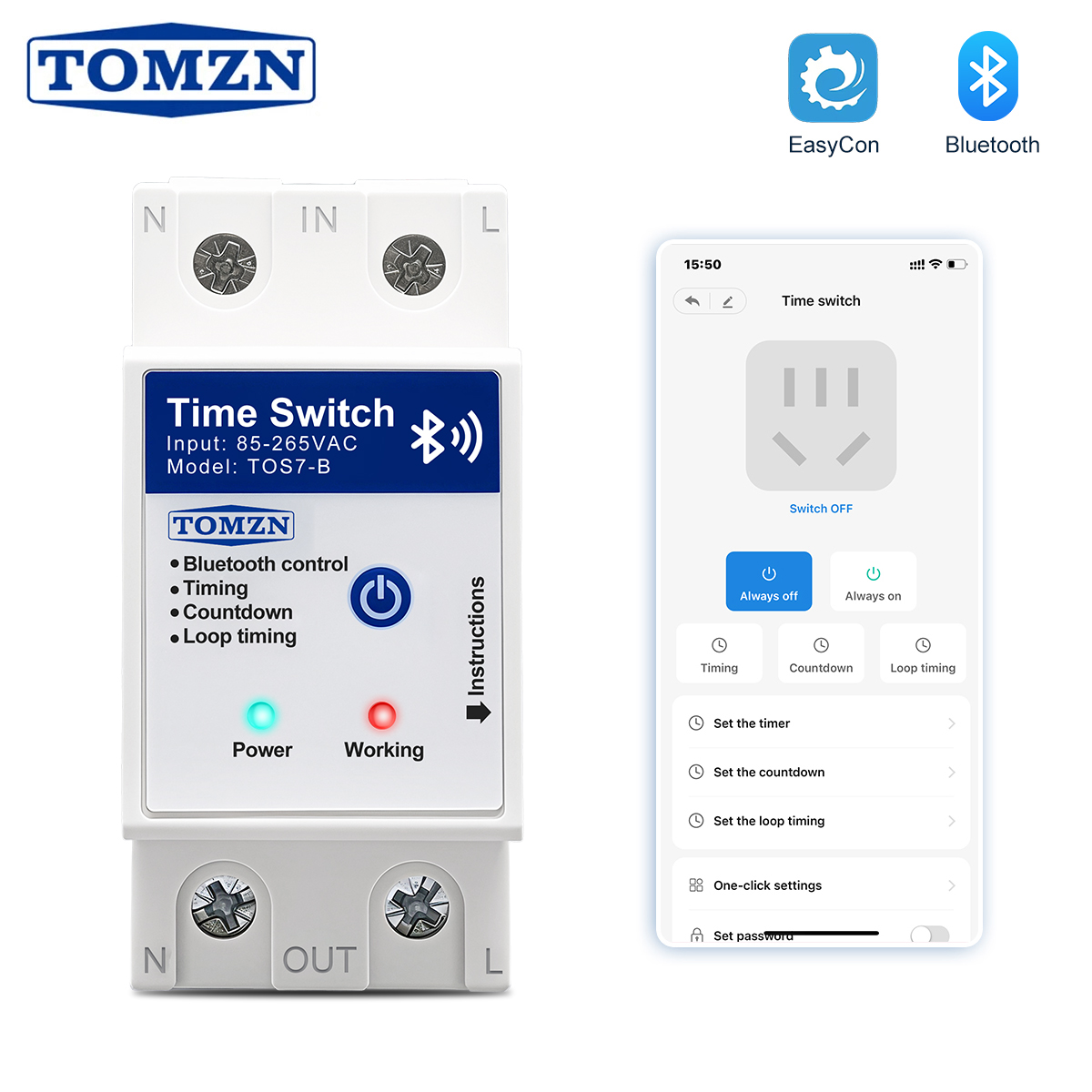
TOMZN TOS7-B Bluetooth Smart Timer Switch 40A 63A 85-265V EasyCon App Remote Control DIN Rail Countdown 28 Groups Timing Loop
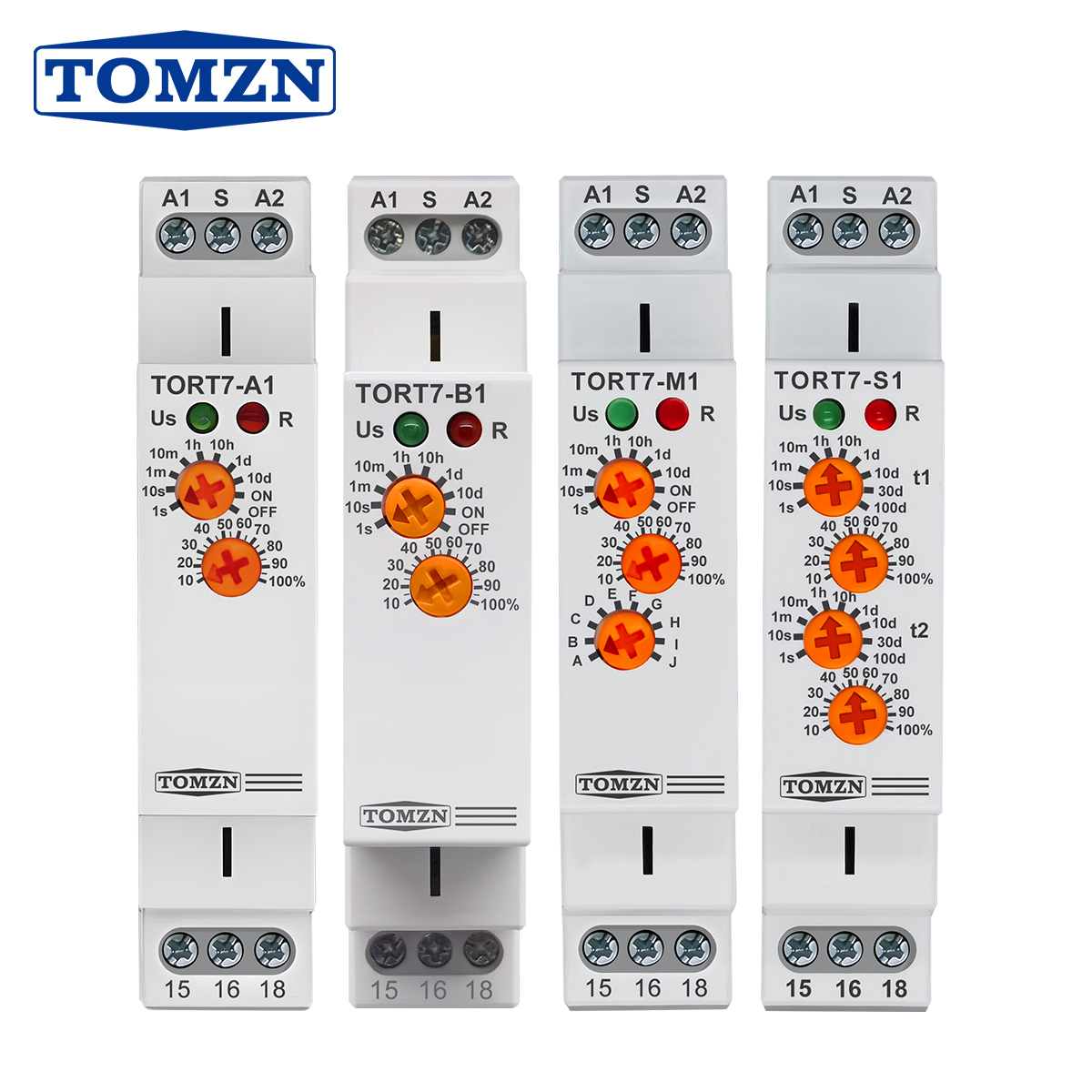
TORT7 Series Delay-ON Delay-OFF 10in1 Asymmetric Cycler Time Relay Multi-function Timer Switch 0.1S-10D Pulse Generator Interval
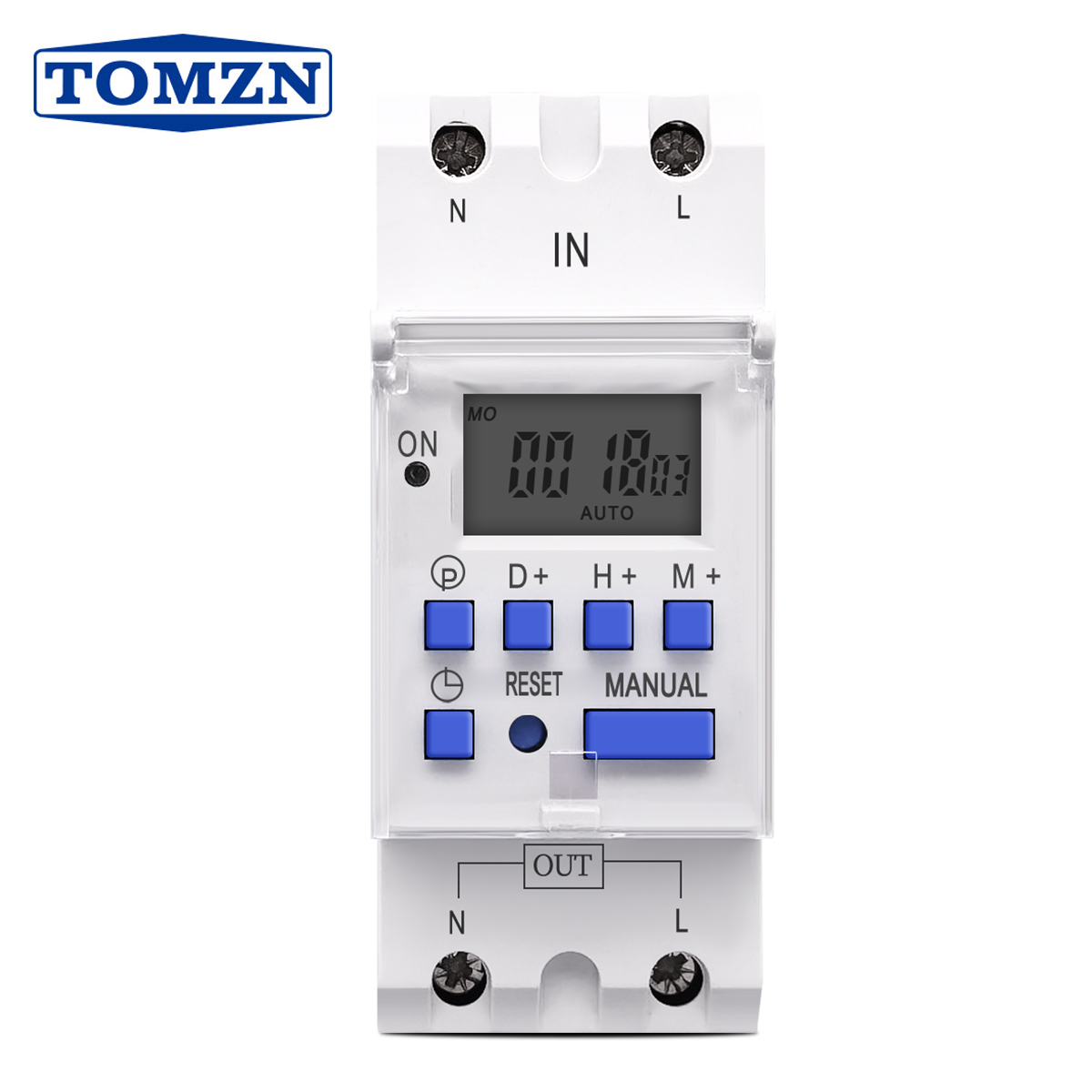
TOMZN New Type Din Rail Single Phase Weekly 7 Days Programmable Digital TIME SWITCH Relay Timer AC 220V 230V 12V 24V 48V 16A
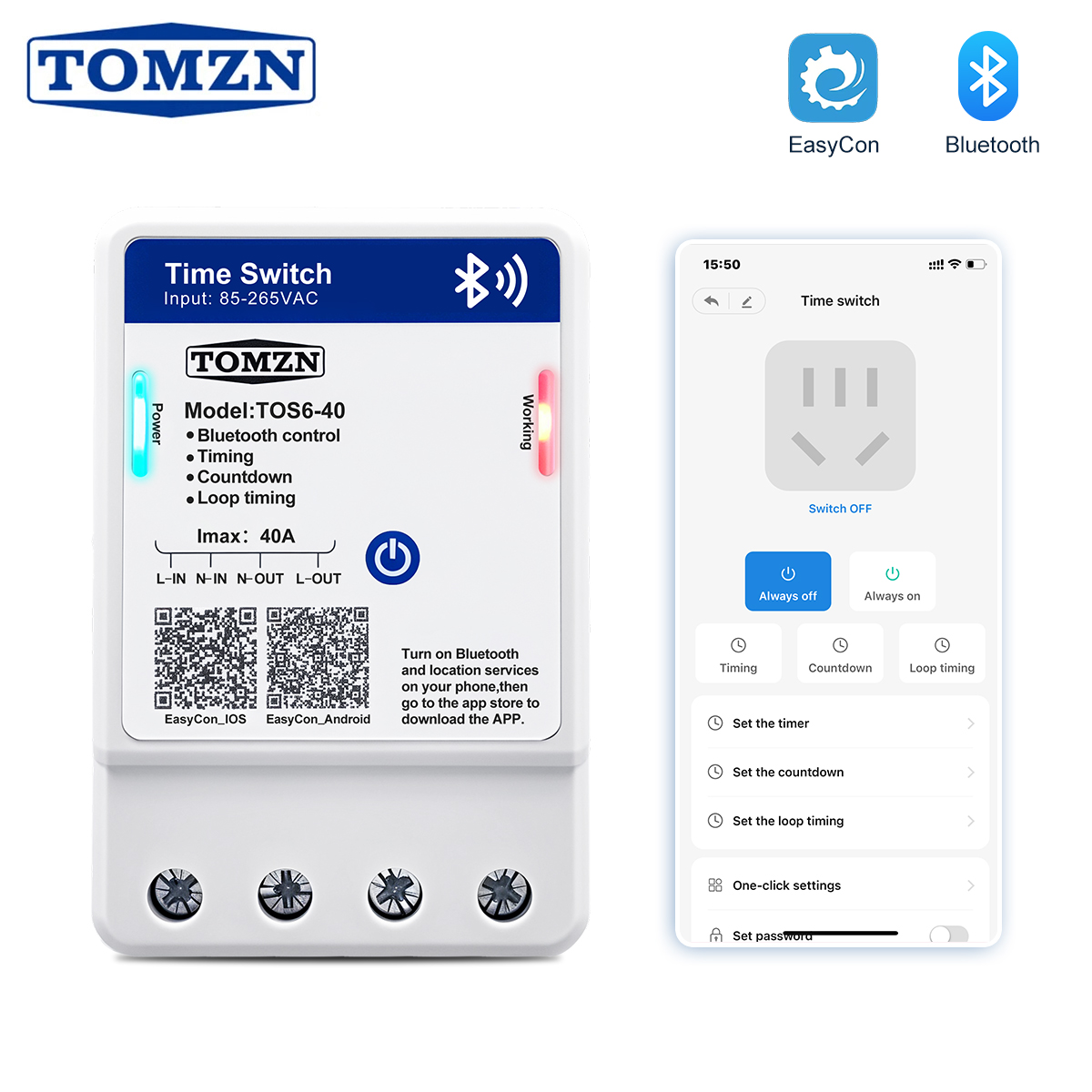
TOS6-40 Bluetooth Time Control Switch 35mm DIN Rail Wall-mounted Timing Countdown Loop Timing AC85-265V 40A Tomzn Official
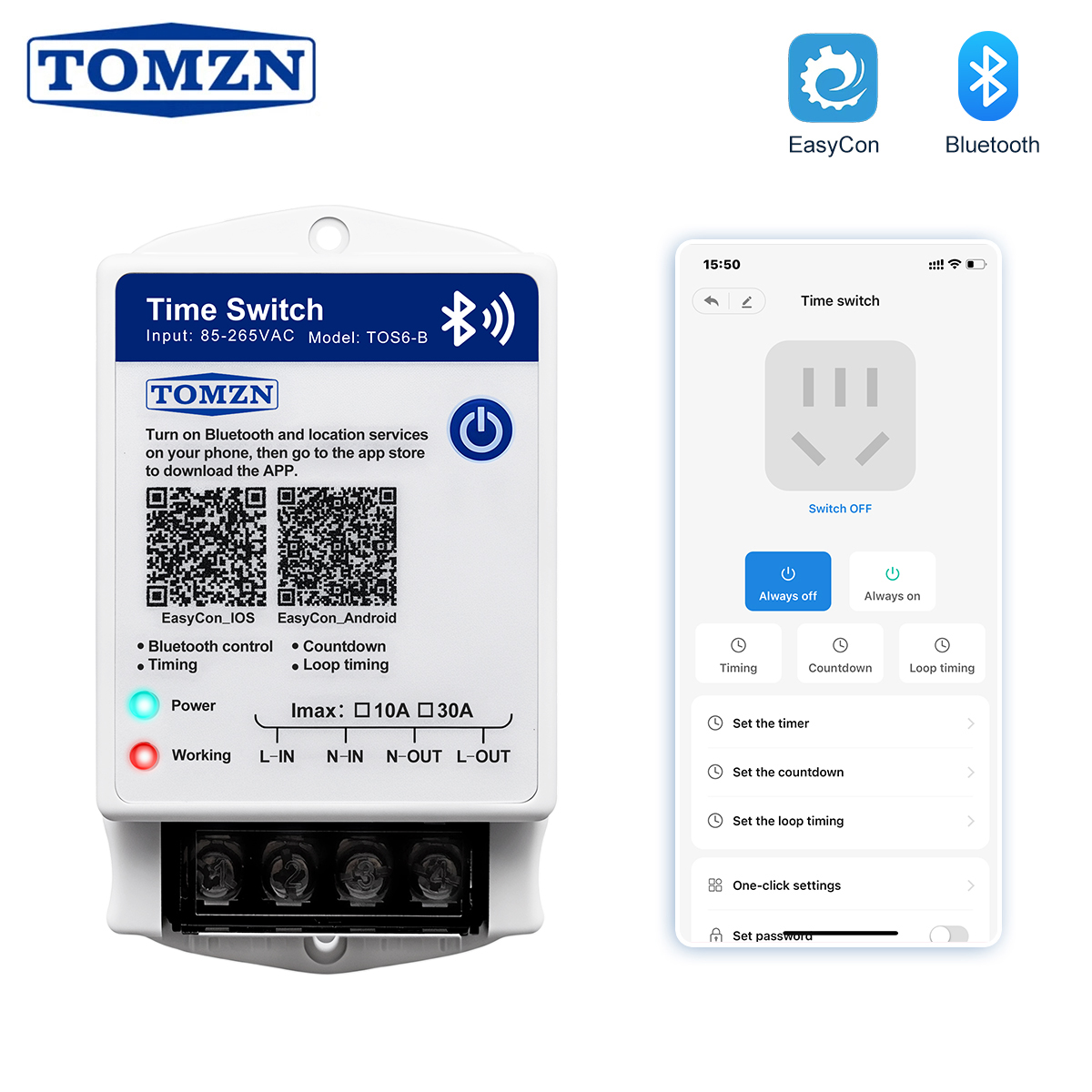
TOMZN Bluetooth Smart Timer Switch 85-265VAC 10A 30A EasyCon Wall-mounted Countdown 28 Groups Timing Loop Timing
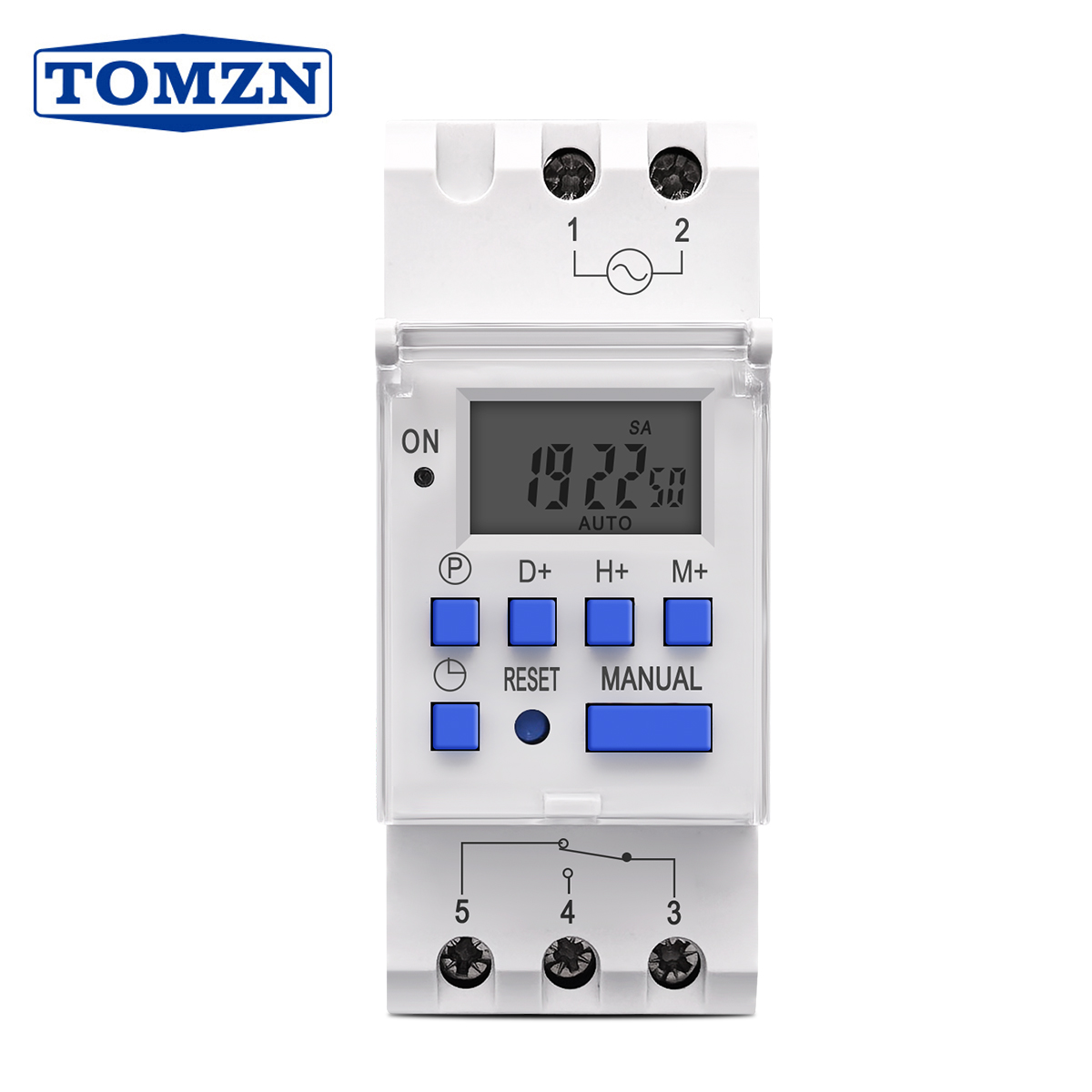
TOMZN 1NO 1NC Din Rail Single Phase Weekly 7 Days Programmable Digital TIME SWITCH Relay Timer AC 220V 230V 12V 24V 48V 16A
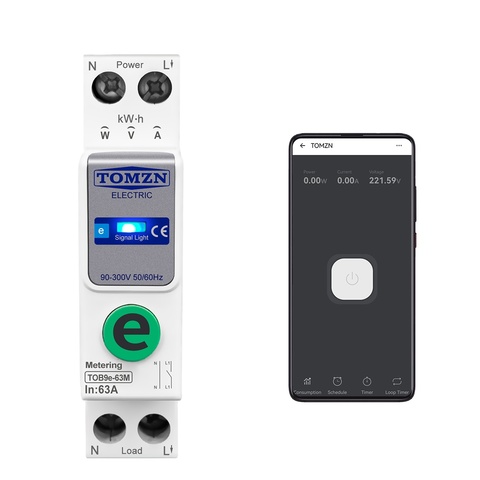
TOMZN TOB9e-63M WiFi Smart Breaker with Bi-directional Energy Metering, Overcurrent & Voltage Protection 110V/220V
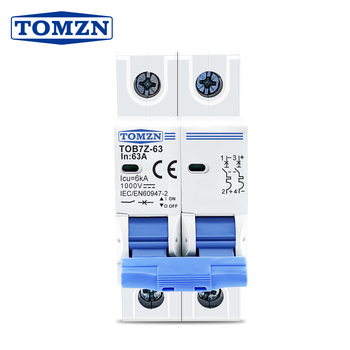
2P 1000V DC Miniature Circuit Breaker Non-Polarized Arc-Extinguishing MCB for Solar Photovoltaic & ESS Battery Strings
Engineered in Liushi: China’s Electrical Capital with Full Vertical Integration
Headquartered in Huabei Village, Liushi Town, Wenzhou—the globally recognized nexus of electrical apparatus manufacturing—Zhejiang TMB Electric Co., Ltd. leverages a tight geographic supply chain. Precision silver-graphite alloy electrical contacts, custom stamping tools, thermostatic bimetal strips, flame-retardant PA66 polymer injection molding, and modular arc-chute splitter stacks are sourced within minutes of our facility, guaranteeing rapid cycle times and tight dimensional tolerances.
For more than 24 years, our production philosophy has merged automated high-volume lines with strict physical testing benches. Unlike regional brokers or drop-shippers, every smart circuit breaker, DC isolator, and time-control switch undergoes 100% mechanical endurance and dielectric flash calibration before leaving our workshop.
Low Trial MOQ from 5 Pcs
Verify sample mechanical tolerance, firmware API compatibility, and thermal stability with minimal capital risk.
TÜV Rheinland Assessed
Audited on-site production lines, certified ISO 9001 quality infrastructure, and authenticated CE conformity.
OEM/ODM Firmware & Hardware
Custom Tuya / eWeLink integration, direct MQTT broker flashing, laser-etched private labels, and custom trip ratings.
Complete PV & ATS Ecosystem
One-stop container consolidation: DC MCBs, surge protection devices (SPDs), ATS switches, and IP65 combiner boxes.



The Evolution of Intelligent Overcurrent Protection: 2025–2030 Architecture
From passive electromechanical bi-metallic strips to IoT-integrated, edge-computing solid-state circuit interruption: analyze the fundamental paradigm shifts shaping modern low-voltage distribution.
Edge-Telemetry & Sub-Metering Convergence
Traditional miniature circuit breakers (MCBs) were purely reactive sacrificial safety barriers. Future-ready smart breakers incorporate Class 1.0 accuracy micro-current transformers (CTs) or shunt resistors paired with 32-bit ARM Cortex processing cores. They perform real-time true RMS current, voltage, power factor, and harmonic distortion sampling directly at the branch pole, sending telemetry via Modbus-RTU, MQTT, or Zigbee to building energy management systems (BEMS).
Solid-State Hybrid Interruption (SSCB)
Electromechanical contacts exhibit arcing upon contact separation, causing contact erosion and requiring high-capacity de-ionizing arc splitter plates. The industry is rapidly adopting hybrid solid-state topologies where GaN or SiC power semiconductors interrupt short-circuit currents in microseconds—substantially eliminating the arc energy—before high-isolation mechanical contacts disengage for galvanic air-gap safety isolation.
Unified Smart Home & Grid Protocols (Matter & Thread)
Proprietary cloud enclosures are giving way to standardized local connectivity. Sourcing directors are prioritizing switchgear certified with Matter-over-Thread and local RS485 fallbacks. This architecture enables smart breakers to communicate natively across ecosystems (Apple Home, Google Home, Home Assistant, commercial SCADA) without dependency on external third-party cloud servers that introduce cybersecurity vulnerabilities.
Predictive Degradation & AI Arc Fault Detection
By executing fast Fourier transform (FFT) algorithms locally within the breaker's DSP, modern devices differentiate harmless motor start-up surges from hazardous series/parallel electrical arcing (AFDD compliance). In addition, monitoring internal contact resistance and thermal expansion trends gives maintenance engineers real-time Remaining Useful Life (RUL) projections before contact welding occurs.
Bidirectional Solar PV & ESS Grid Optimization
The proliferation of distributed energy storage systems (BESS) and rooftop solar introduces complex bidirectional energy flows. Unlike AC circuits that naturally extinguish arcs at the zero-crossing threshold, DC currents maintain continuous sustained arcs. Next-generation breakers utilize permanent magnetic blow-out fields that force the plasma arc into extended de-ion grids regardless of current flow direction.
Procurement Trend: Decarbonization & Carbon Footprint (CBAM)
Tier-1 European and North American buyers require comprehensive Life Cycle Assessments (LCAs) for imported switchgear under the Carbon Border Adjustment Mechanism (CBAM). Sourcing from facilities like Zhejiang TMB Electric ensures full trace certification for recycled copper content, halogen-free UL94-V0 flammability polymers, and compliance with the RoHS and REACH environmental frameworks.
| Circuit Category | Recommended Model Class | Standard Breaking Capacity (Icu) | Supported Communication | Core Application Domain |
|---|---|---|---|---|
| WiFi Smart Sub-Metering | TOB9e-63M Series | 6kA @ 230V AC | WiFi 2.4GHz / Tuya / eWeLink | Commercial sub-metering, EV charger branch circuits, luxury residences |
| Industrial Solar Strings | 2P DC MCB 1000V Series | 6kA / 10kA @ 1000V DC | Dry Contact / Remote Shunt Trip | Photovoltaic combiner enclosures, centralized inverters, battery banks |
| Emergency Power Transfer | TOQ3 Modular ATS Series | 8kA @ 400V AC | Auxiliary Signal / Status Telemetry | Data center backup, hospitals, automated diesel generator changeover |
| Automation Time Control | TOS7-B Bluetooth Series | Cos φ 0.8 Relay Output (Up to 63A) | Bluetooth 5.0 BLE / Mobile App | Agricultural irrigation, municipal street lighting, HVAC cycle management |
| High-Current DC Battery Main | TOM7Z DC MCCB Series | 25kA @ 1000V DC | Modbus-RTU Auxiliary Contacts | Telecom DC base stations, large C&I energy storage containers |
Critical Specification & Sourcing Inquiries from B2B Wholesalers
Clear, unvarnished technical answers regarding arc thermodynamics, OEM protocol customization, testing standards, and container logistics.
Why can standard AC circuit breakers never be substituted into DC solar strings?
Alternating current (AC) cycles through a natural voltage zero-crossing 100 or 120 times per second, which allows the ionized plasma arc across opening contacts to collapse and extinguish cleanly. Direct current (DC) has no zero-crossing; the current flow is continuous and unrelenting. A standard AC breaker attempting to interrupt a 600V–1000V DC fault will suffer from a persistent sustained arc that destroys the chute, welds contacts, and triggers switchboard combustion. Zhejiang TMB Electric's DC breakers integrate permanent blowout magnets that physically stretch and drive the DC arc into dedicated high-capacity splitters.
How does your factory accommodate low trial orders (MOQ 5 pcs) alongside large OEM projects?
We maintain a dedicated sample staging and modular assembly cell inside our 5,700 m² Liushi production base. While our primary automated lines handle batch production runs of tens of thousands of poles, our agile prototyping team manages low trial volumes (from 5 pcs for standard catalog models, and 1 pc for digital timers). This lets overseas engineering directors validate breaking parameters, test dielectric withstand, and evaluate app responsiveness before committing to full 20ft/40ft container purchase orders.
What is the fail-safe mechanism if an IoT smart circuit breaker loses wireless connectivity?
Every smart circuit breaker manufactured by TMB Electric is built around a robust, autonomous mechanical core. Overcurrent (thermal bimetal) and instantaneous short-circuit (magnetic solenoid) trips operate completely independently of the microcontroller, PCB logic, or wireless antenna. Even if the WiFi/Zigbee signal is completely lost or firmware hangs, the physical mechanical trip mechanism will trip instantaneously during a line overload or short circuit. Manual override toggle levers remain active at all times.
Can you provide custom private labeling, packaging, and custom firmware flashing?
Yes. Our OEM/ODM capabilities encompass custom front-fascia pad printing, high-precision fiber laser etching of client logos and custom wiring diagrams, barcoding, and bespoke multi-lingual packaging. On the software side, we support custom Tuya firmware configurations, eWeLink ecosystems, or open firmware flashing enabling direct local MQTT integration for specialized IoT system integrators.
What testing procedures are conducted in-house before export container dispatch?
Our quality control workflow includes 6 mandatory checkpoints: 1) Incoming metallurgical and flammability testing of copper and PA66 housing materials; 2) Micro-torque automated terminal assembly; 3) Multi-point thermal-magnetic trip calibration calibrated against IEC trip curves (B, C, D); 4) High-voltage dielectric flash testing up to 2500V AC; 5) Dynamic switching and motorized transfer verification under load; 6) Final packaging drop and optical barcode audits.
How should distributors calculate thermal derating for smart breakers in high-temperature environments?
Breakers are calibrated at an ambient standard of 30°C or 40°C. In sealed outdoor IP65 distribution enclosures or desert solar installations where internal ambient temperatures exceed 55°C, thermal bimetals deflect prematurely. As an engineering rule of thumb, apply a 0.85–0.90 correction factor to the rated current (In), or request custom-calibrated bimetals calibrated for elevated ambient operating thresholds.
What is the functional difference between 3P and 4P Automatic Transfer Switches (ATS)?
A 3-pole ATS switches the three phase conductors (L1, L2, L3) while maintaining a solidly bonded common neutral conductor. A 4-pole ATS physically switches the neutral conductor (L1, L2, L3, N) simultaneously. In systems with separate ground-fault protection, dual separate utility-generator earthing systems, or sensitive telecommunications power setups, switching the neutral via a 4P ATS is mandatory to avoid circulating stray neutral currents and false RCD/GFCI tripping.
What international documentation and certificates accompany wholesale shipments?
Every export shipment from Zhejiang TMB Electric Co., Ltd. can be accompanied by CE Declaration of Conformity documents, factory routine test reports, comprehensive raw material compliance declarations (RoHS, REACH), and full certificate packs. Our TÜV Rheinland On-Site Verification Assessment Report is available directly to our commercial clients for compliance verification.
Initiate Your Direct Factory Sourcing Partnership
Consult with our low-voltage electrical engineering team in Liushi, Wenzhou. Request comprehensive product catalogs, custom OEM quotes, or sample batches with guaranteed factory direct pricing.