Smart BLE
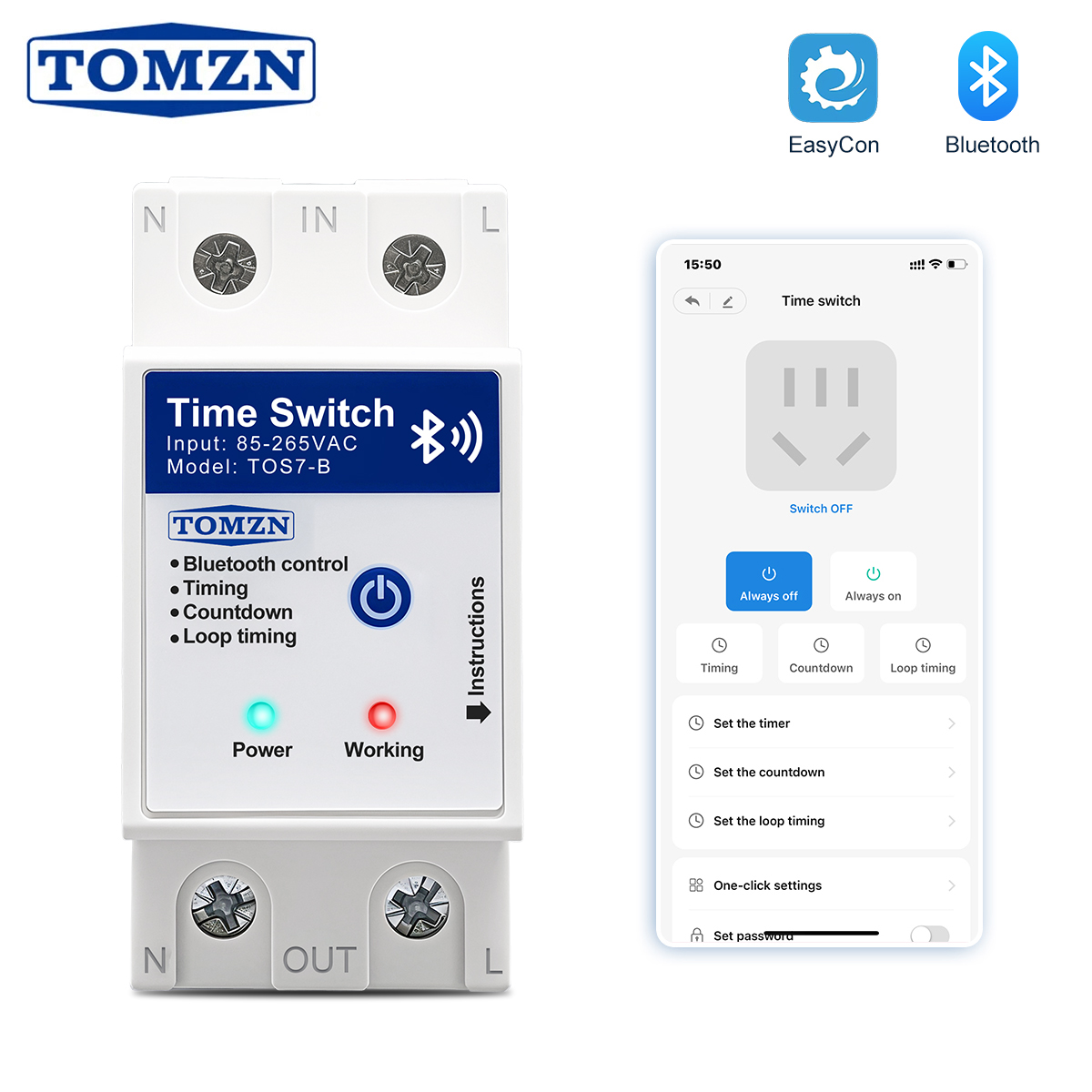
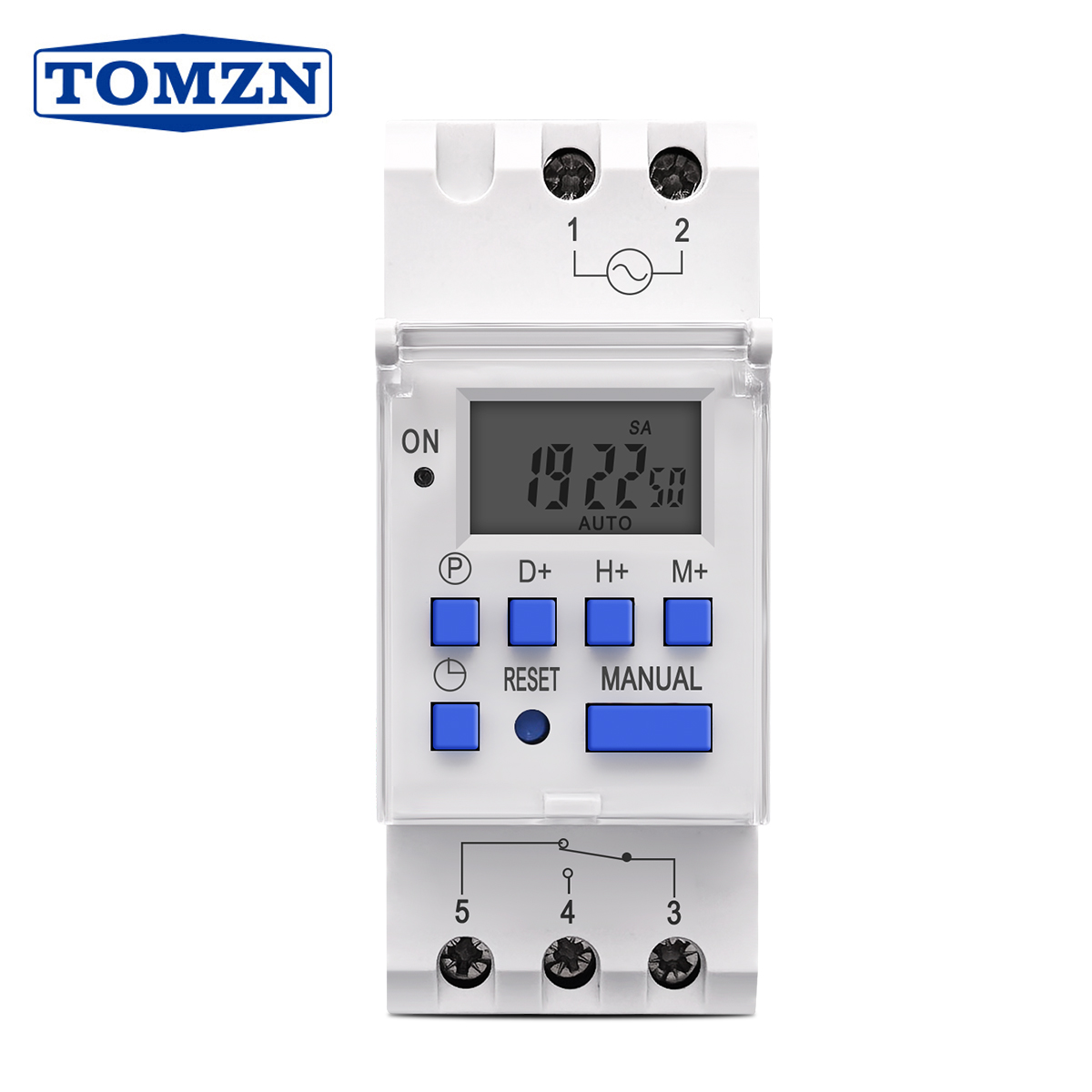
TOMZN TOS7-B Bluetooth Smart Timer Switch 40A 63A 85-265V
40A / 63A
85-265V AC
App Control
Engineered for high-frequency switching, precision residual differential trip curves, and smart automation across industrial, commercial, and renewable installations.
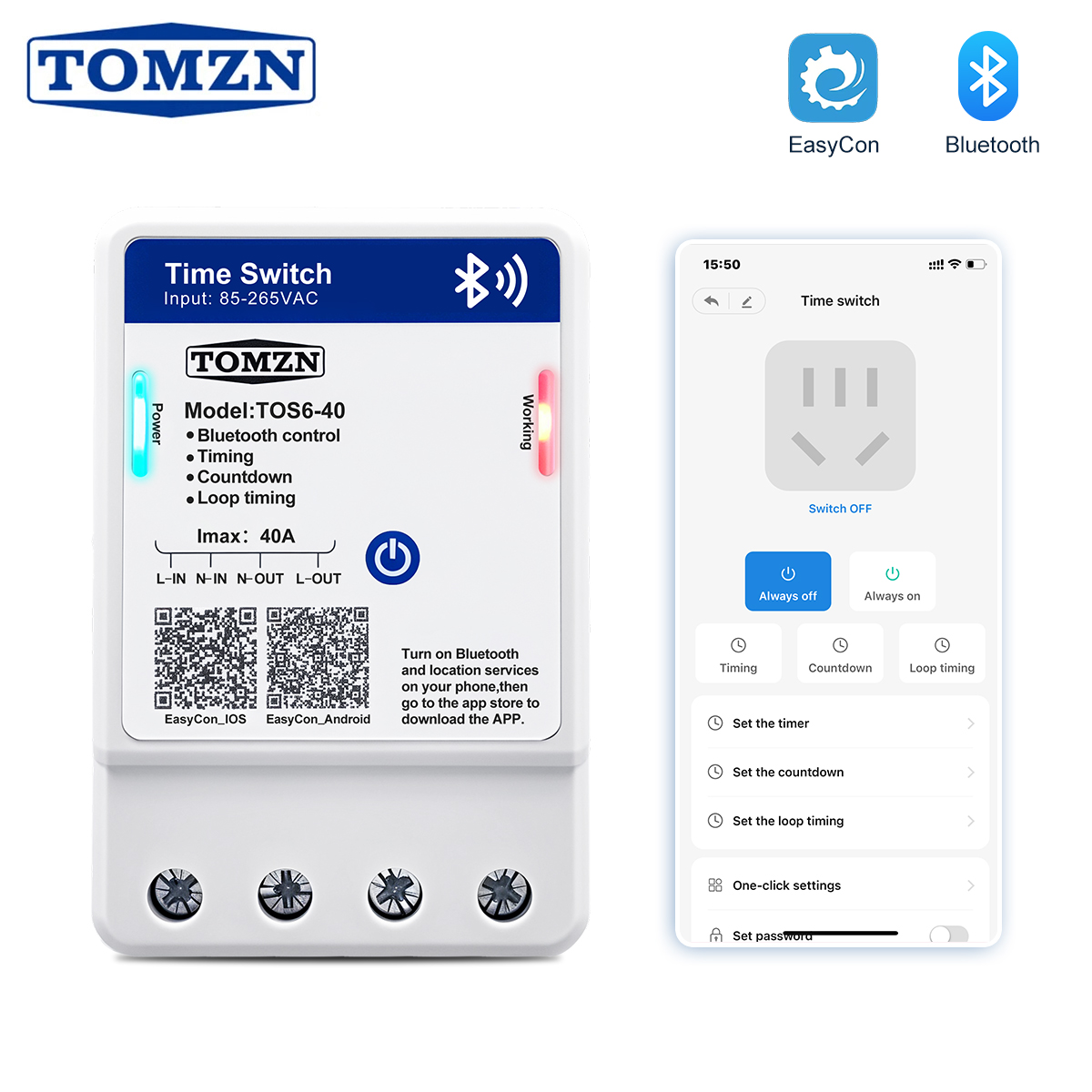
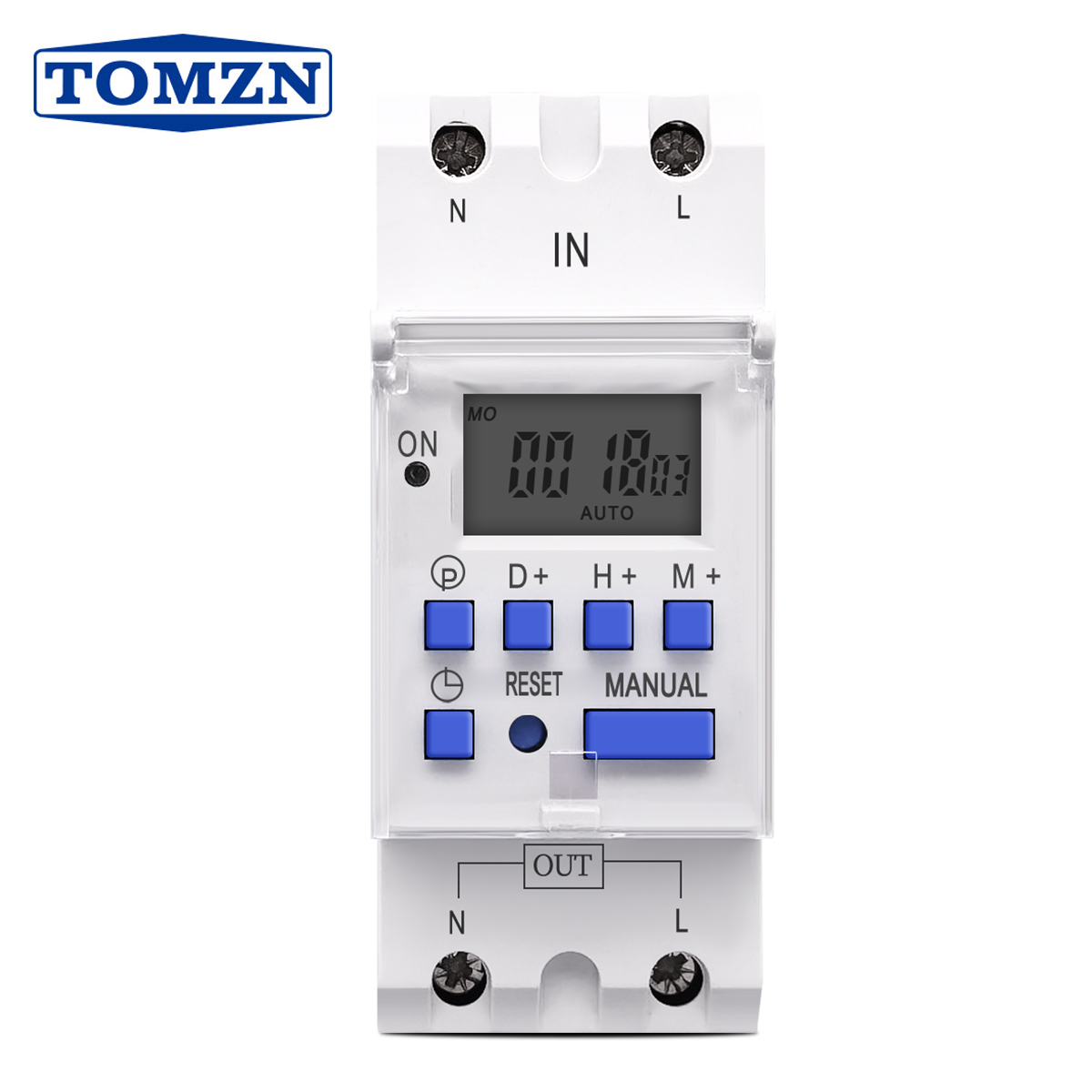
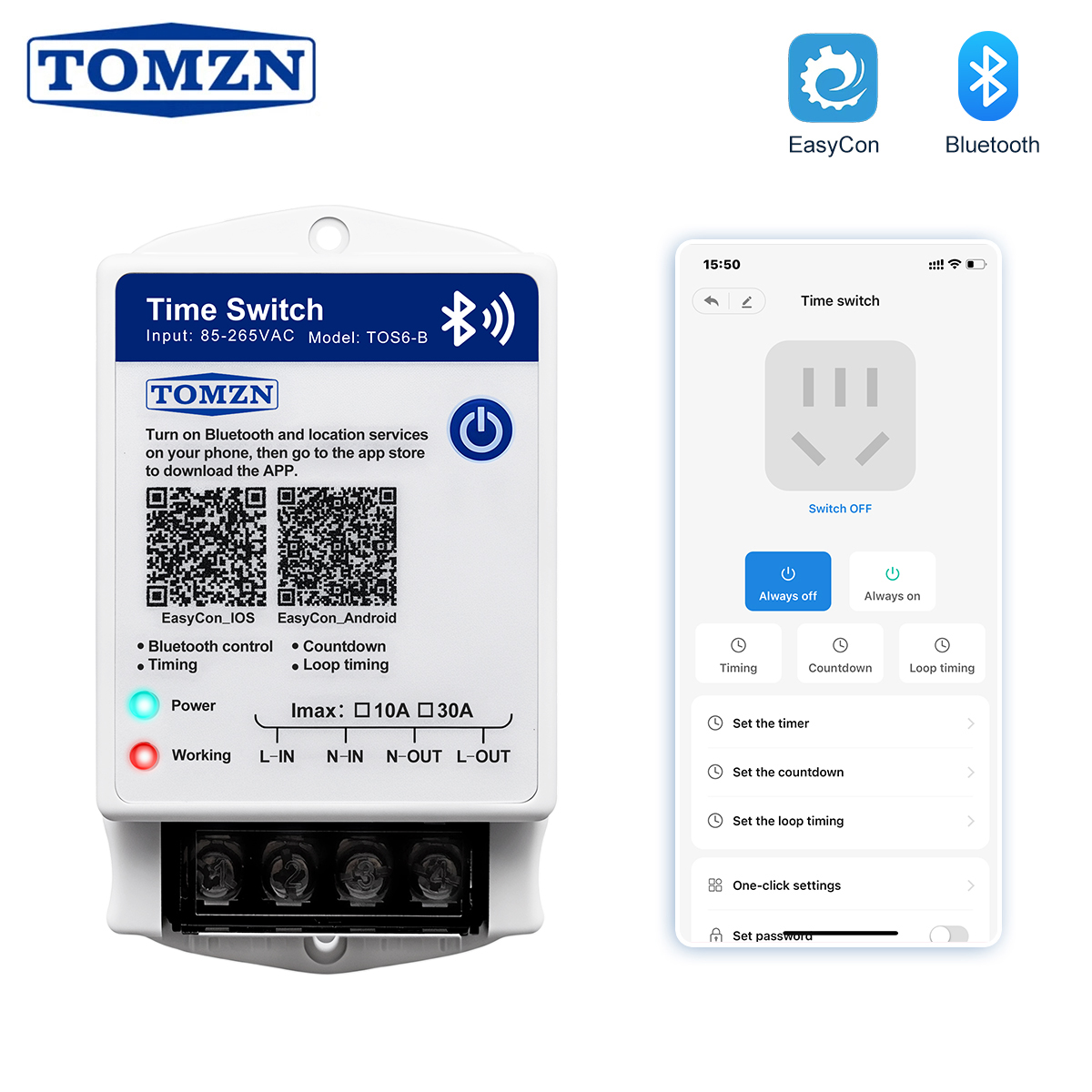
A rigorous examination of magnetic flux summation, core saturation phenomena, and precision trip thresholds in low-voltage distribution design.
Earth leakage circuit breakers (ELCB), encompassing both Residual Current Circuit Breakers without integral overcurrent protection (RCCB, IEC 61008-1) and Residual Current Breakers with overcurrent protection (RCBO, IEC 61009-1), operate on Kirchhoff’s First Law. In an electrically sound single-phase or polyphase system, the vector sum of currents flowing through the active conductors (phases and neutral) identically equals zero: Σ I = I_L1 + I_L2 + I_L3 + I_N = 0.
When an insulation breakdown occurs, or a human touches an energized live terminal, an earth fault path is established. The differential leakage current (I_Δn) returns through protective earth (PE) conductors or directly into the ground, bypassing the neutral path. Inside an OEM earth leakage breaker, all live conductors pass through the central aperture of a highly permeable magnetic toroid core—termed the Zero-Phase Current Transformer (ZCT).
Voltage-dependent (electronic) earth leakage circuit breakers utilize an operational amplifier and comparator circuit powered by the line voltage to evaluate the secondary voltage of the transformer against an engineered silicon bandgap reference. Conversely, voltage-independent (electromechanical) designs utilize the magnetic energy harvested directly from the secondary coil of the ZCT to unlatch a spring-loaded, permanent-magnet polarized holding mechanism. Electromechanical ELCBs ensure life-safety protection even when the neutral wire breaks upstream (floating neutral condition).
Selecting the appropriate residual current detection category is vital for procurement engineering. Mismatched breaker types lead to core saturation, complete failure to trip under DC fault conditions, or chronic nuisance tripping due to normal capacitive leakage.
| Classification | Standard Reference | Fault Current Detection Profile | Primary Application Environment | OEM Core / Electronics Topology |
|---|---|---|---|---|
| Type AC | IEC 61008-1 / 61009-1 | Sinusoidal alternating AC currents only (50/60 Hz). Blind to smooth or rectified DC. | Resistive loads: electric heating, incandescent lighting, conventional household appliances. | Standard Silicon Steel Toroid; Passive Electromechanical Polarized Latch. |
| Type A | IEC 61008-1 / 61009-1 | Sinusoidal AC plus chopped or pulsed DC residual currents up to 6 mA superimposed DC. | Single-phase inverter drives, electronic washing machines, induction cooktops, Class 1 IT hardware. | High-permeability Nanocrystalline Core; optimized secondary impedance matching. |
| Type F | IEC 62423 | Type A parameters + composite frequencies up to 1 kHz from single-phase variable speed drives (VFD). | Modern variable-speed heat pumps, air conditioning systems, frequency-controlled pumps. | Dual-core frequency compensating filters; transient surge filtering circuit up to 3 kA (8/20 μs). |
| Type B / B+ | IEC 62423 / VDE 0664-400 | Pure smooth DC, high-frequency AC up to 100 kHz, multi-phase rectified DC leakage. | EV charging stations (IEC 61851), solar photovoltaic inverters, battery storage ESS, medical imaging. | Fluxgate sensor technology + Hall-effect high-frequency sensor; dual micro-transformer array. |
How international regulatory pressures, energy transition demands, and regional supply clusters are redefining the procurement of custom earth leakage devices.
Procurement teams supplying commercial EV charging networks (Level 2 and DC Fast Chargers) face strict compliance mandates under IEC 61851-1 and UL 2231. If an on-board charger (OBC) leaks smooth DC greater than 6 mA, it can saturate downstream Type A distribution boards, rendering building-wide safety systems completely inert. OEM demand has shifted massively toward integrated Type B RCBOs or combined 6 mA DC + 30 mA AC detection modules.
Panel builders and OEM switchgear manufacturers are replacing bulky two-module (36 mm) or four-module (72 mm) separate breaker-and-differential combinations with ultra-compact 1-module (18 mm) 1P+N residual current breakers. This halves DIN-rail space requirements in high-density multi-tenant smart metering panels, demanding advanced internal arc-quenching chute geometries and micro-mechanical latches.
Procurement executives are increasingly bypassing generic trading middlemen to contract directly with vertically integrated factories in Liushi, Wenzhou. Sourcing from the epicenter of China’s electrical apparatus manufacturing delivers unparalleled cost resilience, short lead-times for custom precision stamping, rapid availability of silver-tin-oxide (AgSnO2) contacts, and localized mold-making capabilities.
From solid-state microsecond fault isolation to IoT-enabled predictive leakage analytics, here is the technology transforming the next decade of electrical safety.
Next-gen OEM breakers incorporate embedded microcontrollers providing real-time telemetry: operating voltage, load current, true RMS residual leakage (mA), and ambient enclosure temperature. Field buses communicate pre-trip warnings long before insulation degraded lines cause safety interruptions.
Traditional mechanical arc separation creates ionized plasma and contact erosion over time. Emerging solid-state circuit breaker (SSCB) research utilizes silicon carbide (SiC) and gallium nitride (GaN) semiconductors capable of isolating residual faults in less than 5 microseconds, eliminating open arcs entirely.
For remote base transceiver stations (telecom BTS), highway signaling, and off-grid solar setups, nuisance trips from lightning surges create catastrophic downtime. Self-resetting earth leakage breakers automatically perform line insulation resistance diagnostic checks prior to mechanical auto-reclosing.
Complex industrial equipment operating variable frequency drives (PWM switching frequencies between 2 kHz and 16 kHz) generates substantial parasitic ground currents. Adaptive digital filtering algorithms differentiate between capacitive leakage and dangerous resistive shock currents.
Combining 24 years of manufacturing heritage in Liushi, Wenzhou with independent TÜV Rheinland on-site audit verification.
Operating with verified transparency, our manufacturing base in Huabei Village, Liushi Town has been thoroughly inspected on-site by TÜV Rheinland. Our management systems align with international Quality Management System protocols, ensuring that every production batch of AC MCBs, DC MCCBs, Surge Protective Devices, and Earth Leakage assemblies demonstrates complete material traceability, flame-retardant housing certification (UL94-V0), and CE compliance for seamless customs clearance across the EU, Middle East, and Latin America.
We empower global distributors, switchgear assemblers, and private-label brands with exhaustive customization flexibility. From specialized trip sensitivity calibrations (10 mA for neonatal medical wings, 30 mA for personnel protection, 100/300/500 mA for industrial fire safety) to customized laser markings, housing colors, and pad-printed brand logos. Our low evaluation threshold (starting from 5 pcs sample test orders up to full 40-foot container shipments) minimizes trial barriers for technical buyers.
Within our 5,700 m² plant, every breaker assembly traverses multi-stage automated verification: incoming inspection of magnetic cores and silver-alloy electrical contacts, computerized torque-controlled screw terminal tightening, automated thermal-magnetic trip profiling, high-potential 2,500V dielectric withstand testing, and individual residual current tripping timing measurements (at 1x, 2x, and 5x IΔn) to ensure zero defective devices reach container loading.
In-depth responses resolving the most challenging technical and logistical friction points faced by international procurement managers.
Voltage-Independent (Electromechanical): These devices harvest 100% of the energy required to trip the mechanical latch directly from the secondary winding of the Zero-Phase Current Transformer (ZCT). They require no auxiliary power supply. Consequently, if the incoming line experiences a severed upstream neutral conductor (floating line), or if supply voltage drops below 50V AC, an electromechanical ELCB/RCCB will still reliably detect leakage and trip if an earth fault occurs. This is the mandatory standard for consumer units across Germany, the UK, France, and Australia (IEC/EN 61008-1).
Voltage-Dependent (Electronic): These utilize an internal electronic amplification stage (comparator / operational amplifier) powered directly by the line voltage. If the supply voltage drops below the operating threshold of the electronics (typically < 70-85V AC), or if the neutral conductor fails, the device may become blind to ground faults. However, electronic designs offer superior resistance against high mechanical vibration, lower cost, and easy integration of multi-function features like adjustable time delays and digital telemetry.
Modern photovoltaic string inverters and industrial variable speed drives produce high-frequency common-mode voltages due to the rapid pulse-width modulation (PWM) switching of insulated-gate bipolar transistors (IGBTs). These high-frequency components couple with parasitic cable-to-ground and module-to-frame capacitances, generating continuous high-frequency leakage currents. Standard Type AC breakers possess toroid cores tuned strictly for 50/60 Hz sinusoidal waves; they either interpret these high-frequency currents as earth faults—leading to repeated nuisance tripping—or worse, become magnetically saturated by residual DC components. Once the core is saturated, the breaker will fail to trip even during a direct, life-threatening human shock event. For these installations, custom OEM specification of Type F or Type B RCDs with intentional high-frequency rejection is non-negotiable.
Our production facility in Liushi Town, Wenzhou has been assessed on-site by TÜV Rheinland—one of the world's most rigorous independent inspection bodies. The assessment verified our physical operating premises (5,700 m²), workforce (92 personnel), specialized testing fixtures, and production capacity. We operate under a certified Quality Management System. For every production run, full test certificates (dielectric withstand, trip timing, short-circuit withstand Icn) and CE declaration documents are compiled and dispatched alongside shipment bills of lading.
To provide an accurate technical quotation and mold/production scheduling, please outline:
Unlike rigid corporate conglomerates, Zhejiang TMB Electric supports agile market entry. Standard catalog items feature ultra-low evaluation MOQs (starting from 5 pieces, with select timer switches from 1 piece) to allow comprehensive lab verification by your engineering team. For fully custom OEM private-label runs involving bespoke pad printing and packaging, the standard MOQ typically starts at 500 to 1,000 units depending on the pole configuration. Standard production lead times run between 15 and 25 days following engineering drawing and sample approval, backed by our streamlined Liushi component supply chain.
Send your bill of materials (BOM), single-line diagrams, or target performance curves directly to the Zhejiang TMB Electric engineering office. We provide matched technical drawings and factory-direct pricing within 24 hours.