Precision Protection, Switching & Modular Timing Lineup
Explore our high-demand OEM/ODM low-voltage components, solar PV protection devices, and smart DIN-rail timing relays manufactured directly at our verified facility.

TOMZN TOS7-B Bluetooth Smart Timer Switch 40A 63A 85-265V Remote DIN Rail

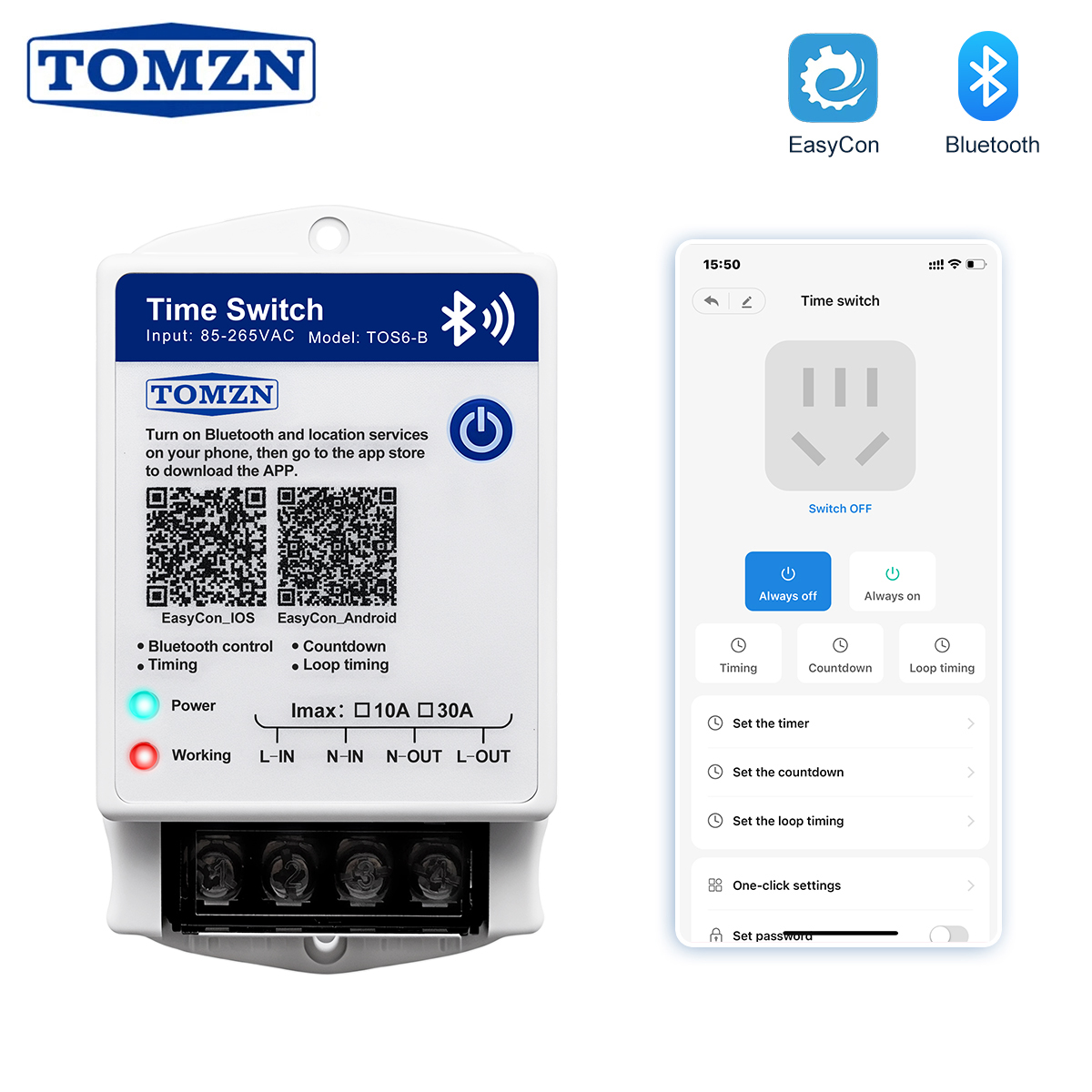
TOMZN Bluetooth Smart Timer Switch 85-265VAC 10A 30A EasyCon Wall-Mounted
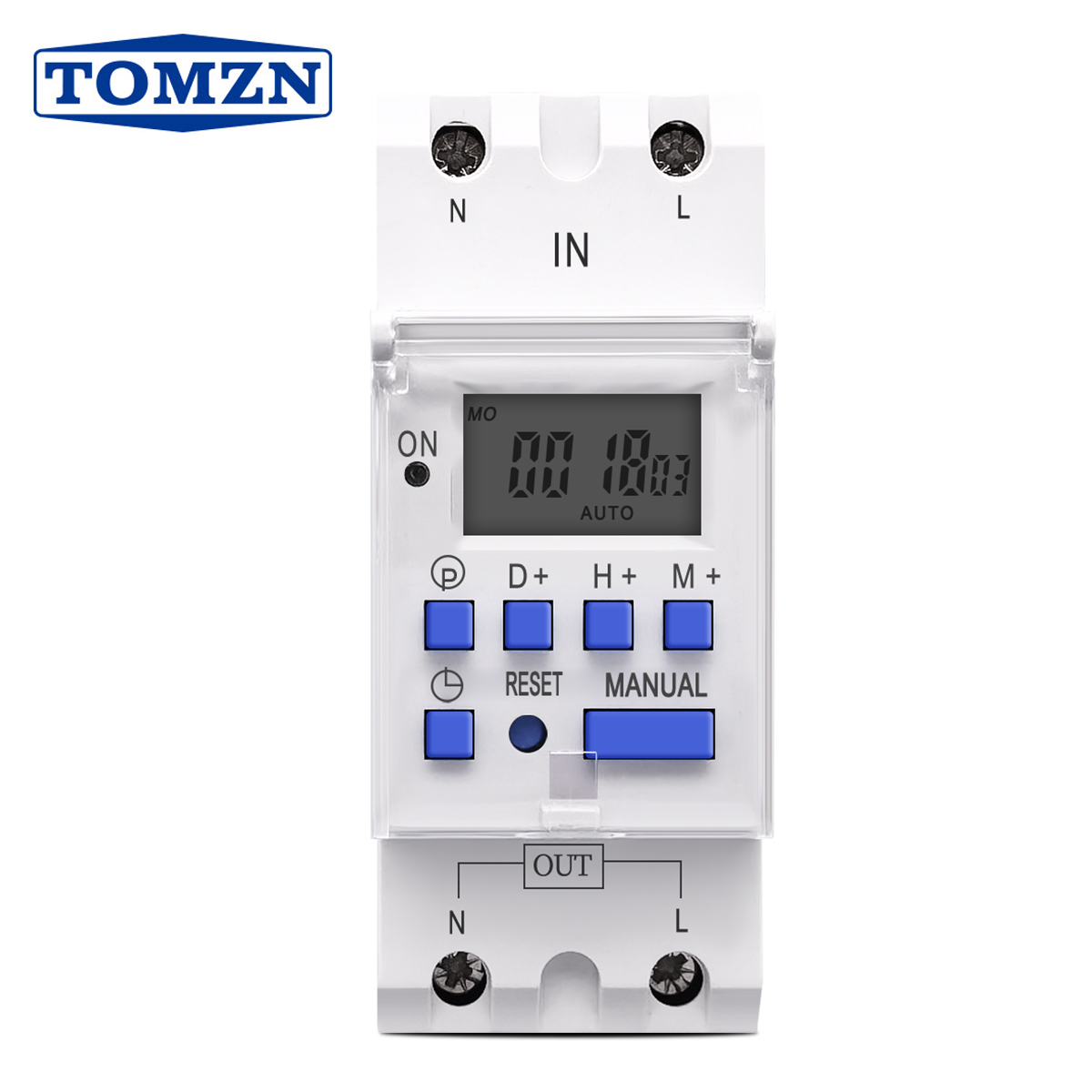
TOMZN Single Phase Weekly 7 Days Programmable Digital Time Switch 16A

TORT7 Series Delay-ON Delay-OFF 10-in-1 Asymmetric Cycler Time Relay
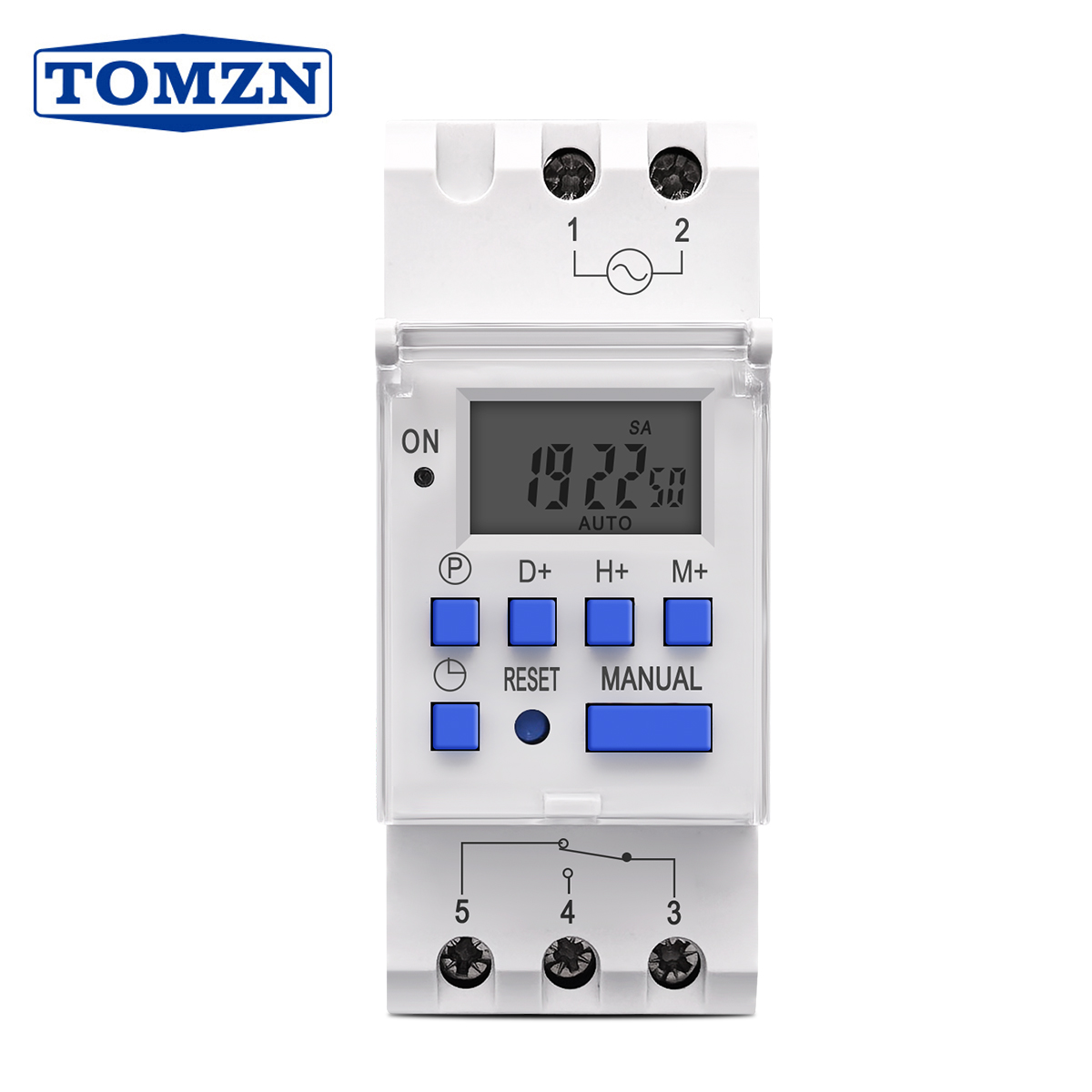
TOMZN 1NO 1NC DIN Rail Single Phase Weekly Digital Time Switch Relay 16A
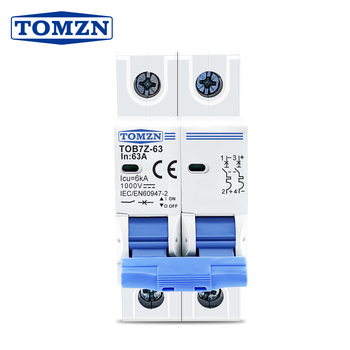
2P DC MCB 1000V DC Miniature Circuit Breaker for Solar PV Strings
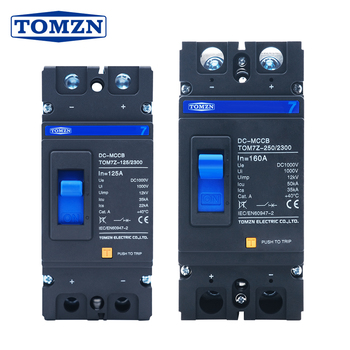
The Global Evolution of Direct Current (DC) Protection Infrastructure
The global transition toward high-efficiency renewable energy, decentralized microgrids, utility-scale Battery Energy Storage Systems (BESS), and rapid Electric Vehicle (EV) DC fast-charging networks has precipitated an unprecedented structural surge in demand for specialized Direct Current Circuit Breakers (DCCBs). While alternating current (AC) circuit protection has matured over a century of standardization, direct current architectures present profound physical and electromagnetic challenges that render conventional AC switchgear wholly unsuitable and dangerously hazardous when applied across high-voltage DC circuits.
Critical Engineering Principle: In AC systems, the electrical current sinusoidally alternates through zero points (zero-crossings) 100 to 120 times every second (at 50Hz/60Hz), naturally facilitating the collapse and deionization of the ionized electric arc inside the contact chamber. Conversely, direct current maintains continuous, unidirectional magnitude with zero periodic crossing points. When mechanical contacts separate under DC fault conditions, the resulting arc behaves as a continuous, high-energy plasma column that sustains itself through intense thermal ionization unless forced into an artificial zero-crossing via advanced electromagnetic blowout coils, deion grid plates, and supersonic arc chute aerodynamics.
As PV string architectures escalate from traditional 600V DC and 1000V DC standards up to 1500V DC utility-scale systems, and as commercial battery banks routinely deploy lithium iron phosphate (LFP) chemistries capable of delivering instantaneous prospective short-circuit fault currents exceeding 25kA to 50kA with sub-millisecond rise times (di/dt), the specification of high-reliability DC Miniature Circuit Breakers (DC MCB), DC Molded Case Circuit Breakers (DC MCCB), and DC Air Circuit Breakers (DC ACB) has become the supreme focal point for electrical engineers, panel builders, and procurement directors worldwide.
Comparative Engineering Dynamics: AC vs. DC Circuit Breaker Physics
Procurement teams frequently encounter catastrophic electrical failures when unvetted suppliers market relabeled AC protective devices for DC applications. The breakdown below details the fundamental differences required in contact metallurgy, arc suppression, and clearance engineering:
| Design Parameter | Alternating Current (AC MCB/MCCB) | Direct Current (DC MCB/MCCB) | Engineering Impact on System Life |
|---|---|---|---|
| Natural Arc Extinction | Inherent: Voltage/current traverses zero every half-cycle (10ms at 50Hz). | Non-existent: Sustained continuous current; no natural extinguishing point. | DC breakers require magnetic blowout coils to steer and elongate the plasma arc into deion chambers. |
| Contact Erosion Rate | Symmetrical erosion across stationary and moving contacts. | Asymmetrical ion migration: Material transfers directional cathode to anode. | Requires specialized silver-tin-oxide (AgSnO2) or silver-tungsten-carbide composite metallurgy. |
| Arc Chute Architecture | Standard multi-plate splitter stack (8 to 11 plates per pole). | Extended deep splitter stacks (13 to 21+ plates) with integrated permanent magnets. | Magnets exert Lorentz force ($F = q(E + v \times B)$) driving the arc into splitters at supersonic velocity. |
| Polarity Sensitivity | Non-polarized: Bidirectional current by design. | Polarity-sensitive (marked +/-) or advanced bidirectional configurations. | Incorrect polarity on polarized DC units results in arc deflection outward, causing catastrophic cabinet flashover. |
| Dielectric Recovery Rate | Moderate: Aided by natural thermal cooling during zero-crossing. | Extremely aggressive: Must deionize gaseous medium under sustained voltage stress. | Demands high creepage distances, gas-tight barriers, and track-resistant polyamide housing (UL94-V0). |
Top 10 DC Circuit Breaker Manufacturers & Exporters
An authoritative evaluation of leading global power switchgear conglomerates and premier specialized manufacturers evaluated by technical capability, certification breadth, agility, and export footprint.
A global pioneer in electrification switchgear, ABB sets industry benchmarks with its S200 M UC (Universal Current) MCB and Tmax PV series molded case breakers. Their solutions excel in utility-scale 1500V DC solar farms, traction substations, and marine DC microgrids, backed by IEC 60947-2 and UL 489B dual certifications.
Schneider Electric dominates the smart distribution landscape through its Acti9 C60H-DC and Compact NSX DC/DC PV ranges. Engineered with proprietary roto-active breaking mechanisms, Schneider breakers deliver superior operational endurance in commercial rooftop PV arrays, telecom battery rooms, and mission-critical UPS systems.
Renowned for precision industrial switchgear, Siemens offers the SENTRON 3VA and 5SY5 universal-current series. Siemens specializes in extreme operational environments, providing ultra-fast breaking capacity for heavy industrial drives, DC rail traction power cabinets, and hyperscale automated logistics automation.
Eaton is an established leader across the North American and European power markets. Its Bussmann line combined with NZM-PV molded case breakers offers comprehensive string-to-inverter protection up to 1500V DC, maintaining rigorous compliance with UL 489, UL 98B, and IEEE standards for utility energy storage installations.
Backed by 24 years of manufacturing heritage and an on-site verified 5,700 m² factory assessed by TÜV Rheinland, Zhejiang TMB Electric is China's premier specialized manufacturer and agile exporter of low-voltage DC protective equipment. Producing high-performance DC MCBs (up to 1000V/1200V DC, 3A-125A), heavy-duty DC MCCBs (TOM7Z series up to 1000V DC), custom IP65 pre-wired solar combiner boxes, and DIN-rail digital control devices, TMB Electric empowers B2B importers, EPC contractors, and private-label distributors in over 100 countries. Featuring rapid sample turnaround, low MOQ thresholds (from 5 pcs), and complete in-house testing covering dielectric withstand, contact resistance, and thermal calibration, TMB bridges Tier-1 industrial quality with unbeatable supply chain agility.
Pioneering high-durability contact technologies, Mitsubishi Electric delivers the WS-V series and specialized high-voltage DC MCCBs tailored for modern data center DC distribution architectures, high-speed rail switchboards, and marine energy storage networks with proven arc-extinction reliability.
As one of the world's largest low-voltage component manufacturers, Chint produces immense volumes of NB1-63DC MCBs and NM8N DC MCCBs. With a vast global distribution network, Chint serves distributed rooftop residential solar projects, agricultural microgrids, and cost-sensitive international tenders.
Specializing in industrial automation and power semiconductor integration, Fuji Electric manufactures compact G-TWIN series DC molded case breakers specifically calibrated for regenerative inverter drives, high-output industrial battery banks, and sensitive marine power subsystems.
Socomec is globally revered for high-power DC load break switches and automated DC disconnection solutions. Its INOSYS and SIRCOVER ranges are extensively installed across utility solar power plants and commercial energy storage farms where high breaking capacity and visible contact isolation are mandatory.
Hager excels in commercial building management systems and residential electrical infrastructure. Its modular DC circuit breakers and surge protective units deliver compact footprints, clean DIN-rail aesthetics, and reliable protection for residential solar arrays and light commercial DC busbars.
Future Sourcing & Technology Trends: The 2025–2030 DC Protection Paradigm
Procurement directors and system architects are operating in an environment of rapid technological transition. Sourcing policies established for legacy low-voltage AC networks are proving inadequate for high-density renewable assets. The following four macro shifts are redefining global DC circuit breaker procurement over the next five years:
1. Universal Migration to 1500V DC String Architecture
Utility solar installations and commercial BESS projects have decisively migrated from 1000V DC to 1500V DC busbars. This higher operational voltage decreases balance-of-system (BOS) copper cable cross-sections and drastically lowers ohmic line losses ($I^2R$). For switchgear buyers, this necessitates specifying breakers featuring multi-stage modular series-connected poles (3P or 4P in series) and advanced thermoplastic dielectric partitions capable of handling higher impulse withstand voltages ($U_{imp} \ge 8kV$).
2. Rise of Solid-State & Hybrid Breakers (SSCB)
Traditional mechanical circuit breakers operate within a clearing window of 5 to 15 milliseconds. In ultra-low-impedance lithium battery energy storage systems, prospective short-circuit current can peak within 1 to 2 milliseconds, potentially damaging sensitive BMS inverter semiconductors before mechanical contacts can fully part. Solid-state circuit breakers (utilizing SiC and GaN power MOSFETs) clear faults in microseconds. The market is increasingly procuring hybrid circuit breakers: mechanical contacts for galvanic isolation paired with solid-state paths for instantaneous arc-less interruption.
3. IoT Smart Breakers & Micro-Telemetry Integration
Remote telemetry is no longer an optional add-on; it is an operational requirement. Modern procurement tenders mandate DIN-rail DC breakers and smart energy monitoring modules (such as our WiFi, Bluetooth, and RS485 Modbus integrated devices) that transmit real-time contact temperature, true DC voltage, string current draw, and power consumption ($kWh$) to cloud SCADA platforms, enabling predictive contact wear analytics before physical breakdown occurs.
4. Cluster Manufacturing & Direct OEM/ODM Partnership
Global supply chain disruptions have driven multinational EPCs and brand distributors away from complex multi-tiered brokerage houses toward agile, verified direct manufacturers situated in specialized industrial clusters. Manufacturers situated in Wenzhou's Liushi industrial belt—such as Zhejiang TMB Electric—offer unmatched component vertical integration (in-house stamped copper busbars, bimetals, precision injection molding, and automated testing), shortening production lead times from 16 weeks down to 10-15 business days.
5. Complete Pre-Wired Combiner Enclosures
Skyrocketing onsite electrical labor rates in North America, Western Europe, and Australia have triggered a shift toward pre-engineered, factory-tested PV combiner boxes and ATS distribution boxes. Buyers no longer source loose MCBs, SPDs, and enclosures separately; they demand turnkey, IP65/IP66 pre-wired combiner assemblies tested to IEC 61439-2 standards, slashing site commissioning time by more than 70%.
Why Global Engineering Firms Partner with Zhejiang TMB Electric Co., Ltd.
Operating from the heart of Liushi Town—China's recognized electrical capital—we combine 24 years of manufacturing expertise with rigorous third-party auditing to supply high-reliability protective switchgear worldwide.
Deep Industry Roots
Founded in the formative years of China's electrical industrialization, TMB Electric possesses over two decades of specialized expertise in low-voltage circuit protection, tripping curve physics, and contact metallurgy.
TÜV Rheinland Verified
Our 5,700 m² modern manufacturing facility and 92 verified staff members have undergone stringent on-site assessment by TÜV Rheinland, providing B2B buyers with documented production authenticity.
Liushi Cluster Economy
Located in Huabei Village, Liushi, our factory sources high-purity electrolytic copper, precision bimetallic strips, and UL94-V0 flammability-rated granules within minutes, slashing tooling lead times and material costs.
Flexible Low MOQ & OEM
Unlike rigid conglomerates with 1,000-piece minimums, TMB accommodates engineering validation batches from 5 pieces, while offering comprehensive OEM private labeling, custom voltage combinations, and customized combiner boxes.
Engineering Selection Protocol for DC Protection Switchgear
Specifying a DC circuit breaker requires calculating dynamic thermal and electromagnetic variables that do not apply to standard AC utility installations. Field engineers and procurement managers must systematically calculate the following four engineering thresholds before issuing purchase orders:
1. String Open-Circuit Voltage ($V_{oc}$) vs. Breaker Rated Insulation Voltage ($U_e$)
A frequent design error is sizing the DC circuit breaker purely on nominal photovoltaic operating voltage ($V_{mp}$). Photovoltaic modules exhibit an inverse temperature coefficient; during winter mornings at sub-zero temperatures, solar string open-circuit voltage ($V_{oc}$) rises significantly. Breakers must be rated such that:
Formula: $U_e \ge V_{oc\_string} = N \times V_{oc\_STC} \times [1 + \beta_{Voc} \times (T_{min} - 25^\circ\text{C})]$
Where $N$ is number of modules in series, $\beta_{Voc}$ is temperature coefficient of $V_{oc}$ (%/°C), and $T_{min}$ is the lowest historic ambient site temperature. Failure to calculate this margin can cause catastrophic dielectric flashover across contacts during cold-weather off-load switching.
2. Continuous Rated Current ($I_n$) and Safety Derating Factors
Under continuous load in enclosed outdoor combiner boxes exposed to solar irradiance, interior ambient temperatures regularly exceed 55°C. Continuous current sizing must follow IEC 62548 and NEC 690 guidelines: $I_n \ge 1.25 \times I_{sc\_string}$. In multi-pole enclosed distribution cabinets, an additional thermal grouping derating factor ($k_{temp} \approx 0.8 - 0.85$) must be applied to prevent nuisance thermal tripping.
3. Ultimate Short-Circuit Breaking Capacity ($I_{cu}$) & Service Capacity ($I_{cs}$)
In BESS battery energy storage setups, short-circuit current is governed entirely by battery internal DC resistance ($R_i$) and busbar impedance: $I_{sc} \approx V_{battery} / R_{total}$. Modern commercial battery racks can easily produce fault currents in excess of 15kA to 30kA. Specifying an undersized 6kA residential MCB on a commercial battery bus results in instantaneous housing explosion and violent plasma ejection under fault conditions. For main battery banks, heavy-duty DC MCCBs (such as the TMB TOM7Z 1000V DC series) or DC Air Circuit Breakers (DC ACB) are mandatory.
Frequently Asked Questions by Global Switchgear Buyers
Direct, engineering-backed answers addressing critical procurement, compliance, and installation concerns encountered by solar contractors, distributors, and panel builders.
Can an AC circuit breaker be safely wired into a solar PV DC string if voltage is low?
What is the distinction between polarized and non-polarized (bidirectional) DC MCBs?
What verification documents should an international buyer require before ordering?
How does Zhejiang TMB Electric guarantee component consistency on volume OEM orders?
What is the difference between a DC MCB and a DC MCCB in practical application?
Can TMB supply custom pre-assembled IP65 PV combiner boxes with specific switchgear?
What are the lead times and minimum order quantities (MOQ) for international buyers?
How do over-and-under voltage protectors and smart timers enhance DC/AC systems?
Accelerate Your Project with Verified Factory-Direct DC Protection
Whether you require standardized 1000V DC MCBs, heavy-duty BESS MCCBs, custom IP65 pre-wired combiner boxes, or turnkey OEM private labeling, Zhejiang TMB Electric Co., Ltd. provides rapid technical documentation, sample dispatch, and factory-direct pricing.