Engineered Time Delay Relays & Digital Timer Modules
Tested under rigorous IEC/EN 61812-1 and IEC 60947 standards. Delivering millisecond-grade repeatability, heavy current contact endurance, and universal DIN-rail integration for international B2B distributors and panel builders.
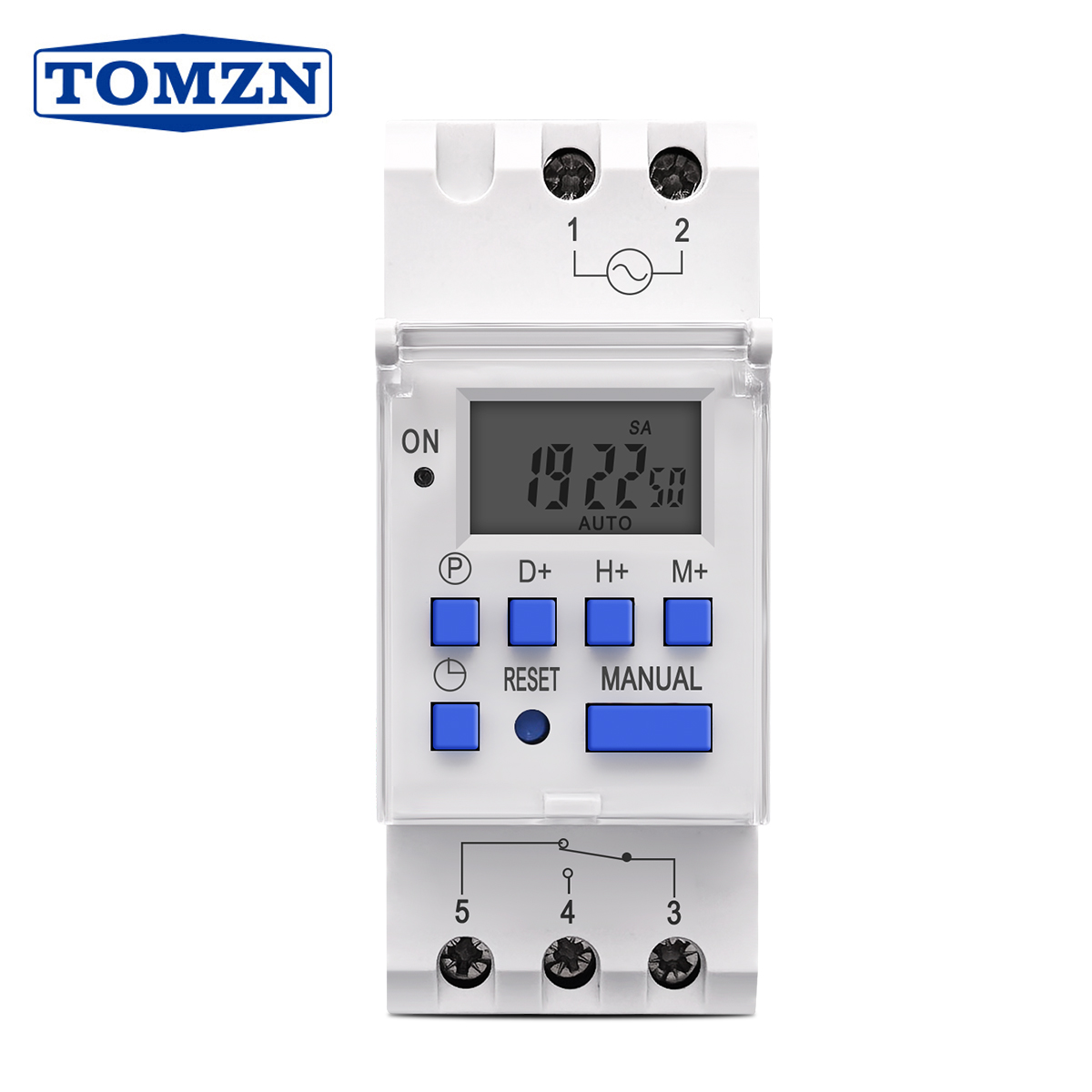
TOMZN 1NO 1NC Din Rail Single Phase Weekly 7 Days Programmable Digital TIME SWITCH Relay Timer AC 220V 230V 12V 24V 48V 16A
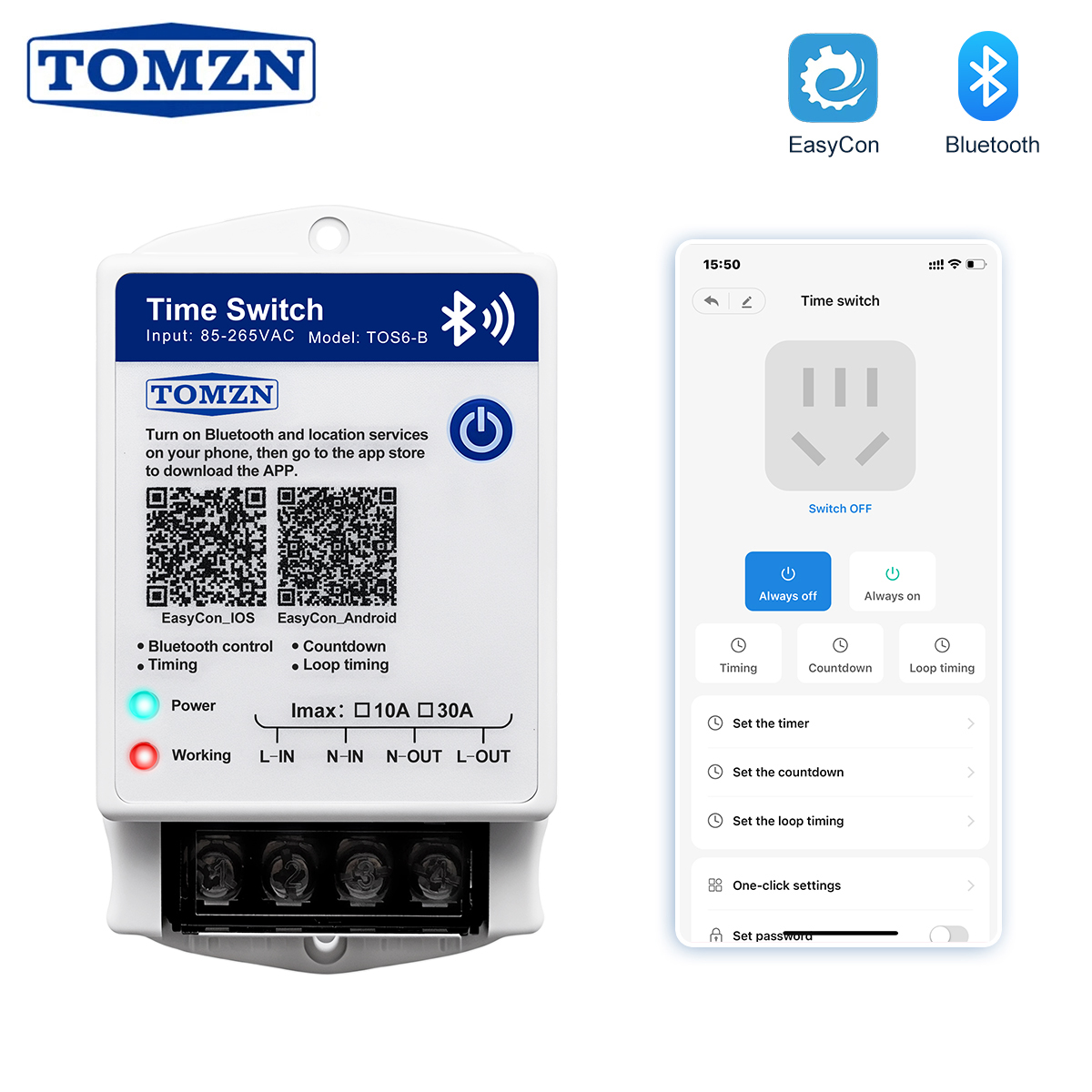
TOMZN Bluetooth Smart Timer Switch 85-265VAC 10A 30A EasyCon Wall-mounted Countdown 28 Groups Timing Loop Timing
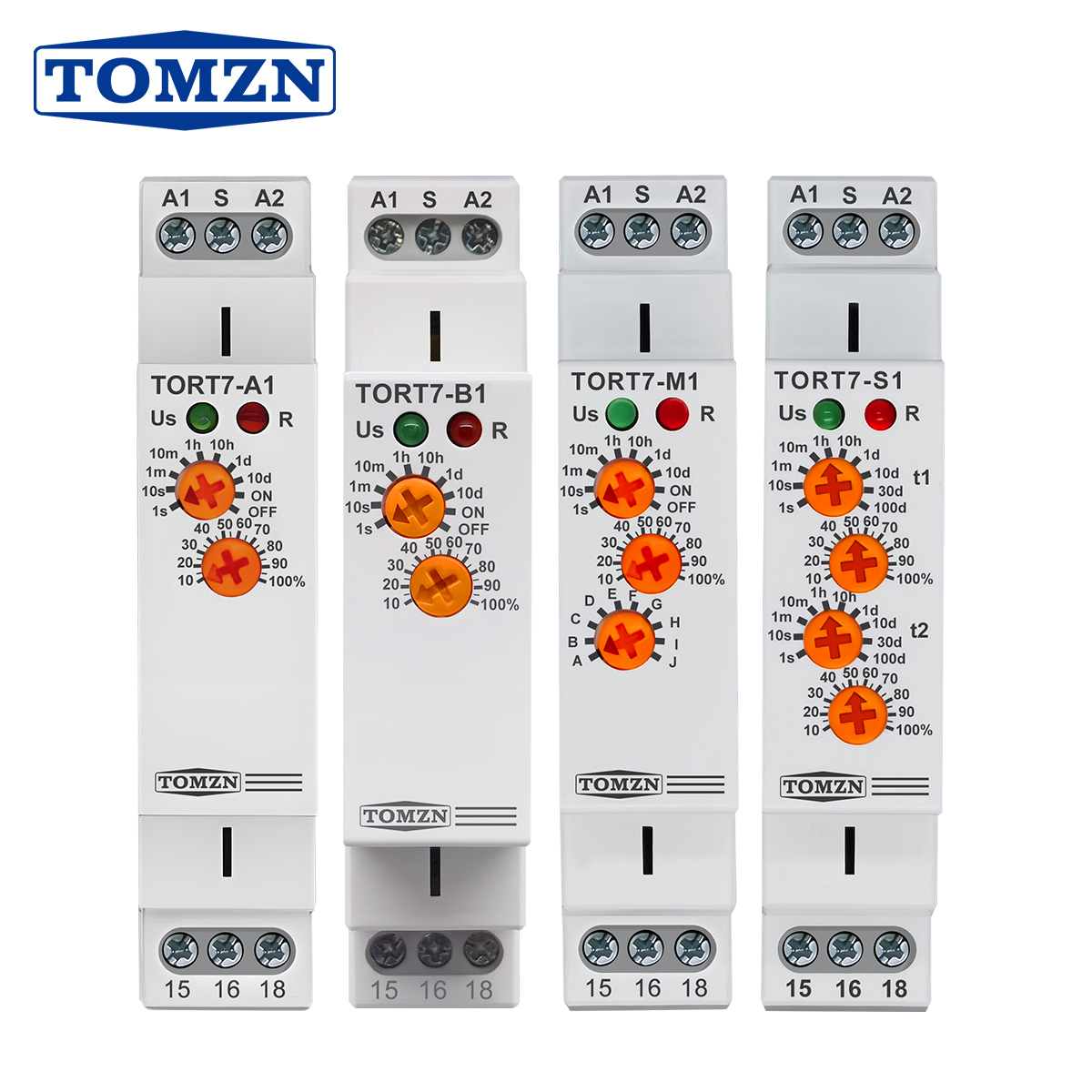
TORT7 Series Delay-ON Delay-OFF 10in1 Asymmetric Cycler Time Relay Multi-function Timer Switch 0.1S-10D Pulse Generator Interval
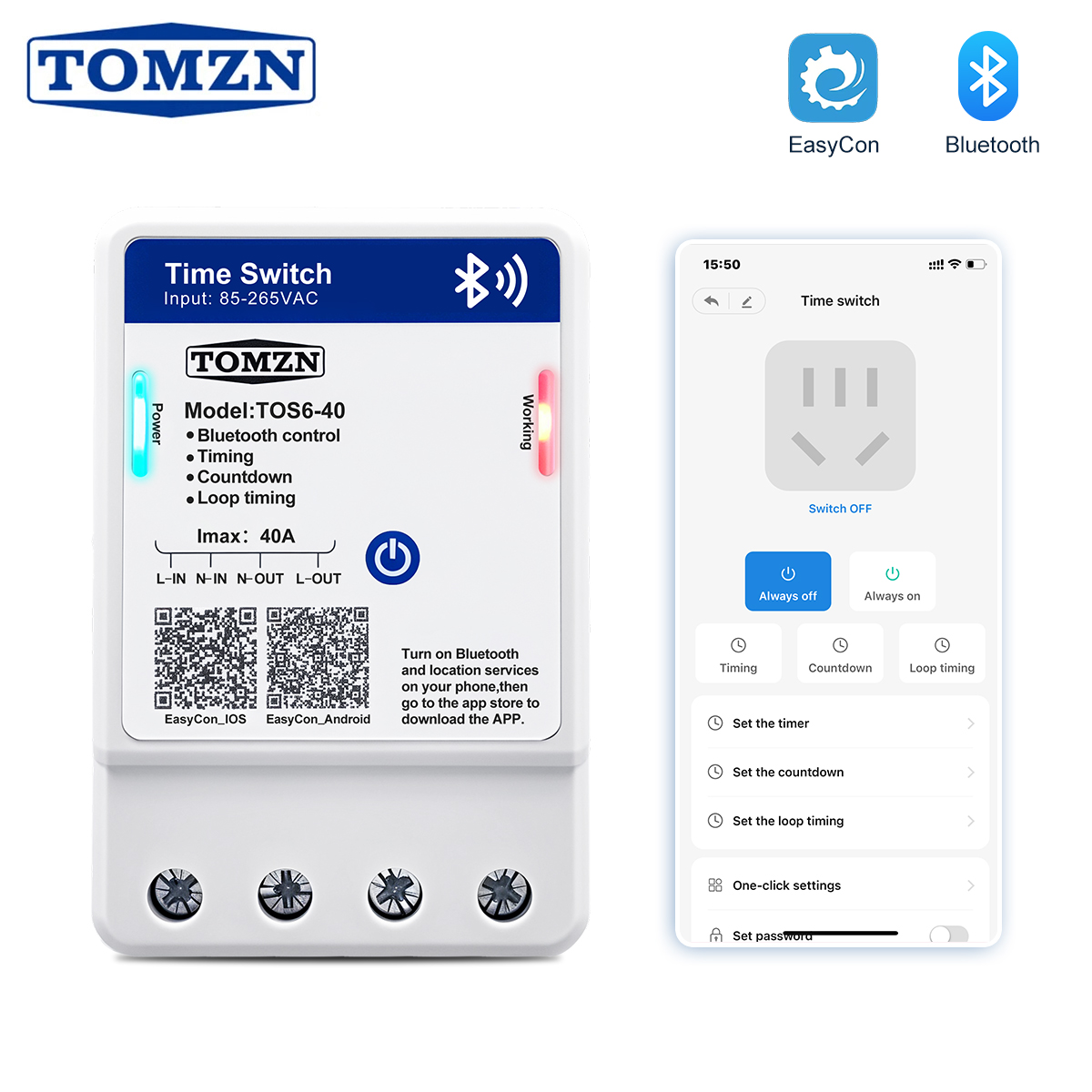
TOS6-40 Bluetooth Time Control Switch 35mm DIN Rail Wall-mounted Timing Countdown Loop Timing AC85-265V 40A Tomzn Official
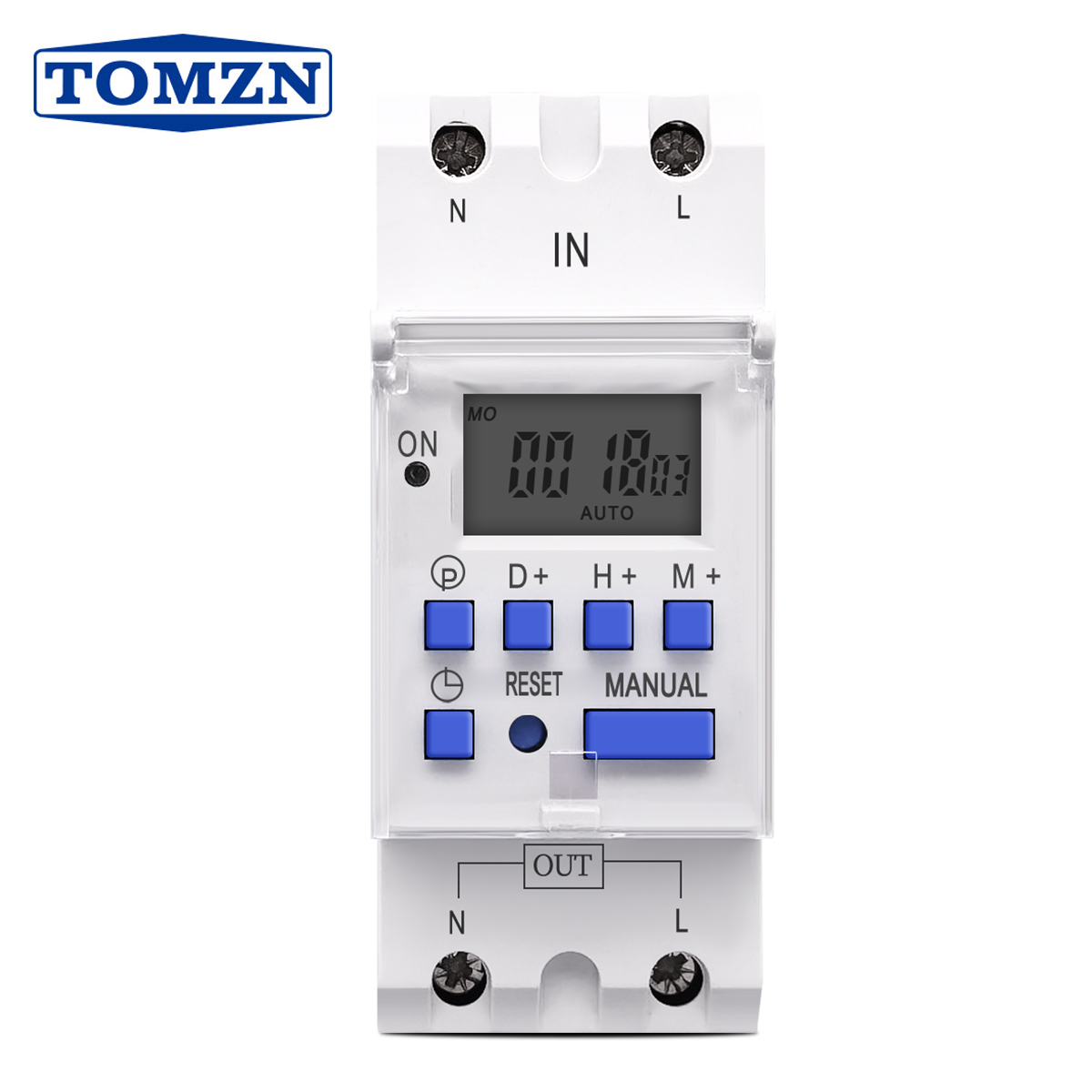
TOMZN New Type Din Rail Single Phase Weekly 7 Days Programmable Digital TIME SWITCH Relay Timer AC 220V 230V 12V 24V 48V 16A
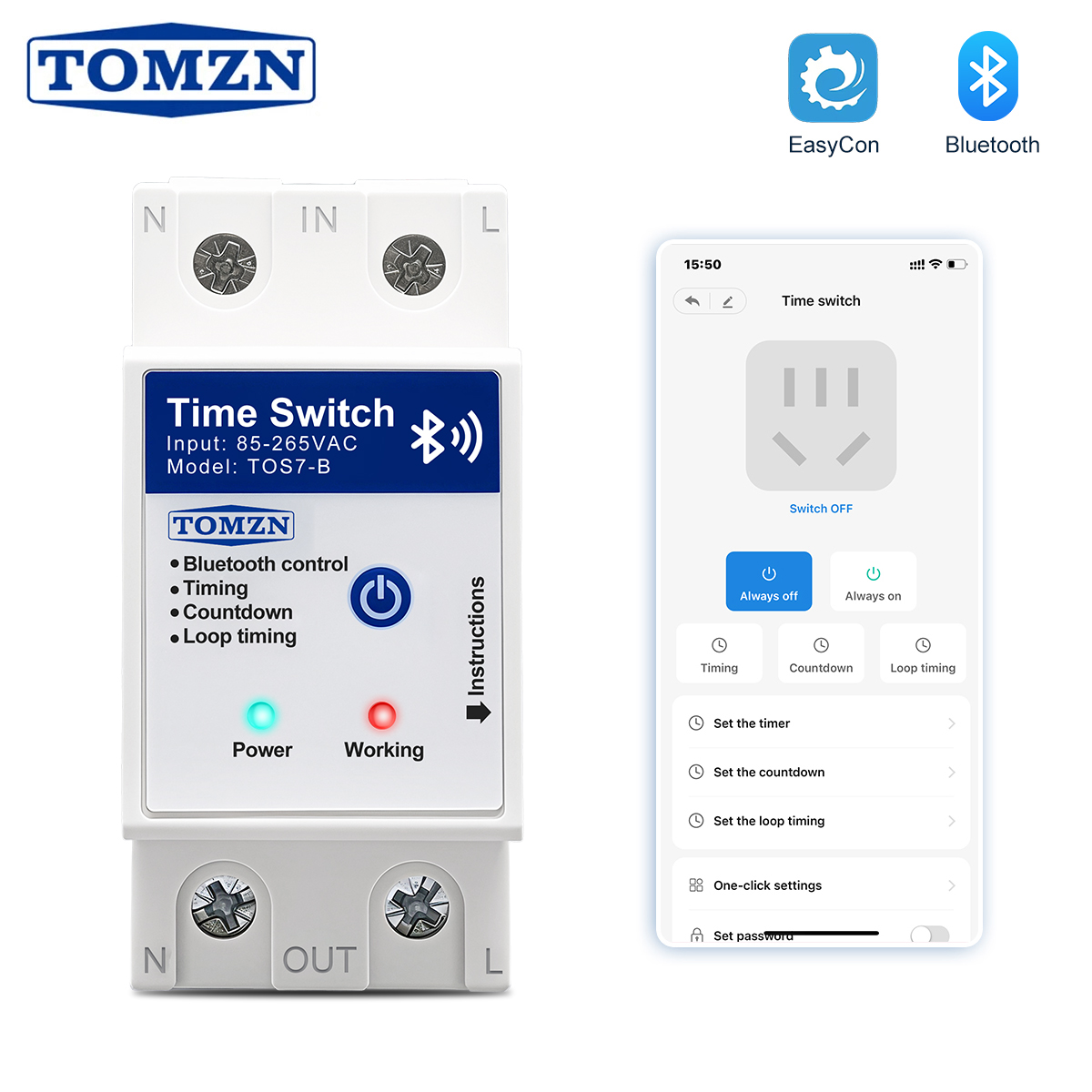
TOMZN TOS7-B Bluetooth Smart Timer Switch 40A 63A 85-265V EasyCon App Remote Control DIN Rail Countdown 28 Groups Timing Loop
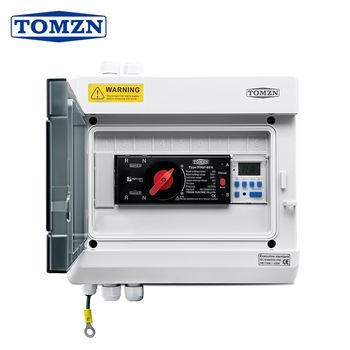
HT-9WAY Integrated ATS Box with Multi-Function Electronic Time Delay Relay & Overcurrent Protection 2P 63A 220V AC
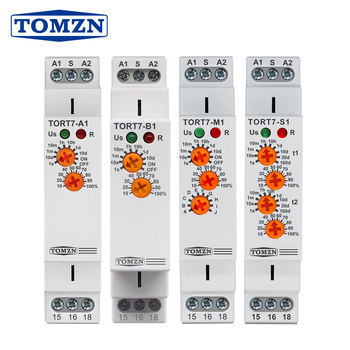
Universal Wide-Voltage Electronic Timer Relay 24V-240V AC/DC DIN-Rail Asymmetric Flasher Generator Interval Controller
Engineering Time Delay Relays: Circuit Topologies, Accuracy, and Contact Metallurgy
Time delay relays (TDRs) form the mission-critical sequencing layer in industrial automation, switchgear cabinets, motor starting circuits, HVAC equipment, and solar-diesel microgrid installations. Unlike consumer timers, an industrial-grade time delay relay operates as an electro-mechanical hybrid: a high-precision electronic timing logic engine controlling a rugged electromagnetic contact switch capable of handling high inductive or capacitive inrush currents.
Modern electrical engineering classifies industrial time delay relays into two primary technological categories: analog RC-oscillator based circuits and digital CMOS microcomputer/microcontroller (MCU) architectures. Analog relays govern delay periods through calibrated resistor-capacitor discharge networks. While cost-effective and inherently immune to soft code errors, analog topologies exhibit thermal drift, where timing intervals can fluctuate by 3% to 7% across extreme ambient ranges (-25°C to +60°C). In contrast, digital timer switches and microcomputer time relays engineered by Zhejiang TMB Electric Co., Ltd. leverage internal quartz-crystal oscillators and embedded real-time clock (RTC) integrated circuits. This architecture delivers repeat accuracy tolerances below ±0.2%, ensuring that critical operations—such as star-delta motor transition delays or automatic transfer switch (ATS) neutral dwell periods—execute with zero operational jitter.
Technical Information Gain: Contact Material Selection (AgNi vs. AgSnO2)
Standard time relays historically utilized silver-nickel (AgNi10) contact alloys suitable for pure resistive (AC-1) loads. However, modern commercial LED lighting drivers, variable frequency drive (VFD) DC bus filter capacitors, and compressor contactors subject the relay contacts to short-duration inrush spikes reaching 30 to 80 times the nominal current. Our latest DIN-rail timer switch series incorporates silver tin-oxide (AgSnO2) contacts. AgSnO2 features an exceptionally high sublimation point, offering superior anti-welding properties and arc-erosion resistance, drastically extending electrical service life to over 100,000 switching operations at full load.
Core Delay Modes & Functional Definitions in Power Engineering
Specifying the proper time relay requires a thorough understanding of signal response waveforms. Below is the operational matrix across primary timing modes implemented in our TORT7 and digital relay series:
| Delay Mode | Trigger Mechanism | Contact Behavior | Typical Industrial Application |
|---|---|---|---|
| On-Delay (Delay on Make) | Continuous coil energization (A1-A2) | Contacts remain in resting state during delay period t; transfer to energized state after t expires until coil de-energizes. | Sequential staging of industrial conveyor belts, compressor anti-short cycling, tiered motor restart after grid outage. |
| True Off-Delay (Delay on Break) | Control input toggle or coil de-energization | Contacts transfer instantaneously upon supply input, then remain locked in operating position for duration t after power interruption. | Exhaust fan purge systems, boiler cool-down sequences, emergency evacuation lighting backup circuits. |
| Asymmetric Recycler / Flasher | Continuous power supply applied | Independently adjustable ON-time (t1) and OFF-time (t2), continuously cycling between open and closed positions. | Lubrication pump pulsing, automated irrigation cycles, industrial visual/audible beacon strobing. |
| Star-Delta Transition Relay | Starter coil actuation command | Star contactor closes immediately; upon timeout, star opens, followed by a fixed 50ms-100ms non-overlap transit pause before delta contactor closes. | High-inertia 3-phase induction motor starters, preventing line-to-line dead short-circuits during contactor transfer. |
| Pulse Generator / Watchdog | External control switch closure | Delivers a precise single output pulse of fixed width t regardless of input signal trigger duration. | PLC input signal conditioning, pneumatic valve pilot activation, remote circuit breaker shunt-trip pulse execution. |
Future B2B Procurement Trends in Industrial Time Delay Relays (2025–2030)
As industrial automation converges with intelligent microgrids and IoT energy management, the procurement landscape for time delay switches and control relays is undergoing substantial structural changes. Global engineering procurement directors and electrical distributors must align their sourcing criteria with four distinct supply-chain and technological developments:
1. Universal Voltage Standardization
Procurement teams are aggressively shifting away from dedicated 12V, 24V, 110V, and 230V SKUs. Sourcing switched-mode, ultra-wide coil inputs (24V–240V AC/DC) slashes distributor inventory SKU requirements by over 60% and eliminates field failures caused by incorrect coil voltages during on-site commissioning.
2. App-Based BLE Commissioning
Traditional manual potentiometers and microscopic multi-pole DIP switches are prone to mechanical drift and setting errors. Modern deployments favor Bluetooth Low Energy (BLE) microcomputer modules (like our TOS6 and TOS7 series), allowing maintenance teams to program 28+ timing schedules wirelessly via smartphone apps in seconds.
3. Stringent Factory Audit Verification
With tightening customs standards in the European Union and North America, B2B buyers no longer rely on unverified self-declarations. Independent, on-site third-party manufacturing audits (such as our TÜV Rheinland On-Site Verification) and formal CE, RoHS 3, and REACH compliance dossiers have become prerequisite procurement baselines.
Furthermore, supply chain resilience is dictating the geographic consolidation of suppliers. Electrical contractors are partnering directly with original manufacturers established in dedicated industrial clusters. Zhejiang TMB Electric Co., Ltd., situated in Huabei Village, Liushi Town, Wenzhou—China's renowned low-voltage electrical capital—maintains direct access to raw electrolytic copper drawing, specialized stamping presses, and polymer extrusion within a 5-kilometer radius. This geographic cluster advantage enables our facility to offer low trial minimum order quantities (MOQ starting at 5 pieces) while sustaining standard delivery lead times 20% to 35% shorter than multi-tier brokers.
Technological Horizons: Smart Grid Integration, Solid-State Hybrids & Miniaturization
Where is timing relay technology headed? As panel builders face increasing physical constraints within motor control centers (MCC) and solar PV distribution combiner boxes, the demand for form-factor optimization has surged. Traditional 8-pin and 11-pin octal round plug-in socket relays are rapidly being displaced by 17.5mm ultra-slim 1-module (1P) DIN-rail modular packages. This delivers identical 16A switching capacity while freeing up over 50% of the usable panel backplate space for breakers, surge arresters, and energy meters.
Another major technological evolution is the hybrid solid-state zero-crossing relay. Conventional electromechanical relays ignite small electrical arcs between contacts when breaking inductive circuits. Hybrid architectures utilize internal microcontroller logic to monitor the alternating current sine wave, triggering internal triac / MOSFET solid-state elements exactly at voltage zero-crossing, followed milliseconds later by mechanical latching. This eliminates contact arcing, drastically minimizes electromagnetic interference (EMI) in sensitive PLC cabinets, and enables switching lifetimes exceeding 1,000,000 operational cycles.
Power Reserve Resilience: Lithium Back-Up vs. Supercapacitors
In digital programmable weekly timer switches, memory preservation during utility outages is vital. Our new-type digital programmable timer switches integrate both high-capacity rechargeable lithium button cells and low-loss supercapacitors. This internal power reserve safeguards user schedules, real-time clock time-stamping, and program states for up to 3 years of de-energized shelf storage, preventing programmatic loss in off-grid and unstable power zones.
Zhejiang TMB Electric Co., Ltd. – Your Direct OEM/ODM Hub
Headquartered in Liushi Town, Wenzhou, Zhejiang TMB Electric Co., Ltd. has delivered 24 years of manufacturing excellence in low-voltage electrical protection, switching devices, and intelligent control relays. Operating across a certified 5,700 m² production complex with 92 skilled technicians, our company integrates precision component tooling, SMD placement, relay mechanism calibration, and comprehensive automated functional verification under a certified Quality Management System.
We accommodate global buyers ranging from multi-brand regional distributors requiring custom laser printing, packaging, and specific coil voltage combinations, to solar EPCs needing fully assembled distribution combiner assemblies.
B2B Supply Assurance
- Low Trial MOQ from 5 Pieces
- 100% Final High-Voltage Dielectric Testing
- Verified Annual Export > US$ 3.3M
- Full Material Traceability & Rohs Reports
Time Delay Relay Sourcing & Engineering FAQ
Detailed technical and operational answers to common inquiries raised by international purchasing managers, electrical wholesalers, and system integrators.
1. What is the difference between an On-Delay and a True Off-Delay relay, and which requires a permanent control supply?
2. How do inductive AC-15 and motor AC-3 load ratings affect the contact life of a 16A time relay?
3. What protective measures are built into your time relays against electrical transients and line noise?
4. Can Bluetooth smart timer switches (TOS6 / TOS7) maintain time accuracy during a total grid power blackout?
5. What are the minimum order quantities (MOQ) and sample lead times for OEM branding?
6. Why is Liushi Town considered the optimal manufacturing origin for low-voltage components?
Ready to Optimize Your Timing Relay Procurement?
Partner directly with Zhejiang TMB Electric Co., Ltd. Share your single-line diagram, technical delay requirements, or target OEM branding specifications for factory-direct wholesale pricing, datasheets, and certification dossiers.