Export Lineup
High-Efficiency DC Circuit Breakers & Smart Control Units
Selected low-voltage DC protective components and modular control devices engineered for Sydney's residential, commercial, and industrial utility frameworks.


24+ Years
Low-Voltage Manufacturing Experience
5,700 m²
TÜV Assessed Production Facility
1,000V DC
Non-Polar & Polar Arc Extinction
100+
Export Nations Including Australia
Localized Engineering
Optimized DC Miniature Circuit Breaker Applications Across Greater Sydney
New South Wales' electrification drive demands ruggedized direct current isolation capable of withstanding intense thermal variations, high UV index degradation, and strict network compliance.
Residential Rooftop Solar (AS/NZS 5033 Compliance)
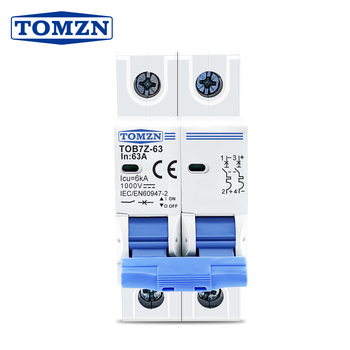
Sydney's western suburbs experience high ambient heat during summer peak generation. In rooftop string arrays, non-zero-crossing DC arcs pose severe fire hazards if broken incorrectly. Our 1000V 2P DC MCB units feature rapid magnetic blowout arc chutes and reinforced silver-alloy contacts, safely interrupting overload faults and thermal runaways without contact weld failure under high-voltage strings.
Behind-the-Meter Battery Energy Storage (AS/NZS 5139)
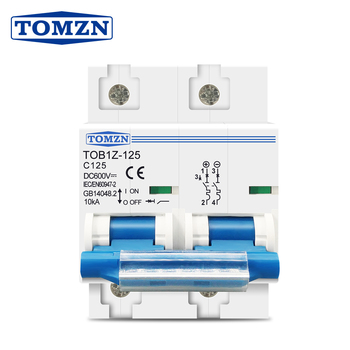
With NSW households rapidly deploying 48V to 400V lithium-ion battery storage, bi-directional current faults present critical risks. Our 600V–1000V DC breakers up to 125A provide non-polarized, bidirectional overcurrent and short-circuit clearance. They act as essential service disconnects between battery management systems (BMS) and hybrid inverters, preventing runaway current surges.
DC Fast EV Charging & Commercial Off-Grid Hubs
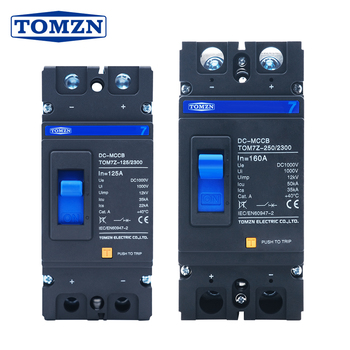
Commercial distribution centers throughout Western Sydney (Parramatta, Blacktown, Penrith) are scaling EV fleet charging stations. Direct current sub-boards require modular, DIN-rail mounted DC isolation breakers capable of clearing high prospective short-circuit currents up to 6kA/10kA without structural case rupture, enabling swift maintenance without whole-facility power interruptions.
| Electrical Parameter | Standard AC Miniature Breaker | TMB Engineered Solar DC MCB | Relevance to Sydney Electrical Standards |
|---|---|---|---|
| Arc Extinction Mechanism | Relies on 50Hz AC zero-crossing | Permanent magnetic blowout + 13-plate de-ionizing arc runner | Critical: Pure DC maintains continuous arcing, creating immediate ignition risk if AC breakers are misused. |
| Rated Operational Voltage (Ue) | 230V / 400V AC | 500V, 600V, up to 1000V DC (2P Series) | Matches string open-circuit voltage (Voc) at Sydney winter extremes (-2°C to 5°C). |
| Polarity Sensitivity | Non-polarized by nature | Bi-directional non-polarized options available | Eliminates installer wiring errors under AS/NZS 5033 during battery charging/discharging cycles. |
| Thermal Derating (Ambient) | Calibrated at 30°C base | High-temperature bimetal calibration up to 55°C enclosure temp | Withstands roof space switchboard ambient temps common in Western Sydney heatwaves. |
Future Outlook
Emerging Technological Trends in the Sydney DC Protection Sector
Market demand in New South Wales is advancing toward higher voltages, decentralized renewable storage, and automated DIN-rail intelligence.
Migration to 1000V+ Higher String Voltages
Both residential micro-generation and commercial rooftop developers across Sydney are transitioning toward longer module strings to slash balance-of-system (BOS) wiring costs. This shifts the default DC MCB demand from legacy 500V single-pole configurations to multi-pole 1000V and 1200V DC modular disconnectors capable of safe isolation under peak open-circuit voltages.
Convergence of Isolation & Smart Remote Telemetry
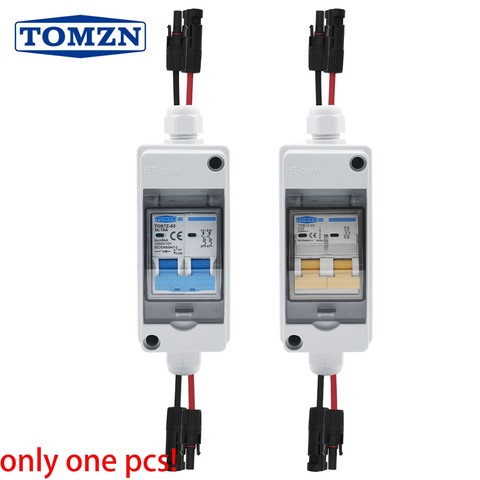
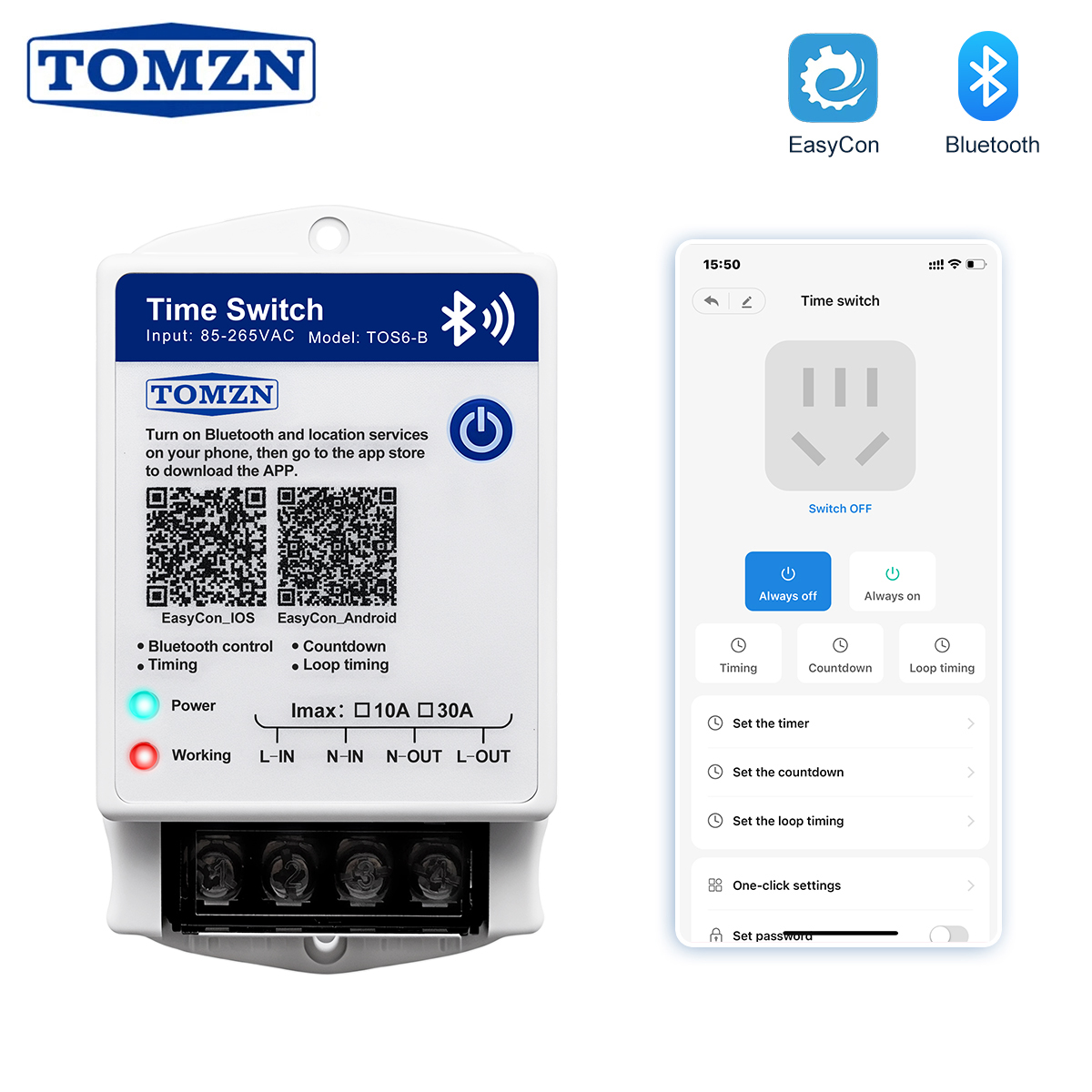
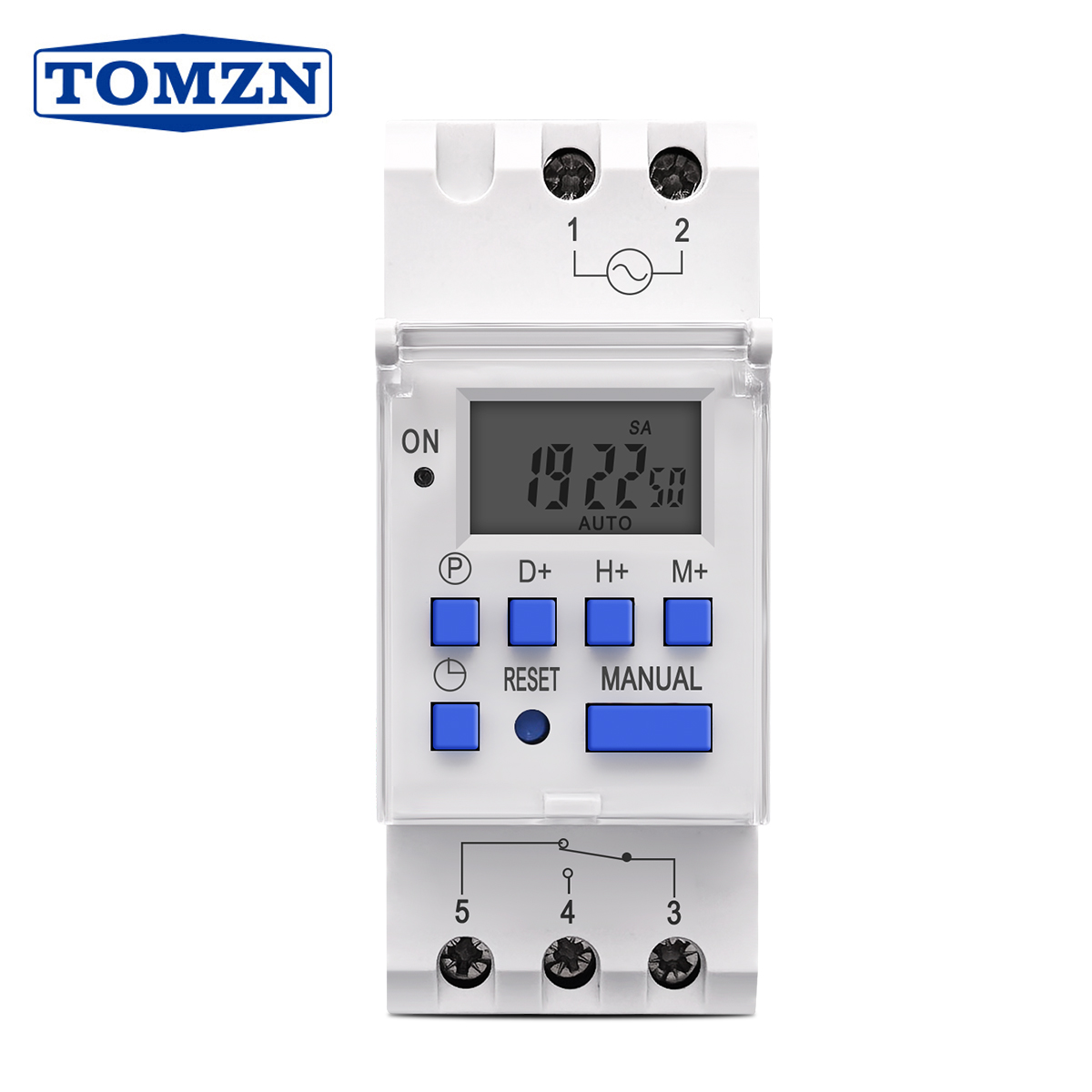
With dynamic virtual power plants (VPP) expanding across Sydney under Ausgrid and Endeavour Energy networks, switchboards are evolving. Combining conventional overcurrent trip curves with smart programmable timers, contactors, and automated disconnect relays allows Sydney energy aggregators to throttle or isolate specific DC arrays during negative pricing events.
Stricter Scrutiny on Non-Combustible Enclosures
Regulators in Australia are tightening compliance on switchboard fire propagation. DC miniature circuit breakers must now feature V0-rated flame-retardant polyamide bodies, anti-tracking insulation barriers, and corrosion-resistant silver plating to ensure continuous reliability in coastal, salt-mist exposed Sydney environments.
Supply Chain Superiority
Why Sydney Importers & Wholesalers Partner with Zhejiang TMB Electric
Direct manufacturing prowess from Liushi, Wenzhou—China's low-voltage electrical capital—backed by verifiable third-party certification and custom OEM agility.
Liushi Production Core
Headquartered in China's top electrical cluster, our 5,700 m² facility benefits from immediate access to premium copper drawing, precision stamping, and arc-chute fabrication, slashing manufacturing lead times.
TÜV Rheinland Audited
Our operations, physical plant, testing bays, and workforce of 92 skilled professionals are systematically audited and certified on-site by TÜV Rheinland, providing transparent operational credibility.
Flexible OEM / ODM MOQs
We empower Australian distributors to develop proprietary private-label brands. With catalogue trial quantities starting from just 5 pieces, buyers can validate mechanical tolerances before high-volume container procurement.
Rigorous Factory Calibration
Every single DC breaker passes through multi-tier quality checks: thermal/magnetic curve calibration, millivolt drop verification, dielectric frame insulation tests, and mechanical fatigue endurance cycling.
Source Direct from Liushi’s Verified Exporter
Consult our electrical engineering desk for custom DC MCB tripping configurations, container freight schedules to Port Botany (Sydney), and comprehensive compliance dossiers.
Buyer Guidance
Frequently Asked Questions by Sydney Importers & Contractors
Essential technical, regulatory, and logistics intelligence for electrical engineers and procurement managers sourcing DC components for Australia.
Can standard AC miniature circuit breakers be legally used in Sydney solar DC installations?
No. Under Australian Standard AS/NZS 5033 and local NSW service rules, standard alternating current (AC) MCBs must never be used in photovoltaic DC circuits. Alternating current naturally passes through zero voltage 100 times per second (in 50Hz grids), allowing air to de-ionize and quench the arc. Direct current has no natural zero-crossing; the arc burns continuously across separating contacts. TMB DC MCBs incorporate specialized permanent blowout magnets that force the DC arc into 13-plate arc splitters, extinguishing high-voltage DC faults safely.
How does ambient temperature in Western Sydney affect DC MCB sizing?
Thermal-magnetic DC breakers utilize a calibrated bimetallic strip for overload tripping. In regions like Western Sydney, unconditioned switchboards or combiner boxes exposed to solar irradiance can easily reach internal ambient temperatures of 50°C to 55°C. In such conditions, standard breakers trip prematurely below their rated current (In). We advise Sydney panel builders to apply a thermal derating factor (typically 0.85–0.90x at 50°C) or consult our engineers for custom ambient-calibrated bimetal options.
What is the difference between polarized and non-polarized DC breakers in battery applications?
Polarized DC breakers have marked positive (+) and negative (-) terminals and rely on internal magnets that deflect the arc in one specific direction. If connected in reverse, the magnetic field can blow the arc away from the splitter, damaging the breaker. In solar-battery installations where current flows both directions (charging and discharging), a non-polarized bidirectional DC breaker must be specified to ensure arc mitigation regardless of fault current trajectory.
What are your minimum order quantities (MOQ) and sample lead times for Australian clients?
We support Australian engineering firms, wholesalers, and switchboard builders with catalog sample MOQs starting from just 5 pieces. Sample dispatch via express air freight (DHL, FedEx) to Sydney Airport typically takes 4–6 business days. For volume sea freight routed to Port Botany, sea transit from Ningbo or Shanghai port averages 14–18 days, ensuring rapid inventory turnaround for major project timelines.
What documentation and compliance reports accompany your export shipments?
Every export consignment can be provided with full product datasheets, CE declarations, factory routine test reports, and our TÜV Rheinland on-site factory verification certificates. We provide complete technical drawings, terminal torque values, and tripping characteristic curves (B, C, D curves) to support your documentation for local electrical authority sign-offs.