High-Accuracy Measuring & Metering Transformers
Direct manufacturer distribution featuring instrument-grade accuracy, robust thermal withstand ratings, and seamless compatibility with DIN-rail electrical systems.



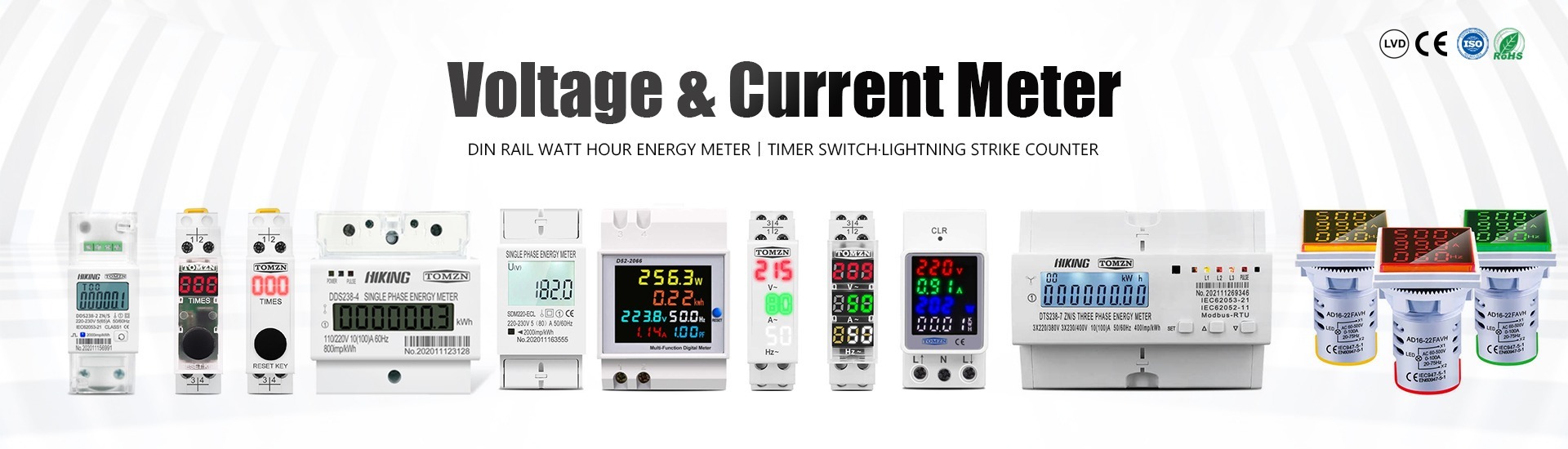
Engineering Superiority: Sourcing Current Transformers for the Iranian Market
Procuring instrument transformers in the Iranian industrial ecosystem requires navigating rigorous mechanical, thermal, and electrical specifications. As a dedicated partner in electrical protection, metering, and automation equipment, Zhejiang TMB Electric Co., Ltd. addresses the distinct requirements of Iran's energy networks. From the high-temperature petrochemical installations in Asaluyeh and Khuzestan to the expansive manufacturing districts around Tehran, Tabriz, and Isfahan, current transformers (CTs) serve as the foundation of protective relays, SCADA automation, and revenue metering.
Whether stepping down high primary currents for standard secondary inputs (typically 5A or 1A) for numerical relays or integrating with building management systems, choosing the correct current transformer dictates system security. Mismatched magnetic saturation, thermal overheating, or substandard dielectric insulation can cause false tripping, relay blinding, or catastrophic arc flash events. Our manufactured CT range complies with stringent IEC 61869-1 and IEC 61869-2 (formerly IEC 60044-1) standards, ensuring dependable performance across variable grid conditions.
Measuring vs. Protection CTs
Measuring CTs feature low Instrument Security Factor (FS5, FS10) to intentionally saturate under severe short-circuit faults, protecting sensitive connected meters and transducers. In contrast, Protection CTs (5P10, 5P20, 10P20) deliver high Accuracy Limit Factors (ALF) to maintain linear output even during massive current spikes, ensuring directional and differential relays trip predictably.
Thermal & Dynamic Withstand
Iranian heavy industry demands robust fault tolerances. Our transformers feature precision-calculated Rated Short-Time Thermal Current (Ith) and Dynamic Current (Idyn = 2.5 × Ith) ratings. High-grade grain-oriented silicon steel cores and flame-retardant VO-grade resin castings prevent thermal degradation during severe upstream network disruptions.
Burden Matching & Lead Loss
An overlooked issue in panel design is VA burden degradation. With digital meters consuming less than 0.5 VA, oversizing rated transformer burdens (e.g., 15 VA) can shift operating points into non-linear, higher-error regions. We provide expert engineering guidance on matching secondary lead impedance and device burdens for Class 0.2S and 0.5S performance.
Current Transformer Implementations Across Iran's Key Sectors
Built to withstand diverse geographical demands, ranging from arid, dust-prone desert operations to high-humidity coastal refining complexes.
Oil, Gas & Petrochemicals
Operating in environments like the South Pars gas fields or Bandar Abbas refineries requires electrical assemblies that resist corrosion, chemical vapor degradation, and extreme ambient heat (exceeding +50°C). Our epoxy resin cast CTs and hermetically sealed units provide robust dielectric strength (up to 3kV to 12kV testing) to protect motor control centers (MCC), medium-voltage pumps, and continuous refining operations.
Renewable Energy & Solar PV
With SATBA expanding photovoltaic installations across Yazd, Kerman, and Fars provinces, current measurement requires transformers that handle harmonic distortions from large-scale central and string inverters. Our broad-frequency measurement transformers integrate seamlessly with combiner boxes, DC-to-AC substations, and bi-directional energy counters.
Steel Mills & Heavy Metallurgical Foundries
Iranian steel complexes encounter severe electrical fluctuations, massive inductive loads, and rapid current spikes caused by electric arc furnaces (EAF). Our custom 5P20 protection transformers prevent core saturation during high-inrush cycling, ensuring differential and earth-fault protection relays operate accurately.
Commercial Infrastructure & Data Centers
Modern commercial hubs in Tehran and municipal modernization efforts demand split-core CTs for hassle-free retrofit installations. These split-core units snap around existing copper busbars and feeder cables without interrupting critical power lines, pairing with multi-channel sub-metering systems to support energy audits.
Emerging Trends in the Iranian Power & Instrumentation Sector
Modernization, automation, and distributed energy are driving changes in the design, purchase, and deployment of current sensors.
Smart Grid Modernization (FAHAM Project)
Iran's national smart metering initiative (FAHAM) has accelerated the need for high-precision, low-error CTs. High-density smart meters and grid intelligence units require Class 0.5S and 0.2S current sensors capable of maintaining accuracy down to 1% of rated primary current, facilitating precise energy tracking and demand-response management.
Transition to Low-Power Instrument Transformers
Traditional 5A outputs are giving way to Low Power Current Transformers (LPCT) and Rogowski coils offering millivolt outputs. These modern sensors eliminate dangerous open-circuit high voltages, offer a wider dynamic range, and interface directly with microprocessor-based protection relays and micro-SCADA setups.
Demanding Localization & Durability Specs
Iranian contractors now face stringent engineering requirements from consultancies like Monenco Iran and Ghods Niroo. Bidding documents increasingly require verified test reports, non-flammable casing materials, high impulse withstand test verification, and rigorous third-party certifications to ensure sustained grid reliability.
| Application Category | Primary Transformer Class | Typical Rated Burden | Core Construction Type | Critical Protection / Measurement Benefit |
|---|---|---|---|---|
| Tariff & Revenue Metering | Class 0.2S, Class 0.5S | 2.5 VA to 5 VA | Toroidal Solid Core (Silicon Steel) | High precision across 1% to 120% nominal current; minimal phase displacement. |
| Industrial Motor Feeder Protection | Class 5P10 / 5P20 | 10 VA to 15 VA | Reinforced Cold-Rolled Magnetic Core | Prevents saturation under 10x-20x starting inrush and locked-rotor conditions. |
| Factory Retrofitting & Auditing | Class 0.5, Class 1.0 | 1.5 VA to 5 VA | Split-Core (Clamp / Snap Type) | Installed without line disconnection; includes integrated voltage protection. |
| Solar PV Inverter Monitoring | Class 0.5 / Class 1 | 2.5 VA to 7.5 VA | High-Frequency Low-Loss Ferrite Core | Accurate performance in harmonic-rich environments, resisting high inverter heat. |
Why Partner with Zhejiang TMB Electric Co., Ltd.
Backing every shipment with over two decades of electrical manufacturing expertise, rigorous quality control, and robust supply chain resilience.
TÜV Rheinland Assessed Factory
Our 5,700 m² production base in Liushi Town, Wenzhou—the electrical manufacturing capital of China—is thoroughly audited and on-site verified by TÜV Rheinland. With 92 skilled technicians, we maintain full quality control across winding, resin casting, assembly, and test operations.
Rigorous Compliance & CE Marking
Every product line is designed and evaluated to international standards, including CE marking and IEC compliance. We supply complete routine test reports, primary injection data, insulation resistance checks, and ratio verification reports with your order.
Supply Chain & Export Track Record
With an annual export volume exceeding US$ 3.3 million across more than 100 countries, we maintain an established logistics system. We regularly accommodate customized busbar windows, unique ratio configurations, private-label branding, and low sample MOQs (starting at just 5 pieces).
Frequently Asked Questions by Iranian Engineers & Importers
Essential technical and commercial answers for electrical contractors, panel builders, and procurement officers.
What is the key difference between Class 0.5 and Class 0.5S for Iranian utility projects?
Class 0.5S provides higher precision at very low load currents compared to standard Class 0.5. Under IEC 61869-2, a 0.5S CT guarantees accuracy down to 1% of its rated current, whereas Class 0.5 specifies accuracy only down to 5%. For projects under TAVANIR or FAHAM guidelines with varying power usage, Class 0.5S is essential for fair and dependable billing.
Why is opening the secondary circuit of an energized CT extremely hazardous?
When the secondary circuit is open, the demagnetizing secondary ampere-turns drop to zero. The entire primary current turns into an intense magnetizing force, driving the core deep into saturation. This generates high-voltage inductive spikes (often several kilovolts) across secondary terminals, posing fatal electrocution hazards, insulation breakdown, and fire risks.
How should we configure CT primary ratings for Iranian solar PV inverter substations?
We recommend sizing the primary rating to roughly 1.15 to 1.25 times the continuous maximum output current of the inverter at peak irradiance and lowest operating temperatures. Additionally, the transformer core should feature sufficient saturation headroom and low-loss magnetic laminations to handle harmonic currents without over-saturation.
Can you provide customized mounting and busbar apertures for local switchgear?
Yes. We support custom production runs to suit busbar dimensions from 30x10mm up to 200x50mm, along with primary wound designs. Mounting provisions include standard 35mm DIN rail clips, busbar clamps, and direct baseplate mounting to fit local panel layouts seamlessly.
How does high ambient temperature in regions like Ahvaz impact CT selection?
High ambient heat reduces transformer thermal dissipation. Standard CTs are rated for ambient temperatures of 35°C to 40°C. In locations reaching 50°C to 55°C, thermal derating is required to prevent insulation degradation (Class E or Class B). We engineer high-temperature resin formulations and copper windings with low thermal resistance for sustained operation in severe climates.
What documentation and test reports accompany custom export shipments?
Shipments can include factory routine inspection certificates, ratio error and phase displacement curves, dielectric test reports, CE compliance documentation, and raw material safety datasheets. Independent third-party inspection can also be coordinated before port dispatch.
Engineer Your System with Confidence
Consult with our instrument transformer engineers to confirm technical ratios, burden calculations, and panel layouts tailored to your project requirements in Iran.
Inquire Now