High-Performance Low-Voltage Protection Inventory
Pre-tested, DIN-rail mountable surge suppression modules, programmable time controls, and direct-current solar circuit protection built for panel builders, commercial integrators, and electrical EPC distributors across the Dallas–Fort Worth Metroplex.

TOMZN Din Rail Single Phase 7-Day Digital Time Switch

TOS6-40 Bluetooth 35mm DIN Rail Time Control Switch
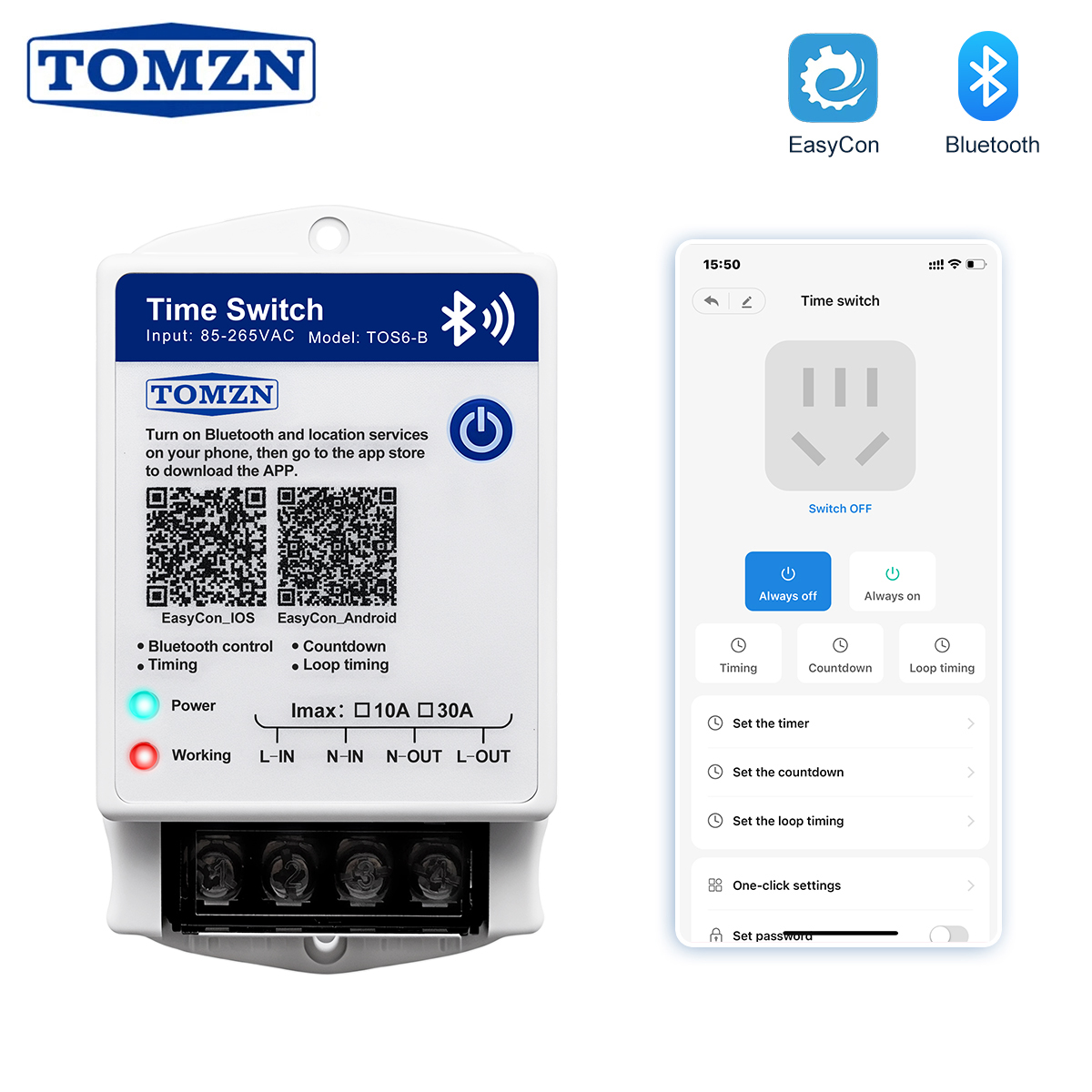
TOMZN Bluetooth Smart Countdown Timer Switch

TORT7 Series 10-in-1 Asymmetric Cycler Delay Relay
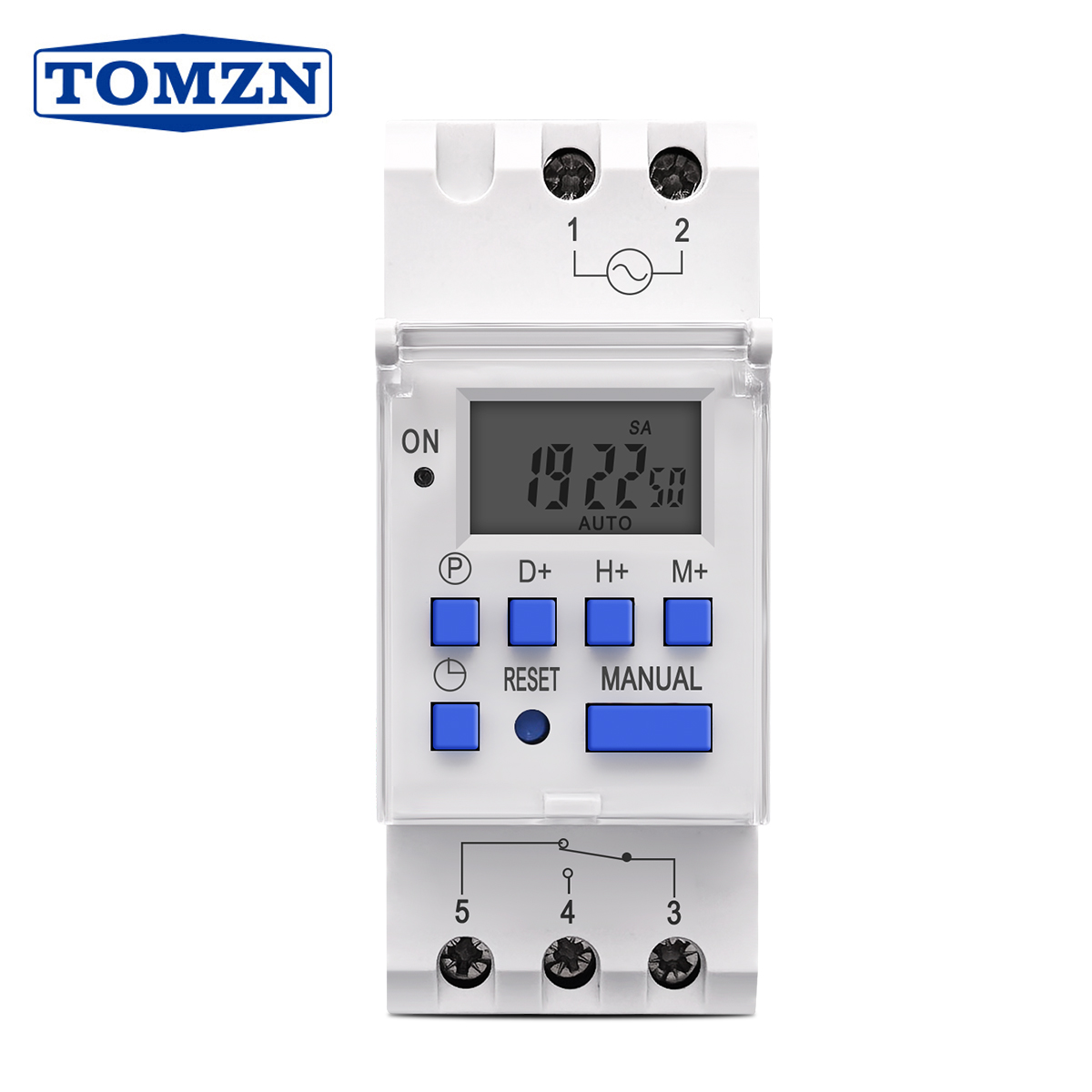
TOMZN 1NO+1NC Single Phase Weekly Programmable Relay

TOMZN TOS7-B Bluetooth Remote Timer 40A/63A
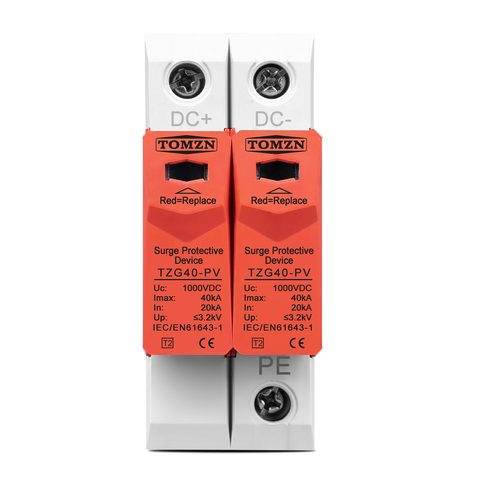
TOMZN DC 500V–1000V Photovoltaic Surge Arrester (SPD)
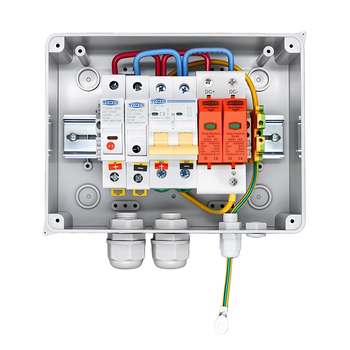
Pre-Wired 600V DC Combiner Box with Built-In Arrester
Overcoming Transient Voltage Anomalies in the Dallas–Fort Worth Electrical Ecosystem
A rigorous examination of lightning ground flash density, industrial load switching transients, and utility interconnection challenges unique to ERCOT’s North Texas service territory.
The Dallas–Fort Worth (DFW) Metroplex represents one of North America's most dynamic industrial hubs and fastest-growing digital infrastructure corridors. However, operating low-voltage electrical distribution networks in North Texas presents unique reliability and component-survival challenges. Geographically situated within "Tornado Alley" and along the subtropical humid boundary, North Texas experiences severe convective thunderstorm fronts characterized by intense atmospheric ionization. According to the National Lightning Detection Network (NLDN), the Dallas region records between 8 to 14 lightning flashes per square kilometer annually, causing destructive cloud-to-ground electromagnetic discharge spikes that couple directly into commercial distribution feeders, exterior solar arrays, and overhead service entrances.
Compounding this environmental exposure is the structural uniqueness of the ERCOT (Electric Reliability Council of Texas) electrical grid. Operating as an asynchronous islanded grid with minimal synchronous AC interconnects to the Eastern or Western interconnections, ERCOT exhibits pronounced frequency and transient voltage volatility during rapid shifts between extreme thermal generation dispatch, utility-scale wind from West Texas, and localized rooftop solar production. Rapid load-shed events, high-capacity utility switching, and transient voltage sags/swells create dangerous sub-microsecond overvoltages ($dU/dt$) within commercial sub-panels. Without robust low-voltage surge arresters (Surge Protective Devices, or SPDs) engineered with rapid response clamping thresholds and coordinated thermal disconnection systems, industrial control boards, data center power distribution units (PDUs), and commercial HVAC compressors experience cumulative dielectric degradation that precipitates catastrophic terminal failure.
Targeted DFW Application Profiles for Low-Voltage Surge Protection
Real-world deployment matrices for OEMs, panel builders, and electrical contractors operating throughout Dallas, Collin, Tarrant, and Denton counties.
Hyperscale Data Centers (Richardson & Plano)
The Telecom Corridor along US-75 and legacy tech enterprise campuses require multi-tier cascade protection. Type 1 SPDs deployed at the main service switchboard (480Y/277V) clamp upstream utility switching surges, while Type 2 modular DIN-rail arresters protect server rack distribution boards, isolated static transfer switches, and UPS bypass pathways against continuous microscopic voltage impulses.
Commercial Rooftop Solar & BESS (South Dallas Logistics)
Massive flat-roof distribution centers along I-20 and the Inland Port of Dallas utilize large commercial solar installations paired with battery energy storage systems (BESS). These installations mandate polarized 600V and 1000V DC surge arresters installed within pre-wired IP65 combiner enclosures to mitigate direct and induced lightning surges along exposed DC string wiring.
Industrial Automation (Fort Worth & Grand Prairie)
Heavy machining facilities, cold-storage warehouses, and automotive suppliers operate massive variable frequency drives (VFDs) and cyclical motor loads. Switching inductive loads generates powerful internal ringing transients. Combining high-discharge AC SPDs with precise asymmetric cycle relays ensures uninterrupted PLC operation and prevents drive inverter gate destruction.
DC Fast EV Charging Corridors (I-35 & DFW Airport)
National Electric Vehicle Infrastructure (NEVI) formula-funded charging hubs operating along North Texas interstate spines utilize high-voltage rectifiers prone to line-side lightning spikes. Dedicated heavy-duty surge arresters integrated into upstream feeder panels safeguard delicate silicon-carbide (SiC) power switching modules against grid voltage transients.
Critical Healthcare & Municipal Emergency Infrastructure
Level-1 trauma centers and municipal 911 dispatch centers in Dallas utilize automatic transfer switches (ATS) tied to diesel generator backups. During grid interruption and transfer transition, back-EMF spikes and out-of-phase reconnects create harsh transients. Coordinated DIN-rail surge protectors guard automatic transfer switch control circuitry and sensitive diagnostic imaging electronics.
North Texas Building Codes & Electrical Mandates Driving Surge Arrester Demand
Understanding the interplay between local municipal amendments and the National Electrical Code.
The regulatory environment across North Texas has pivoted aggressively toward mandatory surge suppression over recent code adoption cycles. Municipalities across the region—including the City of Dallas, Fort Worth, Arlington, and Irving—operate under frameworks aligned with the National Electrical Code (NEC / NFPA 70) 2020 and 2023 editions, enforced through the North Central Texas Council of Governments (NCTCOG) regional amendments:
-
•
NEC Article 242 (Overvoltage Protection & SPDs): Completely consolidated overvoltage requirements, establishing rigorous sizing rules for Type 1, Type 2, and Type 3 surge arresters based on nominal discharge current ($I_n$) and Maximum Continuous Operating Voltage ($MCOV$).
-
•
NEC 230.67 Mandatory Residential & Commercial Service Entrance SPDs: Requires an approved Type 1 or Type 2 SPD on all new and upgraded service entrances. DFW electrical inspectors rigorously verify that surge suppressors feature adequate Short-Circuit Current Ratings (SCCR) equal to or exceeding the available fault current at the service panel.
-
•
NEC Article 705 & 690 Solar Photovoltaic Interconnections: Demands robust overvoltage protection across both DC array source circuits and AC output connections, specifically where combiner enclosures and inverter disconnects are mounted outdoors on commercial parapets exposed to direct atmospheric strikes.
| Classification Parameter | Type 1 SPD (Service Entrance) | Type 2 SPD (Sub-Distribution) | Type 3 SPD (Point-of-Use) | DC Photovoltaic Arrester |
|---|---|---|---|---|
| Installation Location | Line side or load side of main service disconnect | Load side of panelboard overcurrent protection | Minimum 10m conductor length from service panel | Within PV combiner box or DC inverter input |
| Nominal Discharge ($I_n$) | 10kA or 20kA (8/20 µs waveform) | 10kA or 20kA (8/20 µs waveform) | 3kA or 5kA (8/20 µs waveform) | 10kA to 20kA DC |
| Max Discharge ($I_{max}$) | Up to 50kA – 100kA per phase | 40kA per module | 10kA per pole | Up to 40kA per string |
| Typical DFW Target System | 480Y/277V 3-Phase, 240/120V Split-Phase | 208Y/120V Commercial Sub-panels | Industrial PLCs, BMS Servers, Telecom | 600V, 800V, 1000V DC Solar String Arrays |
| Thermal Runaway Cutoff | Integrated micro-gap thermal disconnector | High-temperature solder disconnect + visual flag | Internal fuse / thermal release | Arc-extinguishing DC thermal disconnect switch |
Why Dallas Importers & Contractors Source Directly from Zhejiang TMB Electric
Combining the cost efficiency of the world’s largest low-voltage electrical manufacturing cluster with stringent international third-party factory validation.
TÜV Rheinland Audited Facility
Our 5,700 m² modern manufacturing plant in Liushi, Wenzhou—the undisputed global heart of low-voltage electrical engineering—is assessed on-site by TÜV Rheinland. We maintain a verified staff of 92 skilled technicians, ISO-certified management workflows, and an annual export volume exceeding US$ 3.3M.
Deep Liushi Industrial Cluster Integration
Because our factory is positioned inside China’s premier electrical hub, our supply chain for high-purity electrolytic copper busbars, silver-alloy micro-contacts, custom gas discharge tubes (GDTs), and specialized flame-retardant PA66 casings is compressed within a 5-kilometer radius, guaranteeing unmatched production agility.
Multi-Stage Quality Verification
Every single surge protector, circuit breaker, and automatic transfer switch undergoes a six-step quality protocol: raw material spectrometric analysis, precision robotic assembly, automatic thermal and magnetic trip curve calibration, high-potential dielectric breakdown testing, energized dynamic response verification, and final optical packaging inspection.
OEM / ODM Flexibility with Ultra-Low MOQs
Unlike massive conglomerates that enforce massive container-level minimum orders, we empower Texas panel builders, solar distributors, and electrical wholesalers to begin evaluation orders from just 5 pieces. We offer complete private labeling, custom laser markings, tailored terminal geometries, and pre-configured solar combiner box wiring.
Direct Logistics to Port of Houston & Dallas Inland Port
We routinely coordinate streamlined maritime logistics through the Houston shipping terminal with direct bonded rail-drayage into the Dallas Logistics Hub (Inland Port of Dallas in Hutchins and Wilmer), providing North Texas clients with seamless door-to-warehouse DDP delivery, cleared customs, and rapid turnarounds.
Frequently Asked Questions by Dallas Electrical Specifiers & Importers
In-depth engineering answers addressing code compliance, international standards, testing credentials, and logistics.
How do IEC 61643-11 rated SPDs translate to US NEC / UL 1449 expectations in Dallas municipal projects?
Can your DC Surge Protective Devices be installed on floating or bi-polar solar arrays common in Texas commercial installations?
What Short-Circuit Current Rating (SCCR) and backup overcurrent protection are required for these arresters?
What are the typical sea and air shipping transit times to the Dallas–Fort Worth area?
Does Zhejiang TMB Electric support custom OEM label branding and custom combiner box layouts for US distributors?
How does high North Texas summer ambient heat affect the operational lifespan of your surge arresters?
Ready to Fortify Your Electrical Equipment in the Dallas Market?
Collaborate directly with our veteran low-voltage engineering team. Request full factory test reports, datasheets, evaluation samples, or customized project pricing tailored to your North Texas commercial bids.