Molded Case Circuit Breaker Factory & Exporters Serving the Australia Market
Precision-Engineered Low-Voltage Circuit Protection, DC Battery Energy Storage Breakers & Smart Distribution Assemblies Compliant with AS/NZS 60947.2 Standards
Factory Direct Selection
Precision Circuit Protection & Control Systems for Australian B2B Projects
Source directly from Liushi's premier electrical cluster. Below are our high-reliability DIN rail and molded case protective components rigorously tested for continuous operation in extreme Australasian ambient profiles.
Time Control
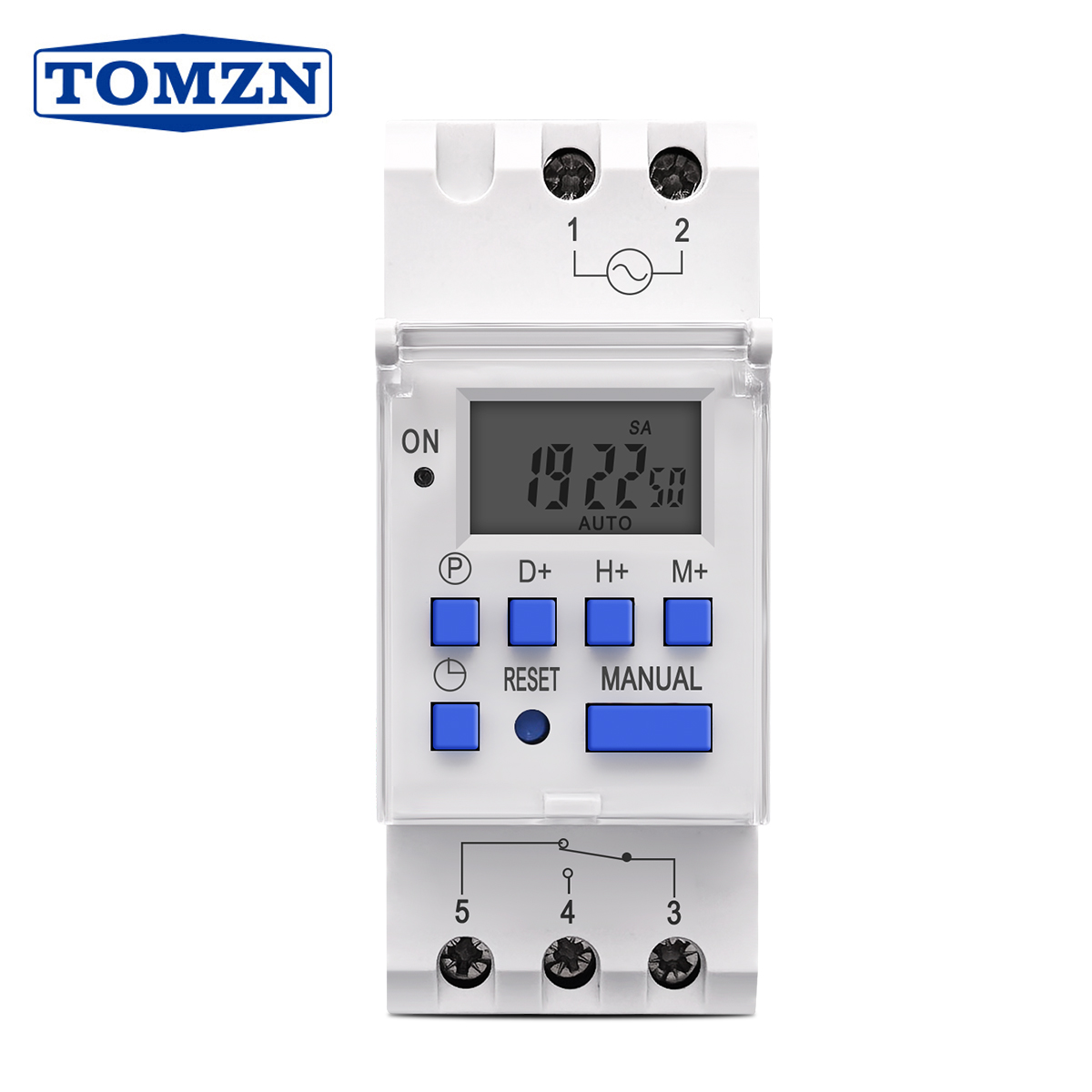
Single Phase Weekly 7-Day Programmable Digital Timer
Molded Case Circuit Breaker Architecture: AS/NZS 60947.2 Structural Imperatives for Australian Grids
Specifying molded case circuit breakers (MCCBs) for deployment across the Australian National Electricity Market (NEM) and off-grid mining microgrids requires engineering rigor far beyond generic international standards. Australian distribution boards and switchgear assemblies operate under some of the world's harshest environmental matrices: prolonged high ambient temperatures exceeding 45°C across regional inland belts, severe ultraviolet degradation, hypersaline maritime conditions, and massive fault-level currents induced by concentrated commercial solar PV arrays.
Under AS/NZS 60947.2 (Low-voltage switchgear and controlgear - Part 2: Circuit-breakers) and the overarching AS/NZS 3000:2018 (Wiring Rules), an MCCB is not merely an overcurrent disconnect. It serves as the primary fail-safe mechanism against thermal runaway, inductive transient damage, and catastrophic arc-flash catastrophes. As a premier manufacturer located in the Liushi electrical manufacturing cluster of Wenzhou, Zhejiang TMB Electric Co., Ltd. builds MCCBs utilizing advanced thermo-set glass fiber reinforced unsaturated polyester (DMC/SMC) housings, ensuring zero casing carbonization and ultra-high dielectric strength even during prospective short-circuit interrupters exceeding 50kA.
Thermal-Magnetic Calibration vs. Ambient Derating in Australasian Climates
The standard baseline calibration temperature for European and global MCCBs is typically anchored at 30°C or 40°C. However, when switchboards are installed in regional Western Australia, Queensland, or Northern Territory mining sites, internal enclosure operating temperatures routinely exceed 55°C. If a standard breaker is installed without precise ambient derating calculations, nuisance tripping occurs, paralyzing production lines and critical infrastructure.
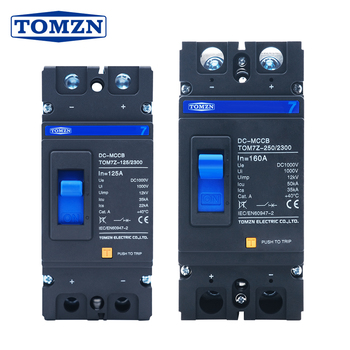
Our OEM/ODM engineering teams integrate custom-calibrated bimetallic thermal elements or microprocessor-driven Electronic Trip Units (ETUs) featuring True-RMS current sensing. These units maintain tripping accuracy across wide temperature excursions (-25°C to +70°C). For DC microgrids and battery energy storage systems (BESS), where thermal rise is compounded by lack of zero-voltage crossing, our DC MCCBs leverage heavy silver-alloy (AgCdO or AgSnO2) electrical contacts paired with ceramic de-ionizing arc chute grids that divide and dissipate thermal arc energy within milliseconds.
Series & Frame Size
Rated Operating Voltage ($U_e$)
Rated Current ($I_n$)
Ultimate Breaking Cap. ($I_{cu}$)
Service Breaking Cap. ($I_{cs}$)
Applicable Australian Standard
TOM7Z-125DC
500V / 1000V DC
16A – 125A
25kA @ 1000V DC
100% $I_{cu}$
AS/NZS 60947.2, AS/NZS 5033
TOM7Z-250DC
1000V / 1500V DC
125A – 250A
35kA @ 1000V DC
100% $I_{cu}$
AS/NZS 60947.2, AS/NZS 5139
TMB-AC160 Frame
415V / 690V AC
25A – 160A
50kA @ 415V AC
75% $I_{cu}$
AS/NZS 60947.2, AS/NZS 3000
TMB-AC400 Frame
415V / 690V AC
200A – 400A
70kA @ 415V AC
100% $I_{cu}$
AS/NZS 61439-1/2 Verified
TOQ3 Modular ATS
230V / 415V AC
63A – 125A
10kA / Transfer < 50ms
100% $I_{cu}$
AS/NZS 60947.6.1 Automatic
Arc Extinction Dynamics in DC Molded Case Circuit Breakers
Direct current (DC) fault clearing poses severe physical challenges compared to alternating current (AC). Because DC current does not oscillate through natural zero-crossings, an electric arc drawn between opening contacts burns continuously until forced to lengthen and cool. In commercial rooftop solar installations regulated by AS/NZS 5033:2021 and battery installations falling under AS/NZS 5139:2019, an ordinary AC breaker deployed on a DC string will catastrophically fail, resulting in sustained electrical fires.
TMB Electric solves this through patented magnetic arc blowout coils coupled to splitter plate arrays. When contacts separate, the electromagnetic Lorentz force rapidly propels the plasma arc off the silver contact tips and into the quenching chamber. The chamber slices the arc into multiple series micro-arcs, rapidly driving the total arc voltage higher than the open-circuit system voltage ($V_{arc} > V_{system}$), collapsing the current to zero in less than 8ms. This level of protection is why Australian electrical wholesalers, switchboard builders, and EPC integrators partner directly with our Wenzhou export manufacturing team.
Localized Engineering
Tailored Switchgear Deployments Across Australia's Industrial Sectors
From deep-pit gold and iron extraction in Western Australia to hyperscale rooftop commercial solar installations in suburban Sydney and Melbourne, explore how our MCCB and modular control line-ups perform in the field.
Mining & Heavy Industry (Pilbara & Goldfields)
Heavy vibration, iron oxide dust penetration, and extreme ambient thermal loading. Our MCCBs with auxiliary contacts, shunt trip coils, and IP66 secondary enclosures provide uncompromised motor feeder and conveyor system protection.
Utility-Scale & C&I Solar PV Systems
String combiners, DC disconnects, and central inverter input protection. Supporting system voltages up to 1500V DC with breaking capacities designed to withstand high prospective fault currents without carbon bridging.
Compact frame sizes engineered to optimize modular space within switchboards compliant with AS/NZS 61439. Standardized busbar spacing, front-accessible terminals, and standardized terminal shrouds accelerate manufacturing throughput.
BESS & Remote Microgrid Installations
Critical sub-millisecond trip characteristics protecting lithium-iron-phosphate (LFP) battery racks from dead short circuits. Bidirectional conduction mechanisms allow unrestricted charging and discharging fault isolation.
Strategic Horizon
Australian Market Dynamics: The Clean Energy Transformation
Key regulatory and structural tailwinds shaping procurement requirements for molded case circuit breakers and electrical protection over the next decade.
01
Aggressive BESS & DC Microgrid Expansion
With Australia leading the world in per-capita residential and commercial rooftop solar, the focus has shifted rapidly to community-scale batteries and industrial energy storage. This drives unprecedented demand for high-capacity, polarized and non-polarized DC MCCBs capable of handling repetitive switching without contact pitting.
02
Enforcement of AS/NZS 61439 Switchboard Standards
The total phase-out of AS/NZS 3439 in favor of AS/NZS 61439 mandates that circuit breaker thermal dissipation and short-circuit withstand values must be certified via rigorous design verification methods. Switchboard manufacturers now demand traceable factory-direct test reports and temperature rise limits ($I_n$ derating tables).
03
Demand for Smart IoT-Enabled Circuit Protection
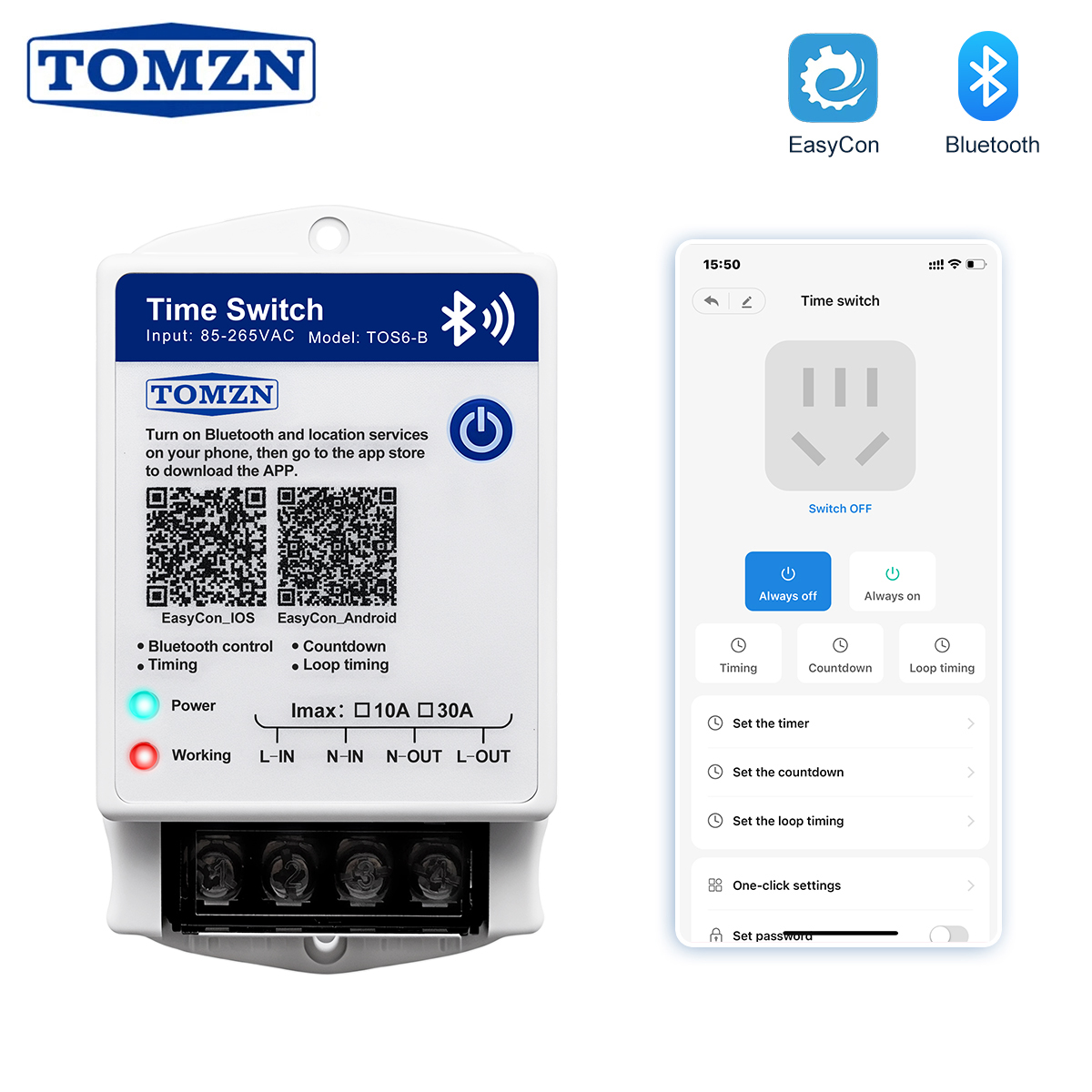
The integration of digital sub-metering, Bluetooth-configured timing switches, and Modbus/RS-485 connected breakers is rapidly expanding across New South Wales, Victoria, and Queensland commercial real estate. Modern panel builders seek plug-and-play breaker platforms that communicate fault diagnostics in real time.
24+
Years Manufacturing
5,700 m²
Factory Floor Area
TÜV
On-Site Verified Facility
5 Pcs
Ultra-Low Sample MOQ
100+
Global Export Markets
Factory Direct Authority
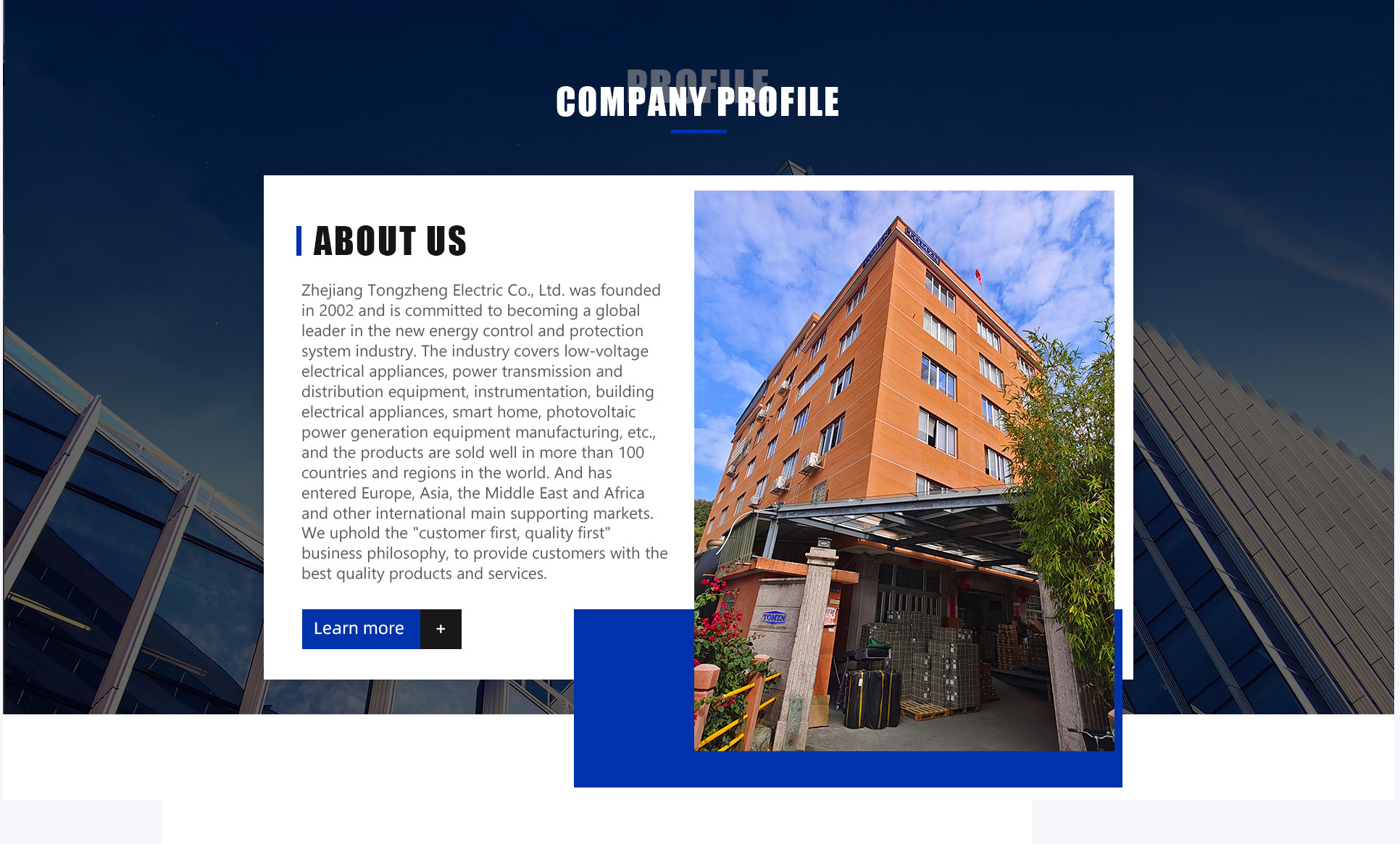
Zhejiang TMB Electric: Your Direct Manufacturing Partner in Liushi
Headquartered in Huabei Village, Liushi Town, Wenzhou—China's universally recognized epicenter for low-voltage electrical technology—Zhejiang TMB Electric Co., Ltd. has accumulated over 24 years of manufacturing and tooling excellence. We bypass intermediate trading entities, granting Australian engineering clients, switchboard builders, and distributors direct access to primary production lines.
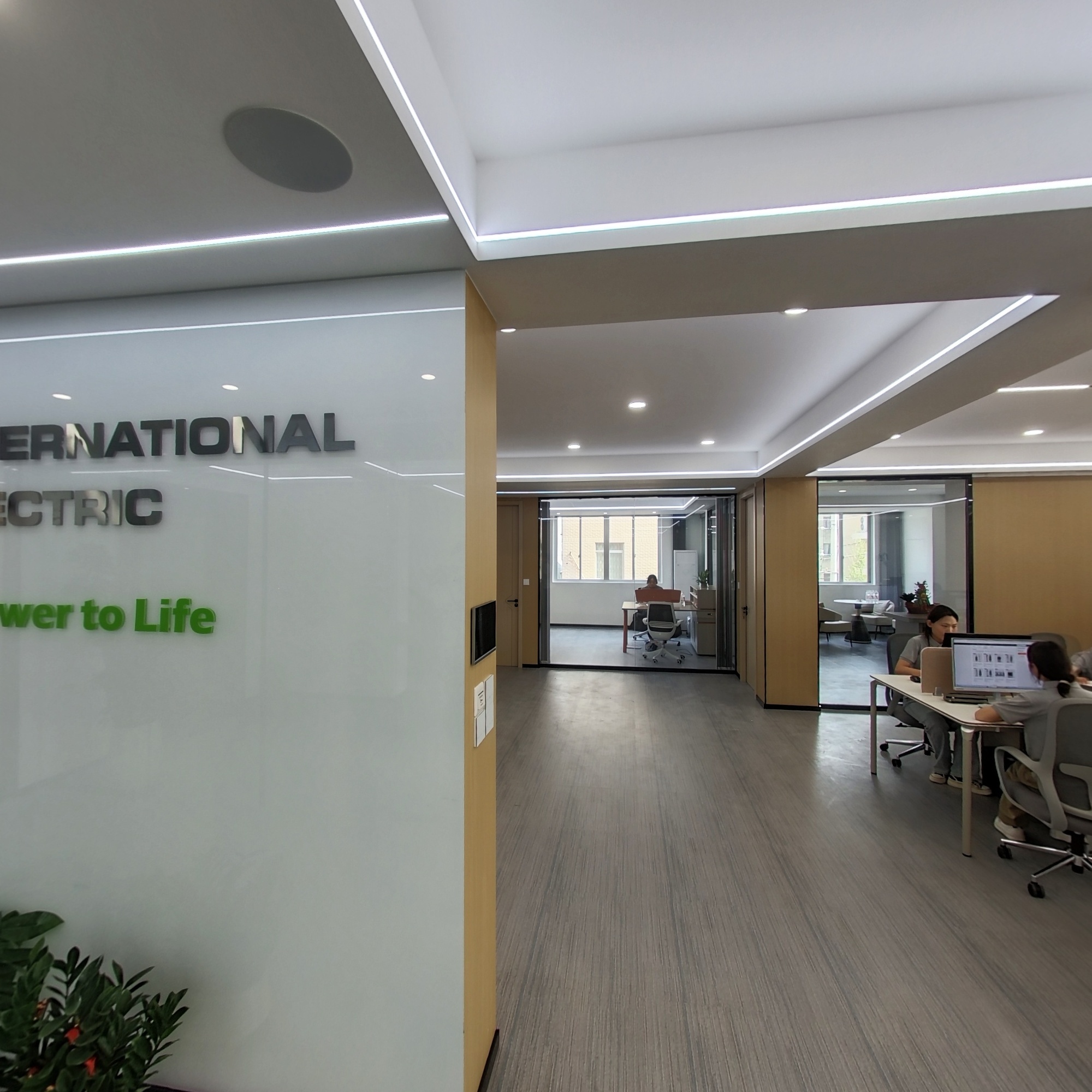
Our comprehensive manufacturing operation spans 5,700 m² of highly automated workshop space. Assessed on-site by TÜV Rheinland, our manufacturing protocols strictly align with ISO9001 certified quality control systems. Every circuit breaker, ATS, and timing controller is systematically inspected via laser-assisted dimensional verification, calibrated thermal-magnetic trip benches, and impulse withstand dielectric testing up to 8kV.
In-House Stamping & Molding
Full OEM / ODM Private Labeling
AS/NZS & CE Compliant Specs
Rapid Australian Sea/Air Logistics
Procurement Guidance
Frequently Asked Questions by Australian Buyers & Engineers
Clear, direct answers regarding compliance, importing formalities, thermal derating, customization, and warranty terms.
Are TMB circuit breakers compliant with AS/NZS 60947.2 and AS/NZS 3000 standards?
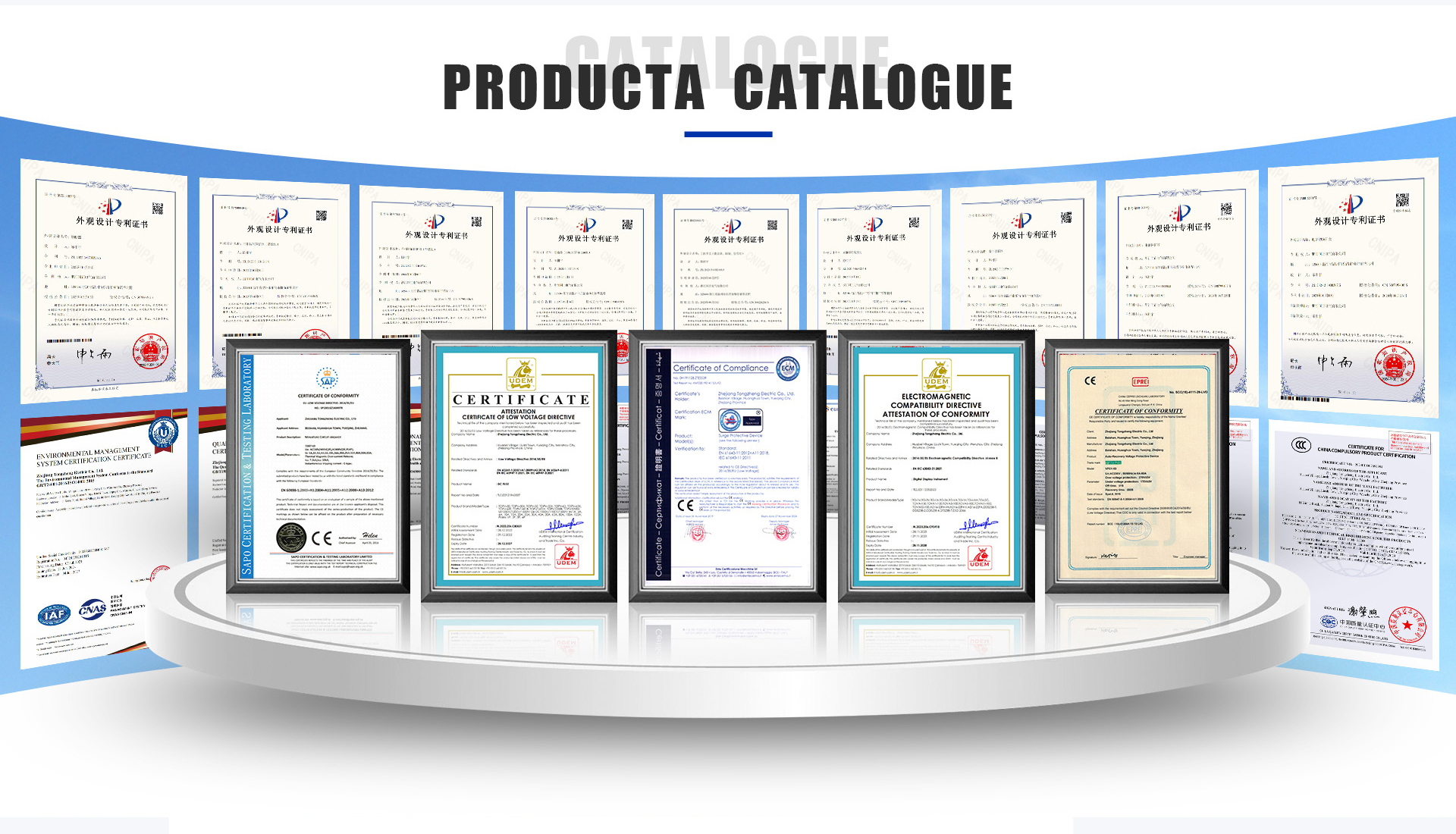
Yes. Our industrial molded case circuit breakers and modular protection devices are engineered in strict alignment with IEC/EN 60947-2, which forms the underlying technical foundation for AS/NZS 60947.2 in Australia and New Zealand. Certified test reports detailing short-circuit breaking capacity ($I_{cu}$/$I_{cs}$), temperature rise tests, and impulse withstand voltage ($U_{imp}$) are provided for integration into AS/NZS 61439 verified switchboard designs.
How does TMB handle thermal derating for switchboards in regional Australia?
We provide comprehensive ambient temperature derating tables spanning 30°C to 65°C. For mining switchboards in the Pilbara or rooftop solar combiners in Queensland, we supply breakers with specially calibrated bimetals or adjustable electronic trip units (ETUs) allowing precise current trimming to prevent nuisance thermal tripping without sacrificing fault clearing speed.
What is the minimum order quantity (MOQ) and sample lead time for testing?
To facilitate Australian engineering verification, switchboard prototype building, and NATA-accredited laboratory testing, our catalog MCCBs and modular components start from an ultra-low trial MOQ of just 5 pieces (some timer switch models from 1 piece). In-stock sample items dispatch within 48 to 72 hours via DHL/FedEx air freight to Australian capital cities (Sydney, Melbourne, Brisbane, Perth).
Can TMB supply custom-branded OEM switchgear with Australian color coding and labeling?
Absolutely. We specialize in comprehensive OEM and ODM partnerships for established Australian electrical distributors and panel builders. This includes pad-printed corporate logos, customized terminal shroud markings, custom trip rating combinations, bespoke outer packaging with GS1 barcodes, and pre-wired solar combiner boxes tailored to specific inverter models.
What is the difference between your DC MCCBs and standard AC breakers?
Direct current faults lack the natural zero-crossing of AC circuits, making the electrical arc significantly harder to extinguish. Our DC MCCBs feature permanent magnetic arc deflectors and extended splitter plates that rapidly force the arc away from contacts, dissipating energy without dielectric breakdown. Deploying standard AC breakers in DC solar or battery circuits violates AS/NZS 5033/5139 and introduces extreme fire risk.
What customs documentation and Incoterms are supported for Australian ports?
We regularly export under FOB (Ningbo/Shanghai), CIF, CFR, and DDP terms directly to ports in Fremantle, Melbourne, Sydney, and Brisbane. We supply complete commercial documentation including Certificates of Origin (ChAFTA for duty-free entry), compliant Bills of Lading, packing declarations for biosecurity/AQIS compliance, and harmonized system (HS) customs codes (8536.20 for automatic circuit breakers).
Accelerate Your Australian Switchgear Supply Chain Today
Partner directly with a verified 24-year Wenzhou manufacturer. Send us your single-line diagrams, tender specifications, or monthly container volume forecasts for rapid, factory-direct quotation.