Precision Circuit Protection & Timing Control Hardware
Tested, calibrated, and compliant molded case circuit breakers, intelligent controllers, and automated switches designed for demanding industrial duty cycles.



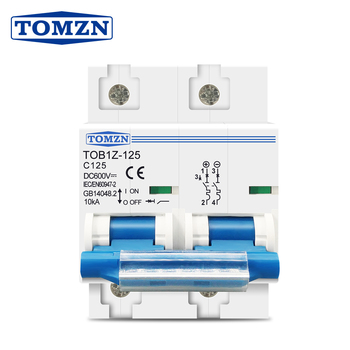
Molded Case Circuit Breaker Engineering Standards in Freeport's Heavy Industrial Sectors
In modern power distribution networks, the Molded Case Circuit Breaker (MCCB) serves as the indispensable backbone for protecting low-voltage feeders, motor control centers (MCCs), utility-scale battery energy storage systems (BESS), and port terminal electrification. In the strategic maritime and industrial center of Freeport, operating conditions differ radically from standard inland commercial environments. The combination of intense maritime salt fog, sustained high ambient temperatures exceeding 38°C with up to 95% relative humidity, and aggressive mechanical vibration from port gantry cranes, container spreaders, and heavy processing machinery demands circuit protection devices engineered far beyond minimum nominal ratings.
Industrial procurement engineers and electrical engineering contractors sourcing for Freeport projects require MCCBs featuring exceptional ultimate short-circuit breaking capacity (Icu), high service short-circuit breaking capacity (Ics), and superior thermal-magnetic or electronic trip units (ETUs) capable of precise zone-selective interlocking (ZSI). A failure in downstream trip discrimination can lead to upstream busbar lockouts, causing crippling downtime across container berths, bunkering logistics terminals, or processing facilities.
As Freeport continues to expand its free-zone logistics warehouses, maritime dry docks, cruise terminal shoreside power supplies, and utility solar arrays, switchboard builders and EPC managers must navigate global supply chain channels to secure dependable MCCB manufacturing partners. Manufacturers operating dedicated automated production facilities certified under TÜV Rheinland on-site audit frameworks ensure that every unit delivered to the Caribbean and international free-trade zones conforms strictly to IEC 60947-2, UL 489, and CE directives.
Localized Freeport Application Scenarios for Industrial MCCBs
Tailored circuit breaker configurations engineered to withstand high short-circuit faults, extreme marine atmospheres, and continuous tropical operation.
Deep-Water Port & Gantry Cranes
Freeport's deep-water container transshipment hub requires MCCBs with high magnetic withstand thresholds to handle frequent inductive inrush currents generated by high-power hoist motors, variable frequency drives (VFDs), and quay cranes. Units with electronic trip units offer adjustable short-time delay (Isd) to eliminate nuisance tripping during rapid load swings while sustaining an Icu of 50kA to 85kA at 415V/480V.
Shipyard Drydock & Marine Shore Power
Marine repair facilities and cold-ironing shore power terminals in Freeport impose extreme galvanic and airborne chloride stress. MCCBs deployed in shoreside feeder pillars require electro-tin plated copper terminal pads, internal auxiliary switches treated with silicone encapsulation, and anti-fungal tropicalized coatings to prevent tracking currents and terminal overheating during shore-to-ship synchronization.
Petrochemical & Bunkering Terminals
Heavy fuel storage, transshipment pipelines, and blending plants across Freeport require secondary power isolation and explosion-proof distribution panels. Our DC and AC MCCB models ensure rapid fault clearance within 10 milliseconds, containing the prospective let-through energy (I²t) to protect hazardous-area motor pumps and emergency automated shutdown valving.
Island Microgrids & Solar PV Combiners
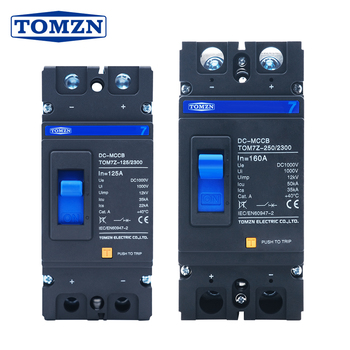
To offset grid fossil generation, Freeport is aggressively integrating commercial utility PV and BESS battery installations. Our TOM7Z series 2P 1000V DC MCCBs and heavy-duty 600V DC breakers feature non-polarized permanent magnetic blowouts that immediately force DC arcs into splitter plates, overcoming the absence of natural voltage zero-crossings inherent in DC solar strings.
Technical Selection Matrix: Molded Case Circuit Breakers vs. Alternate Low-Voltage Switchgear
Specifying electrical protection hardware for the Freeport industrial ecosystem requires selecting the right breaker typology based on breaking capacity, selectivity coordination, frame size, and maintenance accessibility. The engineering matrix below contrasts the operational parameters of standard MCBs, heavy-duty industrial MCCBs, and Air Circuit Breakers (ACBs).
| Performance Parameter | Miniature Circuit Breaker (MCB) | Molded Case Circuit Breaker (MCCB) | Air Circuit Breaker (ACB) |
|---|---|---|---|
| Rated Current Range (In) | 0.5A to 125A | 16A to 1600A (TMB Frame Optimized) | 630A to 6300A |
| Breaking Capacity (Icu at 400V) | 4.5kA to 15kA | 25kA to 100kA (High Breaking Frame) | 50kA to 150kA |
| Service Breaking Ratio (Ics) | 50% to 75% of Icu | 75% to 100% of Icu (IEC 60947-2) | 100% of Icu |
| Trip Unit Technology | Fixed Thermal-Bimetallic & Magnetic | Thermal-Magnetic Adjustable & Microprocessor ETU | Full Electronic Microprocessor Protection |
| DC High-Voltage Applicability | Limited (up to 1000V DC at low currents) | Optimized up to 1000V/1500V DC for BESS & PV | Specialized DC frames required |
| Marine / Tropical Derating Factor | High thermal sensitivity (ambient > 30°C) | Calibrated for 40°C–50°C Heavy Marine Ambient | Requires forced switchboard ventilation |
| Typical Freeport Deployment | Sub-branch distribution, lighting, small timers | Main panel incomers, motor feeders, PV arrays | Primary substation intake & main switchboards |
For panel builders constructing switchboards for the Grand Bahama Port Authority territory, selecting MCCBs with Ics = 100% Icu guarantees that after clearing a severe fault current, the breaker remains fully operational without welding of silver-alloy contacts or degradation of dielectric insulation, eliminating costly system downtime.
Freeport Infrastructure Modernization & Global Procurement Trends
The industrial landscape of Freeport is undergoing rapid modernization driven by several transformative electrical trends. To capitalize on these changes, local EPC contractors and plant operators are fundamentally altering their procurement and technical specification strategies:
1. Transition to 1000V–1500V DC Microgrids
With rising commercial utility tariffs, industrial complexes across Freeport are deploying multi-megawatt commercial solar arrays and containerized Battery Energy Storage Systems (BESS). This requires transitioning from standard AC protection to specialized DC MCCBs rated at 1000V DC to safely isolate high-capacity lithium iron phosphate (LiFePO4) storage racks.
2. Dual Power Automatic Transfer Integration
Because of hurricane-prone tropical weather and isolated island grid vulnerability, critical facilities in Freeport rely heavily on standby diesel generators and dual-source automated transfer switches (ATS). MCCBs integrated with mechanical and electrical interlocking ensure seamless emergency changeover without back-feeding the utility grid.
3. Direct-from-Factory B2B Sourcing
Supply chain bottlenecks have led Caribbean contractors to bypass traditional multi-tiered distribution markups. By establishing direct OEM/ODM manufacturing partnerships with certified low-voltage factories in Liushi, Wenzhou—China's electrical capital—buyers secure verified CE and TÜV-audited breakers with rapid custom configuration and competitive factory pricing.
Enterprise Manufacturing Capabilities: Zhejiang TMB Electric Co., Ltd.
Headquartered in Huabei Village, Liushi Town, Wenzhou, China, Zhejiang TMB Electric Co., Ltd. has accumulated more than 24 years of manufacturing excellence in low-voltage electrical protection, solar PV DC components, and automated power control systems. Our advanced industrial complex spans 5,700 m² of precision assembly lines supported by an elite engineering workforce of 92 technical specialists.
TÜV Rheinland On-Site Verified
Our manufacturing facility has undergone comprehensive on-site verification by TÜV Rheinland. We operate certified Quality Management Systems (QMS) ensuring complete material traceability from copper coils and bimetal thermal elements to glass-reinforced flame-retardant housings.
End-to-End Liushi Supply Chain
Located at the core of China's primary electrical equipment manufacturing cluster, TMB Electric commands immediate access to high-purity electrolytic copper stamping, silver-cadmium oxide contacts, precision bimetallic strips, and high-pressure injection molding, resulting in shortened lead times and competitive volume pricing.
OEM / ODM Flexibility & Low MOQ
We accommodate global project engineers with trial Minimum Order Quantities starting from only 5 pieces for standard catalog models. We provide complete custom laser branding, custom tripping curve configurations (B, C, D curves), and bespoke pre-wired IP65 distribution combiner boxes.
Frequently Asked Questions by Industrial Buyers in Freeport
Clear, engineering-backed answers covering specifications, certifications, marine derating, and international logistics.