Specified for Montreal electrical contractors, panel builders, and OEM equipment integrators demanding rigorous thermal-magnetic response, compact DIN architecture, and uncompromising fault isolation.
DIN Smart Control
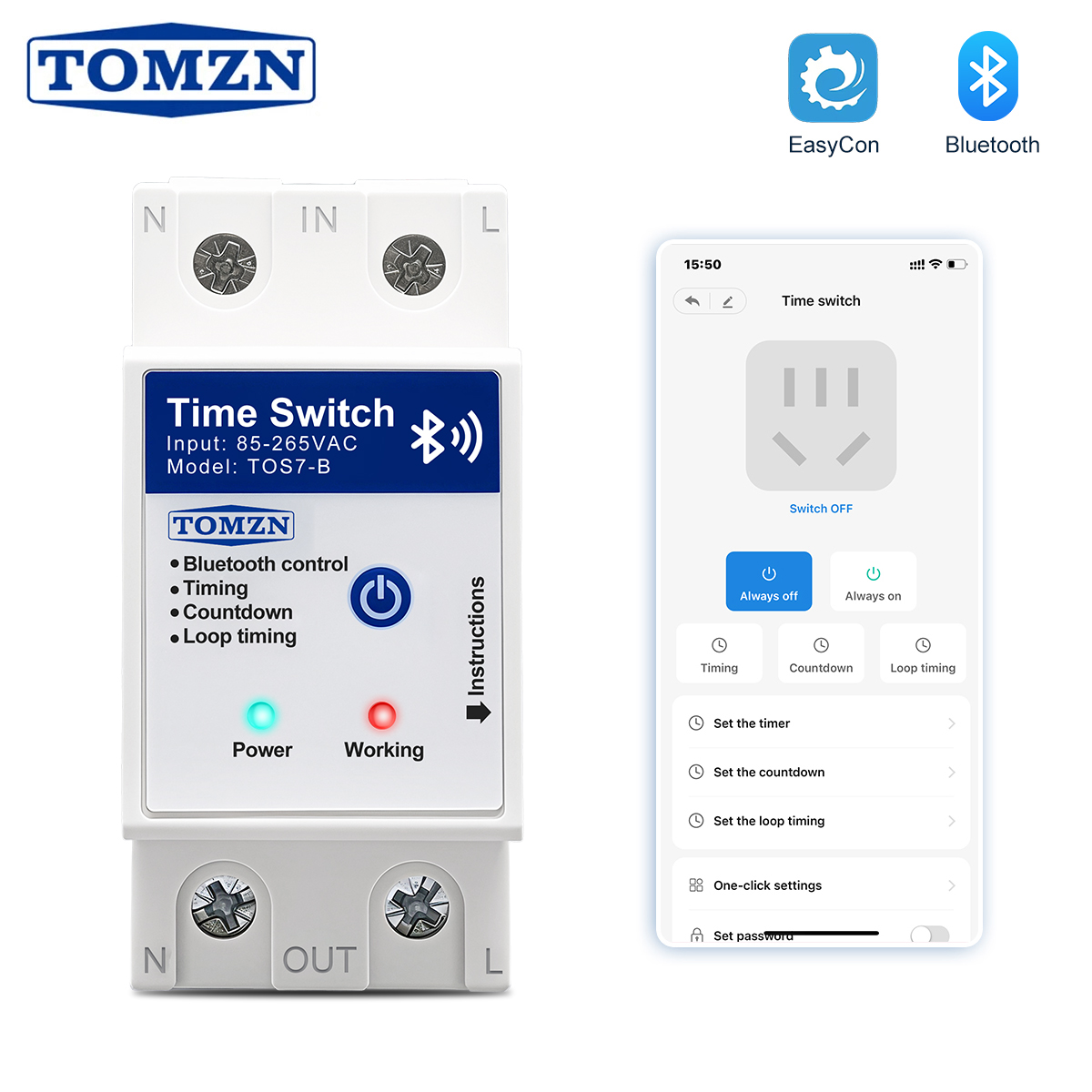
TOMZN TOS7-B Bluetooth Smart Timer Switch
40A/63A 85-265V remote control smart DIN relay engineered for dual-tariff scheduling and load shedding under Hydro-Québec dynamic winter rate matrices.
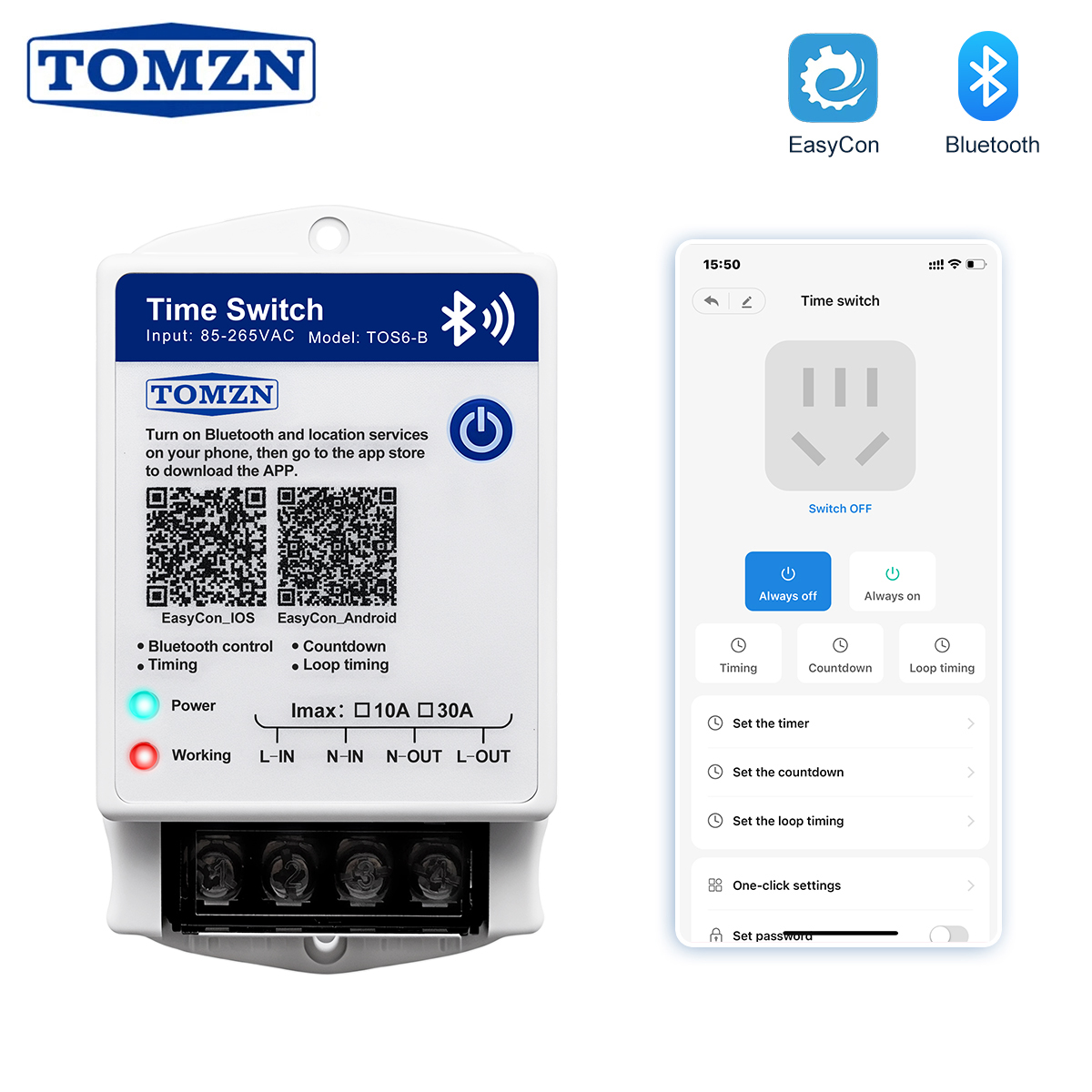
85-265VAC 10A/30A high-accuracy programmable countdown mechanism designed for auxiliary motor automation, HVAC circulators, and multi-residential lighting loops.
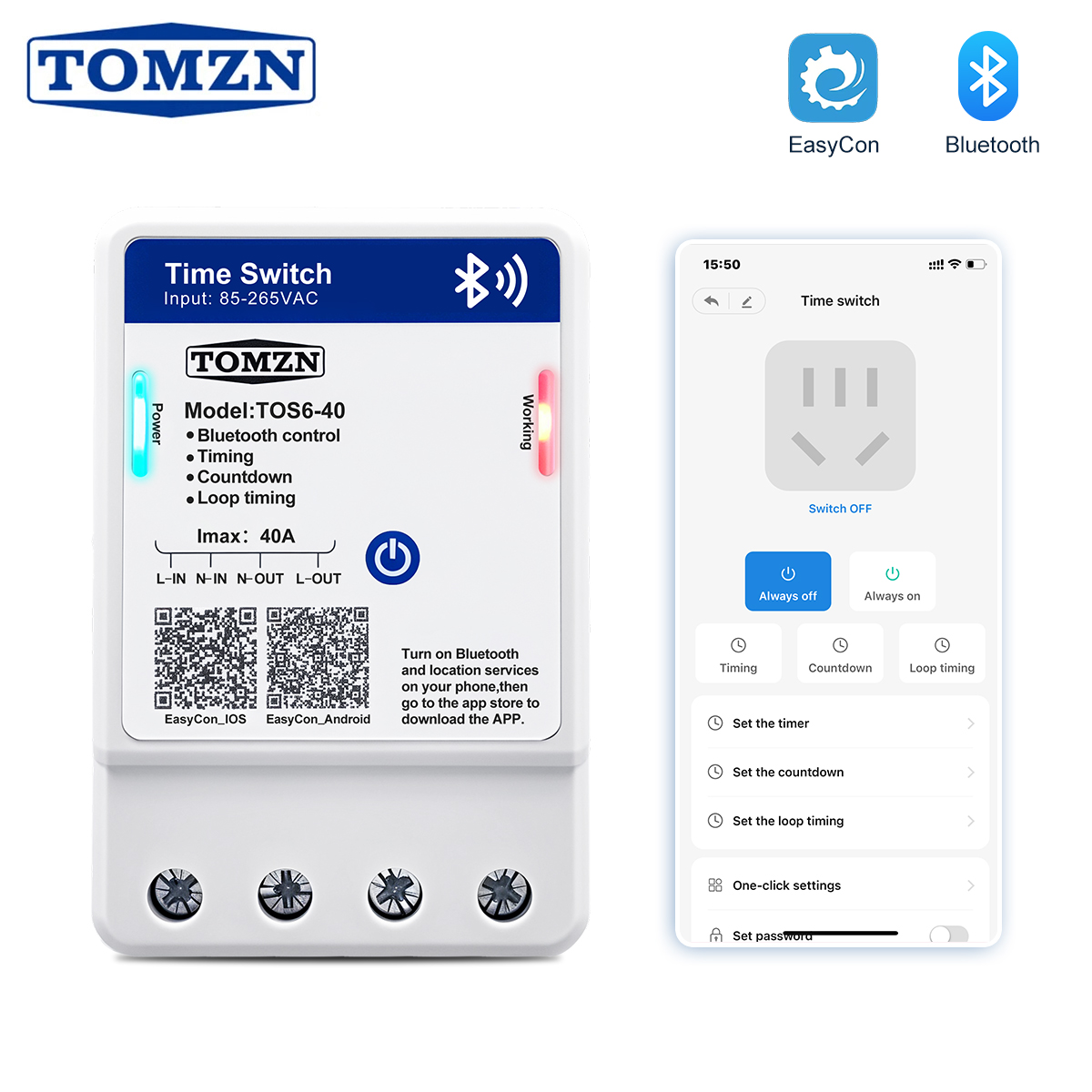
AC85-265V 40A solid-state modular switch providing countdown cycle isolation for commercial refrigeration and seasonal ventilation in Greater Montreal facilities.
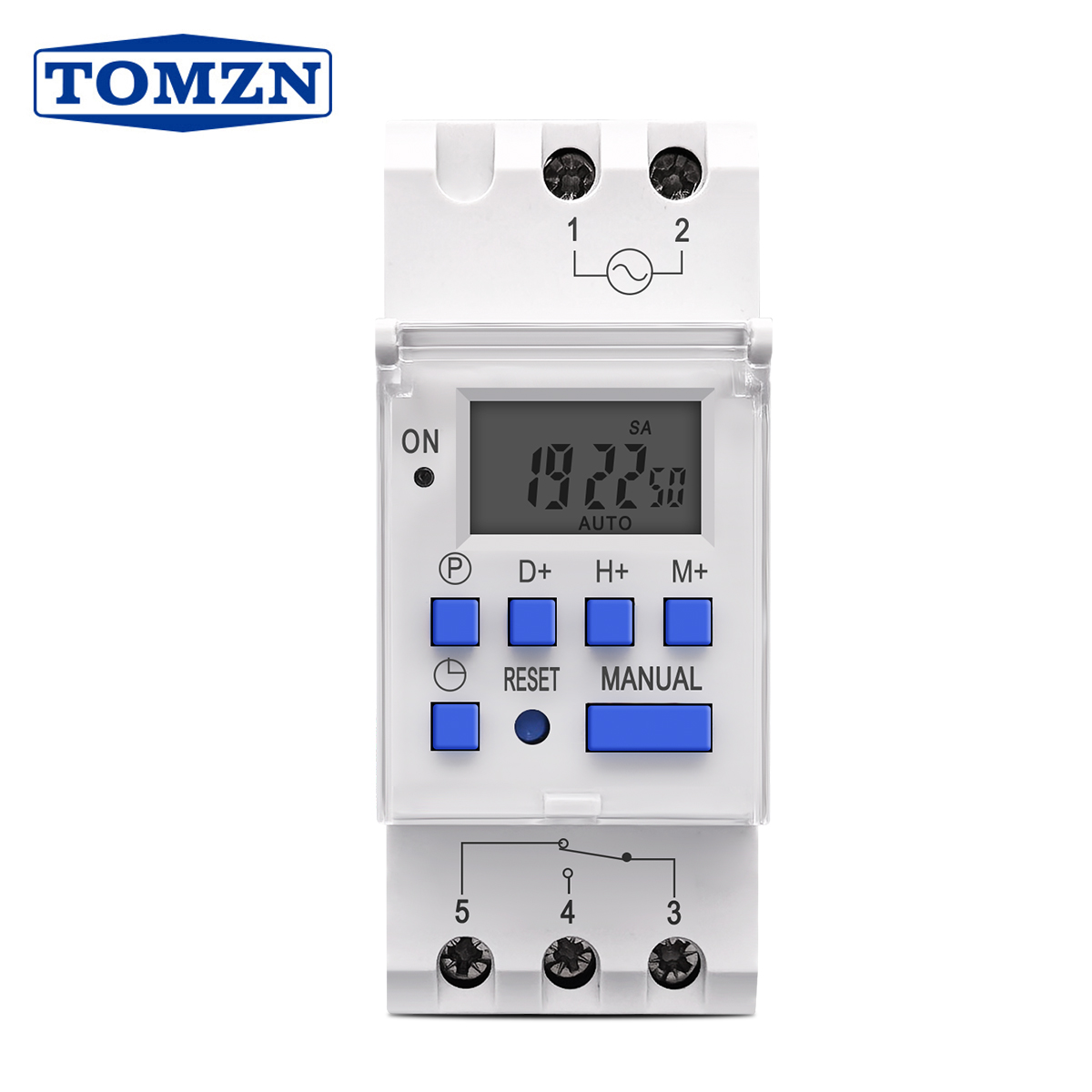
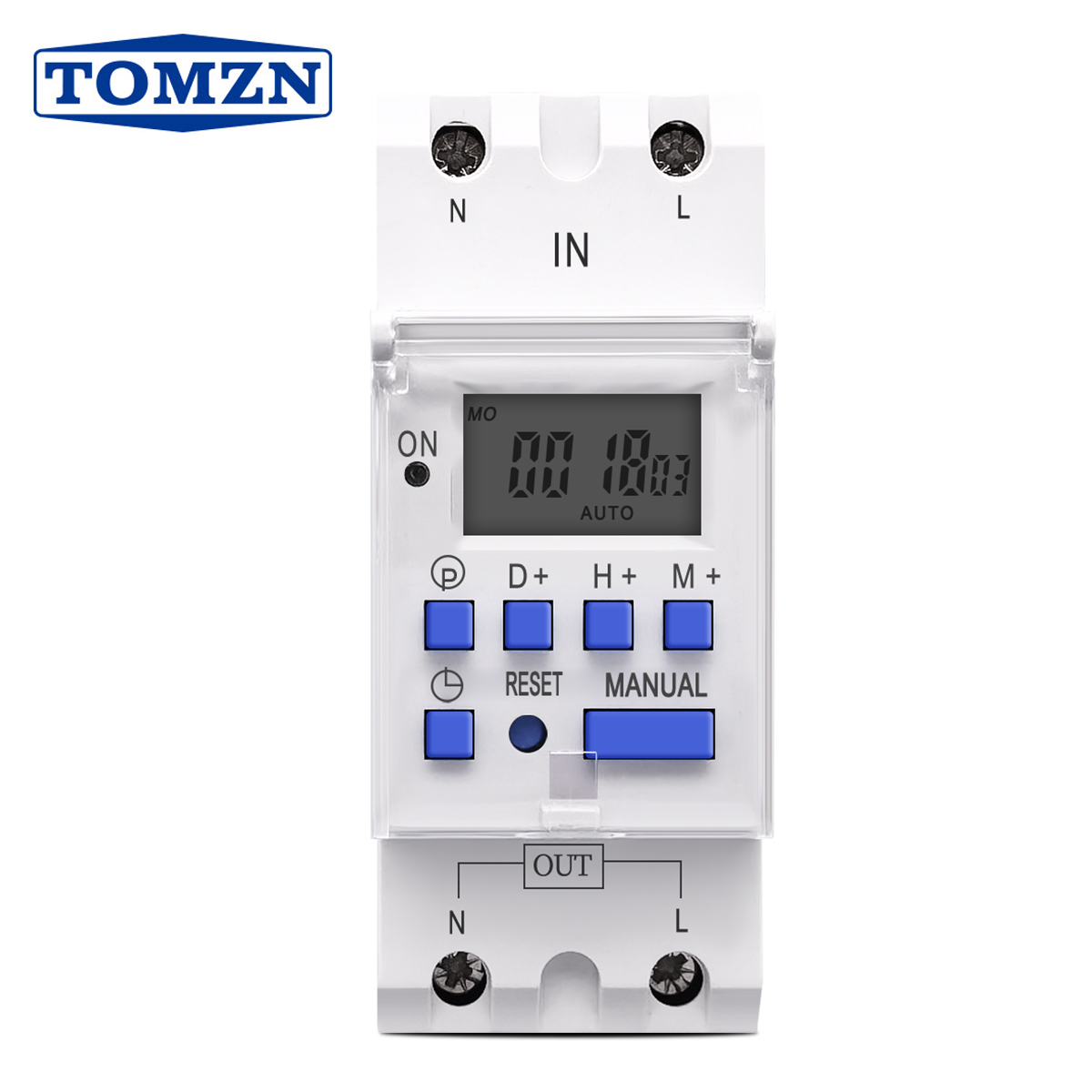
Precision micro-controller relay supporting AC 12V up to 230V 16A switching profiles. Ensures zero-drift 7-day cyclical operations for industrial sub-panels.
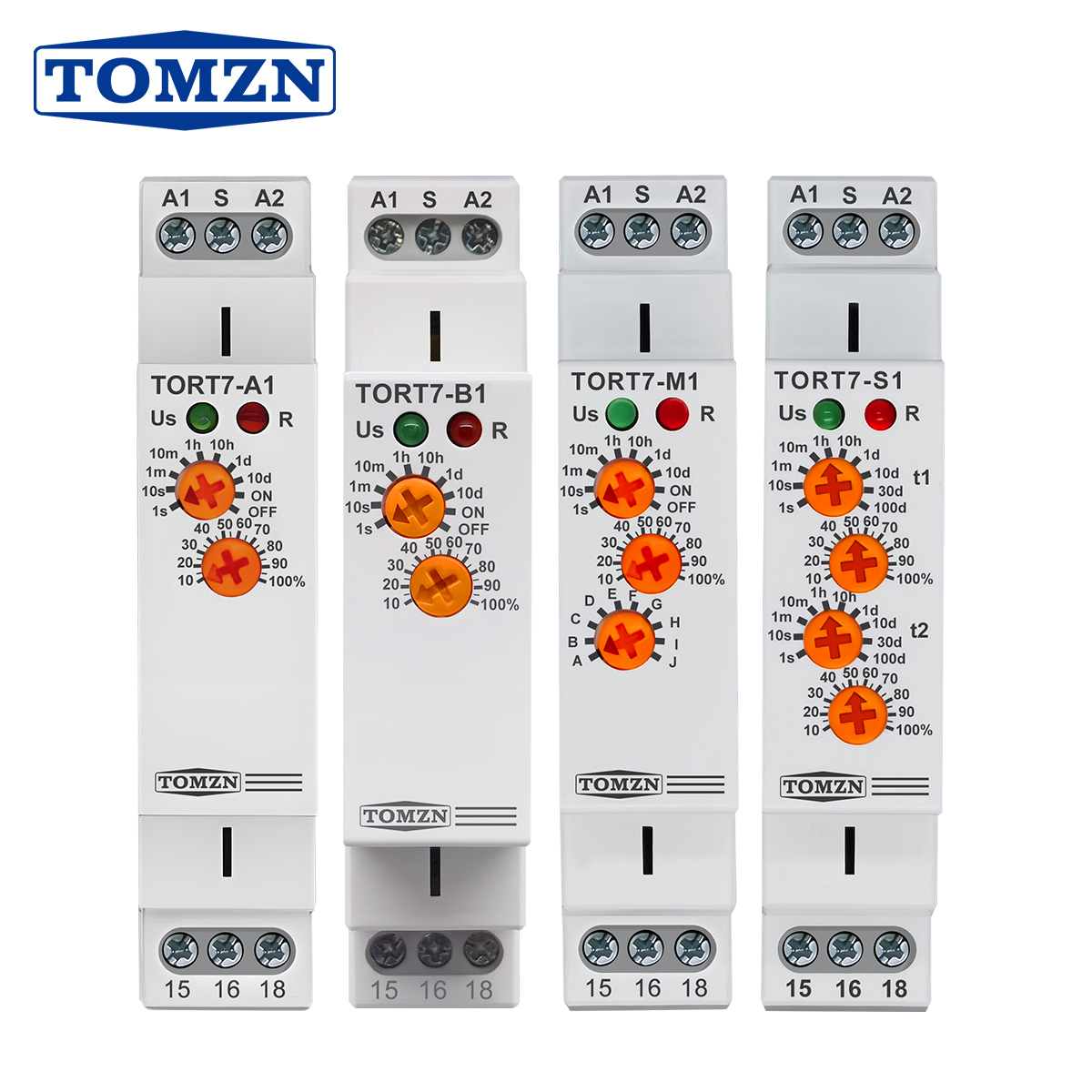
0.1S to 10-day delay-on/delay-off pulse generator designed to protect inductive compressor systems against short cycling following freeze-induced line trips.
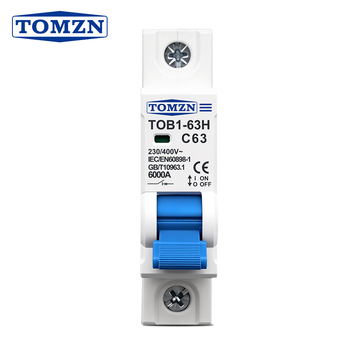
Combined Residual Current Breaker with Overcurrent Protection. Features 30mA earth fault sensitivity, 6kA/10kA breaking capacity, and rapid-extinguishing arc runner.
The Architecture of Modern RCBO Protection in Quebec's Electrical Grid
A rigorous technical breakdown of Residual Current Breakers with Overcurrent protection (RCBO), examining trip curve selectivity, galvanic isolation, and localized performance across the Saint Lawrence River basin.
In contemporary industrial, commercial, and multi-family residential electrical topologies throughout Montreal and the surrounding Montérégie and Laval corridors, device footprint and fault selectivity have become paramount design criteria. A Residual Current Breaker with Overcurrent protection (RCBO) synthesizes two distinct protective mechanisms within a single, space-optimized DIN-rail module: the thermal-magnetic protection of an MCB (guarding against line overloads and dead short circuits) and the core balance differential current sensing of an RCD/GFCI (mitigating dangerous ground-fault currents and electrical fire hazards).
Historically, North American distribution boards relied heavily on separate miniature circuit breakers paired with bulky downstream GFCI receptacles or dual-function AFCI/GFCI breakers operating on standard panelboard stabs. However, with the rapid modernization of Greater Montreal's commercial real estate, data centers, EV fleet hubs, and industrial automation networks, consulting electrical engineers increasingly specify standardized DIN-rail systems equipped with modular RCBOs. This shift provides single-phase and three-phase galvanic safety, true neutral-switching isolation, and discrete circuit diagnosis that prevents nuisance cascading outages across non-faulted branches.
Critical Diagnostic Benefit for Montreal Facilities
Unlike combined upstream RCDs which trip entire distribution blocks upon sensing residual current leakage, a dedicated RCBO isolates purely the faulted branch circuit. In high-density installations such as Saint-Laurent biotech labs, Mile-Ex cloud data servers, or multi-story duplexes in Plateau-Mont-Royal, this localized trip topography prevents catastrophic loss of refrigeration, emergency ventilation, and network telemetry.
The mechanical architecture of our RCBO platforms utilizes a highly coordinated dual-trip mechanism engineered to survive repeated full-load breaking operations:
1. Overcurrent & Short-Circuit Section: The thermal protection circuit relies on an individually calibrated bimetallic strip engineered with matched expansion co-efficients. When prolonged overcurrents pass through the conductive path, thermal expansion forces the latching mechanism to release within defined inverse-time parameters (Curve B, Curve C, or Curve D). For instantaneous short-circuit mitigation, a high-speed magnetic solenoid generates immediate mechanical repulsive force against the moving contact arm, directing the electrical arc into a heavy-gauge de-ionizing splitter plate grid (arc chute) comprised of 9 to 13 segmented steel plates that extinguish destructive energy in under 5 milliseconds.
2. Ground Leakage & Residual Detection (Zero-Sequence Current Transformer): Both phase and neutral conductors pass through a high-permeability toroidal ferrite magnetic core. Under balanced line conditions, the vector summation of incoming and returning alternating currents equates to zero ($\sum I = 0$), inducing negligible magnetic flux within the core. Should an insulation breakdown, water ingress, or personal contact event occur, a portion of the phase current escapes to earth ($\sum I \neq 0$). The resulting differential flux induces a proportional secondary voltage in the sensing winding, triggering a polarized sub-miniature permanent-magnet trip relay that disengages the primary contact latch within 30 to 40 milliseconds at rated sensitivity.
Regional Applications
Montreal Localization: Deployment Across Critical Infrastructure
How our RCBO and power control hardware resolves complex environmental, thermal, and architectural demands specific to the Island of Montreal.
Heritage Multi-Plex Retrofits
In vintage Montreal duplexes, triplexes, and grey-stone buildings located in Ville-Marie and Outremont, spatial constraints inside old masonry chases severely restrict electrical cabinet size. Compact 18mm single-module RCBOs allow electrical contractors to upgrade antiquated split panels to modern human-protection standards without performing invasive panel replacement.
Sub-Zero Thermal Derating
Winter ambient temperatures in Montreal drop routinely below -30°C. Standard commercial breakers experience severe thermal recalibration shifts in unconditioned garages and exterior enclosures. Our custom bimetallic and electronic RCBO designs feature specialized thermal-compensation algorithms that maintain calibrated trip thresholds under rigorous sub-zero conditions.
Biotech, AI & Saint-Laurent Cloud Hubs
Greater Montreal has emerged as an artificial intelligence and pharmaceutical titan. These operations generate massive high-frequency harmonic distortions from variable frequency drives (VFD) and enterprise server switch-mode power supplies. Our Type A and Type B RCBOs suppress nuisance trips caused by DC residual ripples while providing absolute protection.
Hydro-Québec Peak-Shaving Integration
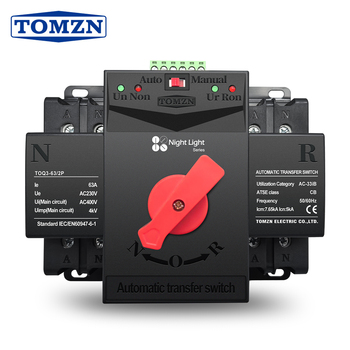
Under Hydro-Québec's dynamic dual-energy pricing (Tarif DT) and winter peak-demand initiatives, institutional facilities must alternate automatically between electrical heat pump compressors and auxiliary fuel or backup thermal generators. Integrating smart DIN-rail switching modules and ATS hardware eliminates costly manual intervention.
Commercial EV Fleet Infrastructure
With Quebec’s mandated transition toward commercial fleet decarbonization, industrial charging corridors require dedicated Type B ground fault sensing. Standard Type AC residual breakers blind to pure DC fault currents escaping from electric vehicle on-board rectifiers; our advanced breaker mechanisms prevent magnetic core saturation.
Food Processing & Cold Storage
From the Port of Montreal to Anjou logistics hubs, severe indoor humidity and corrosive washdown environments in food processing facilities demand non-corrosive internal silver-alloy contact pads and IP65 outer enclosure packaging to avoid thermal thermal-runaway breakdowns.
Engineering Reference
RCBO Technical Selection Matrix for Montreal Procurement
Compare operational characteristics across current ratings, residual tripping classes, and prospective fault capacity.
Characteristic / Parameter
Type AC Standard
Type A Industrial
Type B EV / VFD Specialized
Residual Current Sensitivities
Sinusoidal AC Leakage Only
Alternating AC + Pulsating DC Currents
Pure DC, High-Frequency & Multi-Phase Smooth DC
Rated Operating Currents (In)
6A, 10A, 16A, 20A, 25A, 32A
6A, 10A, 16A, 25A, 32A, 40A, 63A
16A, 25A, 32A, 40A, 63A, 80A
Short-Circuit Capacity (Icn)
4,500A / 6,000A
6,000A / 10,000A
10,000A
Typical Tripping Threshold ($I\Delta n$)
30mA, 100mA
10mA, 30mA, 100mA, 300mA
30mA (Personnel), 300mA (Fire Protection)
Operating Ambient Temperature
-5°C to +40°C
-25°C to +55°C (Extended Montreal Spec)
-40°C to +70°C (All-Season Exterior Rated)
Primary Montreal Applications
Standard Resistive Space Heaters
Modern Residential & Heritage Renovation
EV Fast Chargers, Rooftop Solar PV, Server Racks
Emerging Trends in Greater Montreal's Electrical Landscape
The modernization of the electrical landscape across Quebec is driven primarily by rigorous enforcement from the Régie du bâtiment du Québec (RBQ), compliance with the Canadian Electrical Code (CEC Part I, CSA C22.1), and Hydro-Québec's aggressive electrification of transport and heating. The intersection of these forces dictates dramatic shifts in procurement strategy:
1. Stringent Arc and Leakage Isolation: As high-density housing developments expand across Griffintown and Longueuil, regulatory authorities place stringent mandates on preventing electrical fire propagation caused by damaged insulation and line arcing in aging infrastructure. RCBOs configured with 30mA trip thresholds serve as the gold standard for combined equipment ground-fault protection, substantially outperforming traditional fuses or standard MCBs.
2. Solar PV and Battery Storage Infiltration: Rooftop commercial solar installations throughout suburban industrial parks (such as Dorval and Pointe-Claire) are standardizing on bi-directional micro-grid architectures. When coupled with local battery energy storage systems (BESS), traditional circuit breakers can experience failure under DC fault conditions. Specialized DC MCBs and Type B RCBOs ensure that back-fed DC stray currents do not blind upstream safety devices.
3. Smart Panelboard Modernization: The influx of IoT building management systems across downtown office towers requires real-time monitoring of energy consumption at the branch level. Integrating Bluetooth and WiFi-enabled intelligent metering relays alongside core RCBO breakers allows facilities managers to remotely balance loads, pinpoint recurring high-leakage equipment before critical failure occurs, and automate compliance reporting.
Manufacturing Excellence
Direct Factory Reliability: Zhejiang TMB Electric Co., Ltd.
With 24 years of dedicated low-voltage engineering excellence based in Liushi Town, Wenzhou—the world's premier cluster for circuit protection components—we deliver enterprise-grade circuit breakers, transfer switches, and protection hardware directly to international B2B distributors, panel builders, and project contractors.
Frequently Asked Questions by Montreal Electrical Engineers & Buyers
Direct technical answers addressing standards compliance, freezing weather performance, installation mechanics, and bulk ordering terms.
What is the core functional difference between an RCBO, an RCCB, and a standard MCB?
An MCB (Miniature Circuit Breaker) protects conductors strictly against overcurrent and short-circuit conditions; it cannot detect ground fault leakage. An RCCB (Residual Current Circuit Breaker) detects dangerous residual earth currents but possesses zero thermal-magnetic overcurrent protection, requiring an upstream fuse or MCB. An RCBO integrates both functionalities in a unified compact housing, providing individual branch overcurrent, short-circuit, and ground fault protection without taking up double enclosure space.
Can these RCBO circuit breakers operate reliably in unheated Quebec sub-zero environments?
Yes. Standard industrial ratings calibrate breaker operation at +30°C. However, for Canadian installations subjected to severe winter drops (-25°C to -40°C), thermal-magnetic tripping thresholds naturally shift because heat dissipates faster from the bimetal strip. Our units utilize refined thermal-calibration curves and specialized low-temperature lubricants on internal latch assemblies to prevent binding or false delays during extreme cold snaps.
Why is Type A or Type B RCBO protection mandatory for modern Montreal EV charger installations?
Electric vehicle charging equipment incorporates internal AC-to-DC rectification stages. A ground fault occurring on the DC side of an EV inverter or charging module can introduce smooth DC residual currents into the grounding system. Standard Type AC residual devices become magnetically saturated ("blinded") by smooth DC currents greater than 6mA, preventing them from tripping under life-threatening conditions. Type A detects pulsating DC components, while Type B guarantees trip response across smooth DC, high-frequency, and composite fault currents.
How does Zhejiang TMB Electric ensure batch consistency for custom OEM/ODM orders?
As a manufacturer verified on-site by TÜV Rheinland with 24 years in low-voltage electrical protection, we execute a rigorous 6-step quality control regimen. Every production run undergoes incoming spectrometer checks on silver contact composition and electrolytic copper busbars, followed by automated precision thermal-magnetic trip calibration, high-potential dielectric withstand tests, and end-of-line trip latency timing at 1x, 2x, and 5x rated residual currents ($I\Delta n$).
What documentation and test reports are supplied to support local municipal and project approvals?
We provide comprehensive technical datasheets, full laboratory type-test reports (including short-circuit breaking performance, mechanical endurance up to 20,000 cycles, and dielectric withstand curves), CE declarations of conformity, ISO 9001 certificates, and factory assessment summaries verified by TÜV Rheinland upon sample request or commercial quotation.
What is the lead time and Minimum Order Quantity (MOQ) for shipping to Montreal freight terminals?
Standard catalog products feature an ultra-low trial MOQ of just 5 units, enabling engineering teams to conduct thorough bench tests prior to project-scale rollouts. Sample orders ship via expedited international air courier (DHL/FedEx) arriving in Montreal within 4 to 7 business days. Full container load (FCL) or consolidated sea freight (LCL) shipments dispatched to the Port of Montreal average 25 to 35 calendar days from factory completion.
Architecting Your Next Distribution Project in Greater Montreal?
Connect directly with our engineering division for comprehensive line-by-line model cross-referencing, custom terminal and enclosure configurations, or bulk distributor price schedules.