Industrial
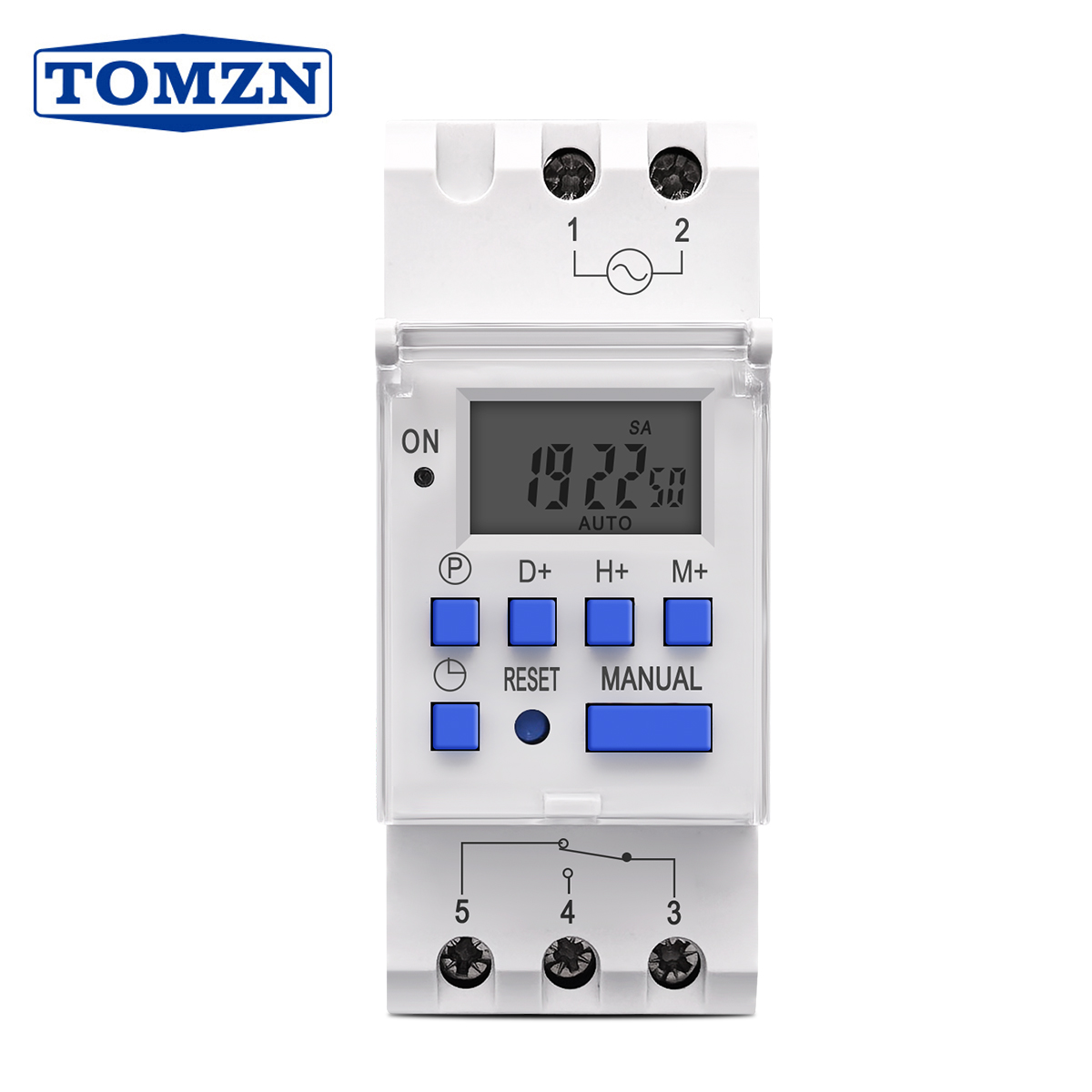
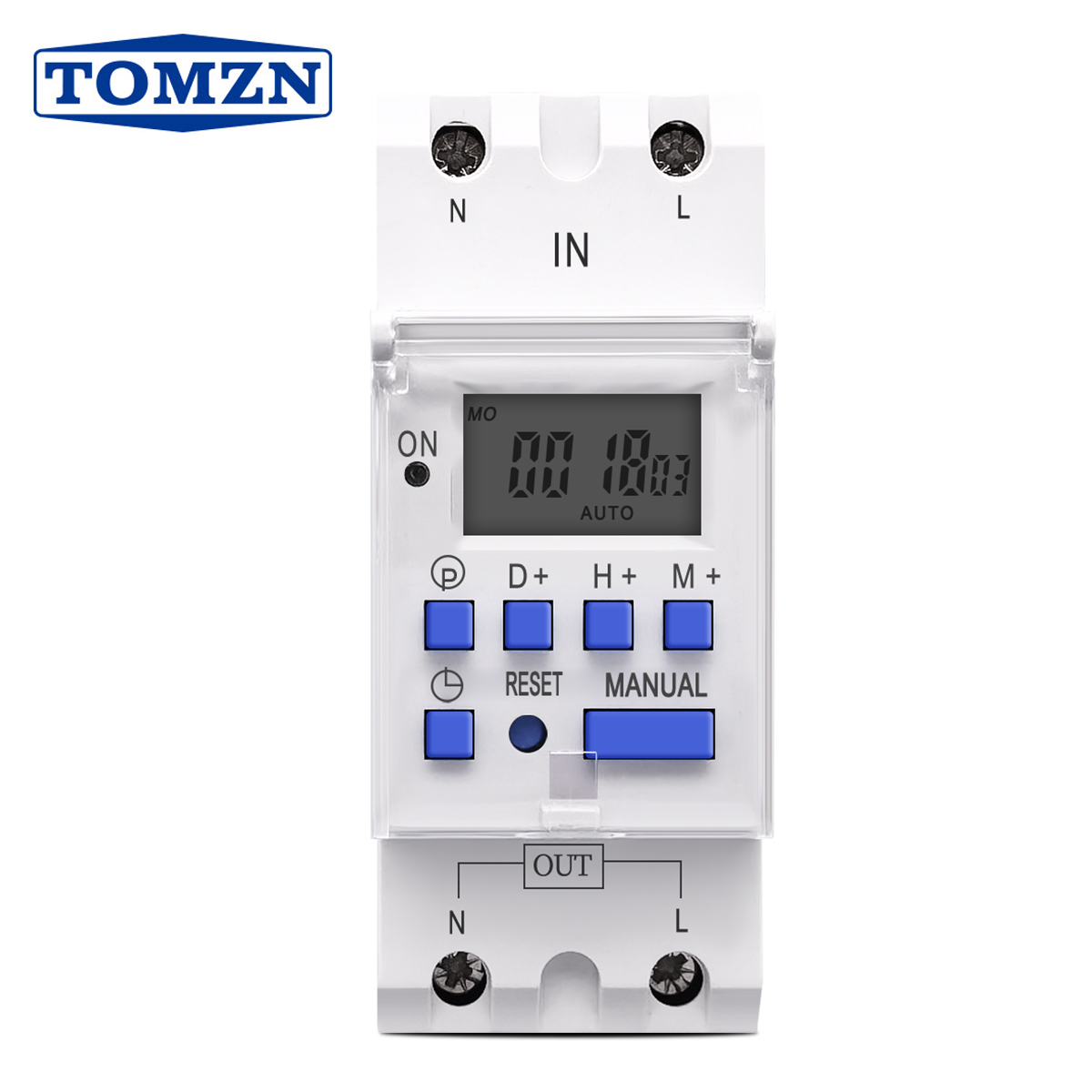
TOMZN 1NO 1NC DIN Rail Weekly 7-Day Digital Timer Switch
AC 220V/230V
16A Rating
1NO + 1NC
DIN 35mm
Selected low-voltage protection, intelligent switching, and programmable relays certified for heavy industrial, commercial, and solar distribution boards across Egypt.
A comprehensive examination of earth-fault isolation, harmonic saturation challenges, and thermal calibration requirements in Egyptian residential, industrial, and solar infrastructures.
Electrical installations throughout the Arab Republic of Egypt are governed by the Egyptian Code of Practice for Electrical Wiring Installations, closely harmonized with the international electrotechnical standards IEC 60364, IEC 61008-1 (Residual Current Operated Circuit-Breakers without Integral Overcurrent Protection - RCCB), and IEC 61009-1 (RCBO with overcurrent protection). As urban expansion in the New Administrative Capital (NAC), New Alamein, and Ain Sokhna accelerates, compliance enforced by the Egyptian Organization for Standardization & Quality (EOS) requires stringent personal electrocution defense ($I_{\Delta n} \le 30\text{ mA}$) and anti-incendiary leakage protection ($I_{\Delta n} = 300\text{ mA} - 500\text{ mA}$).
Historically, standard Type AC RCDs—sensitive strictly to sinusoidal alternating residual currents—were ubiquitous across Greater Cairo and Alexandria. However, the massive adoption of non-linear loads, switch-mode power supplies (SMPS), variable frequency drives (VFDs) for HVAC compressors, and distributed photovoltaic string inverters has rendered standard Type AC breakers prone to "blinding." Smooth or pulsed direct-current residual components saturate the magnetic core of the internal sensing toroidal current transformer (Zero-Sequence Current Transformer - ZSCT), failing to trip under genuine human contact. Consequently, engineering specifications from leading consultancies in Cairo (such as Dar Al-Handasah and ECG) now mandate Type A or Type B RCDs across mixed-use and industrial developments.
A major operational failure mode for imported European and East Asian electrical components in Upper Egypt (Aswan, Luxor, Qena) and industrial desert sectors is excessive internal thermal dissipation inside sealed low-voltage enclosures. Standard factory calibrations for bi-metallic release strips and magnetic trips are calculated at a reference ambient temperature of 30°C. In Egyptian outdoor distribution boxes and unconditioned electrical risers, midday temperatures regularly hit 45°C to 52°C, with enclosure interiors reaching up to 65°C.
Without factory compensation and high-grade silver alloy contacts ($AgCdO$ or $AgSnO_2$), standard thermal elements exhibit premature nuisance tripping below rated load currents ($I_n$). Zhejiang TMB Electric Co., Ltd. addresses this through specialized thermal-magnetic calibration curves, reinforced arc chutes with 9 to 13 deion plates, and high-tracking-index PA66 flame-retardant housings (UL94 V-0 rated), maintaining dielectric stability up to 6000V impulse withstand ($U_{imp}$) even under pervasive desert dust, fine sand infiltration, and high dry-heat cycles.
| RCD Typology | Tripping Waveform Capabilities | Typical Egyptian Application Matrix | Grid Vulnerability Solved | Recommendation Level |
|---|---|---|---|---|
| Type AC | Sinusoidal AC currents only (50/60 Hz) | Legacy residential apartments (Giza, Shubra), basic resistive lighting circuits. | Direct 50Hz earth faults without rectifiers. | Legacy / Phasing Out |
| Type A | Sinusoidal AC + Pulsed DC residual currents ($I_{\Delta n} + 6\text{mA}$ DC) | New Administrative Capital residences, modern office towers, single-phase EV chargers. | Core blinding caused by PC power supplies, washing machines, inverter ACs. | EOS & Cairo Standard |
| Type F | AC + Pulsed DC + High-frequency composite residual (up to 1 kHz) | Single-phase variable speed pump drives, high-efficiency Delta agricultural pumps. | Nuisance tripping caused by motor starting frequencies & inverter PWM noise. | Specialized / High Demand |
| Type B / B+ | AC + Pulsed DC + Smooth DC currents + High frequency up to 100 kHz | Benban Solar Park combiner boxes, industrial battery ESS, Suez Canal heavy cranes. | Inverter DC-link ground leakage currents causing blindness in conventional transformers. | Essential for Renewable/EV |
| Selective (Type S) | Time-delayed tripping ($t_{\Delta n} \ge 130\text{ ms} - 500\text{ ms}$) | Main incoming distribution boards, multi-story commercial feeders, fire prevention ($300\text{mA}$). | Provides total cascade discrimination with downstream 30mA instantaneous breakers. | Code Mandate for Mains |
From Cairo’s monumental vertical towers to the arid photovoltaic expanses of Upper Egypt, discover how our custom low-voltage assemblies provide critical ground-fault protection.
High-density high-rise residential and governmental headquarters demanding multi-tier discrimination. Earth fault safety must prevent isolated circuit faults from cascading into tower-wide blackouts.
Harsh marine atmospheric conditions combined with petrochemical fumes, chemical dust, and heavy crane gantry automation in Port Said, Ain Sokhna, and Ismailia.
Solar arrays deployed in extreme desert conditions where ambient summer temperatures exceed 50°C and DC earth faults risk devastating electric fires and equipment damage.
Agricultural irrigation setups operating over long transmission distances where inductive motor transients, voltage sags, and wet soil environments elevate shock risks.
Strategic economic, regulatory, and infrastructural shifts shaping residual current device manufacturing specifications for Egyptian engineering tenders.
Traditional panels separated the MCB (overcurrent) and RCCB (residual current), leading to widespread neutral-wire confusion and bulky DIN rails. Consultants in Cairo now specify 1P+N or 2P RCBOs to guarantee individual final circuit isolation. If a leakage occurs on an air conditioner circuit in an apartment, only that branch disconnects, keeping lighting and refrigeration active.
Due to peak load management and rotating outages, Egyptian facilities deploy solar backup systems and diesel generators. Frequent switching between grid and generator sources generates severe switching voltage transients ($di/dt$), causing false RCD trips. Demand has surged for high-immunity RCDs (Type F / Super Immunized) equipped with short time-delay filtering circuits.
Egypt's National Single Window for Foreign Trade (Nafeza) and Advance Cargo Information (ACI) regulations demand 100% verifiable factory credentials, accurate HS-codes (8536.20/8536.30), and testing reports before bills of lading issue. Importers no longer accept unverified trading houses; they source directly from verified manufacturers with TÜV Rheinland audit credentials.
Combining 24 years of manufacturing precision in Liushi with tailored customization, international third-party audits, and end-to-end supply chain integration.
Our 5,700 m² factory in Liushi Town, Wenzhou—China's low-voltage capital—is embedded within a world-class electrical supply ecosystem. Internal manufacturing of precision stamping parts, bi-metallic strips, silver-alloy contacts, and injection-molded housings guarantees immediate quality control and short delivery cycles.
Verified on-site by TÜV Rheinland, our facility operates an ISO9001-certified Quality Management System. Every breaker passes 100% factory verification across dielectric insulation, mechanical life cycling, thermal trip thresholds, and sensitivity calibration before export packing.
We provide full customization for Egyptian wholesalers and panel builders: bilingual Arabic/English laser-engraved front plates, custom trip curve calibrations (B, C, D curves), corporate brand packaging, and custom-configured IP65 waterproof combiner boxes.
Our engineers adjust thermal response parameters specifically for the Egyptian desert climate. By optimizing copper cross-sections and selecting silver contacts, our breakers carry rated currents at 45°C ambient without nuisance tripping or derating compromise.
To support prototype testing and local Egyptian tender sample approvals, catalog items start from a low MOQ of just 5 pieces. We offer consolidated air-freight samples to Cairo International Airport (CAI) and full container shipments directly into Sokhna or Alexandria.
We supply complete type-test certificates (CE, CB, RoHS), full technical datasheets, factory inspection records, and certificate of origin documentation required by Egyptian banks and customs for immediate ACI approval.
Key information regarding clearance procedures, testing protocols, ACID requirements, and technical parameter specification.
Zhejiang TMB Electric is fully experienced with Egypt’s Advance Cargo Information (ACI) system. Once your company registers the order on the Nafeza portal, we promptly upload our verified manufacturer foreign exporter data, proforma invoice, commercial invoice, and packing list. We ensure the 19-digit ACID number is clearly printed on the Bill of Lading, Certificate of Origin, and all cargo labels to ensure zero customs delays at Alexandria or Sokhna ports.
In Egyptian three-phase four-wire distribution boards (TN-S or TT earthing systems), a 4-Pole (4P) RCD that breaks all three active phases along with the neutral pole is strictly required. Breaking the neutral conductor prevents dangerous reverse neutral potential during grid phase imbalances and ground faults. For single-phase residential circuits, our compact 1P+N or 2P devices guarantee total isolation.
Under Egyptian electrical practice, final circuits supplying socket outlets, bathrooms, kitchens, and wet utility areas must have high-sensitivity 30mA instantaneous protection for direct human touch protection. Distribution board incomers and main risers require 100mA, 300mA, or 500mA selective (Type S) units to guard against electrical cable insulation degradation and arc-induced fires while ensuring upstream coordination.
Yes. Every production batch is accompanied by comprehensive Routine Test Reports (insulation resistance, dielectric withstand, tripping times at $1\times I_{\Delta n}$, $2\times I_{\Delta n}$, and $5\times I_{\Delta n}$). We welcome third-party pre-shipment inspections (SGS, Bureau Veritas, or TÜV) at our Liushi facility to verify product conformity against Egyptian contract parameters before container loading.
Our devices feature ultrasonic-welded, dust-proof PA66 casings meeting IP20 protection natively and up to IP65 when installed in our sealed distribution enclosures. The mechanical trip linkages use bimetals treated with passivation and high-grade zinc-nickel plating, preventing corrosion and mechanical jamming from coastal humidity in Alexandria or fine dust during desert Khamsin winds.
Standard catalog sample orders ship within 3–5 working days. Volume OEM/ODM orders of 5,000 to 50,000 units are completed in 15–20 days. Maritime freight from Ningbo/Shanghai port to Port Said or Ain Sokhna typically takes 22–30 days via direct Suez transit routes.
Consult with our engineering team for single-line diagram reviews, ambient thermal derating calculations, private-label branding, or trial sample orders.