Solar Disconnect Switch Manufacturers & Supplier in Panama City
Heavy-Duty DC Disconnect Switches, String Combiners & UL/IEC Compliant Isolation Systems for Panama's High-Humidity Coastal and Commercial Solar Installations
High-Efficiency DC Components
Featured Solar Disconnect Switches & Protection Hardware
Engineered in our TÜV Rheinland-verified smart manufacturing facility, these DC isolators, smart circuit breakers, and integrated transfer systems are customized for tropical marine environments and volatile utility profiles across Panama City.
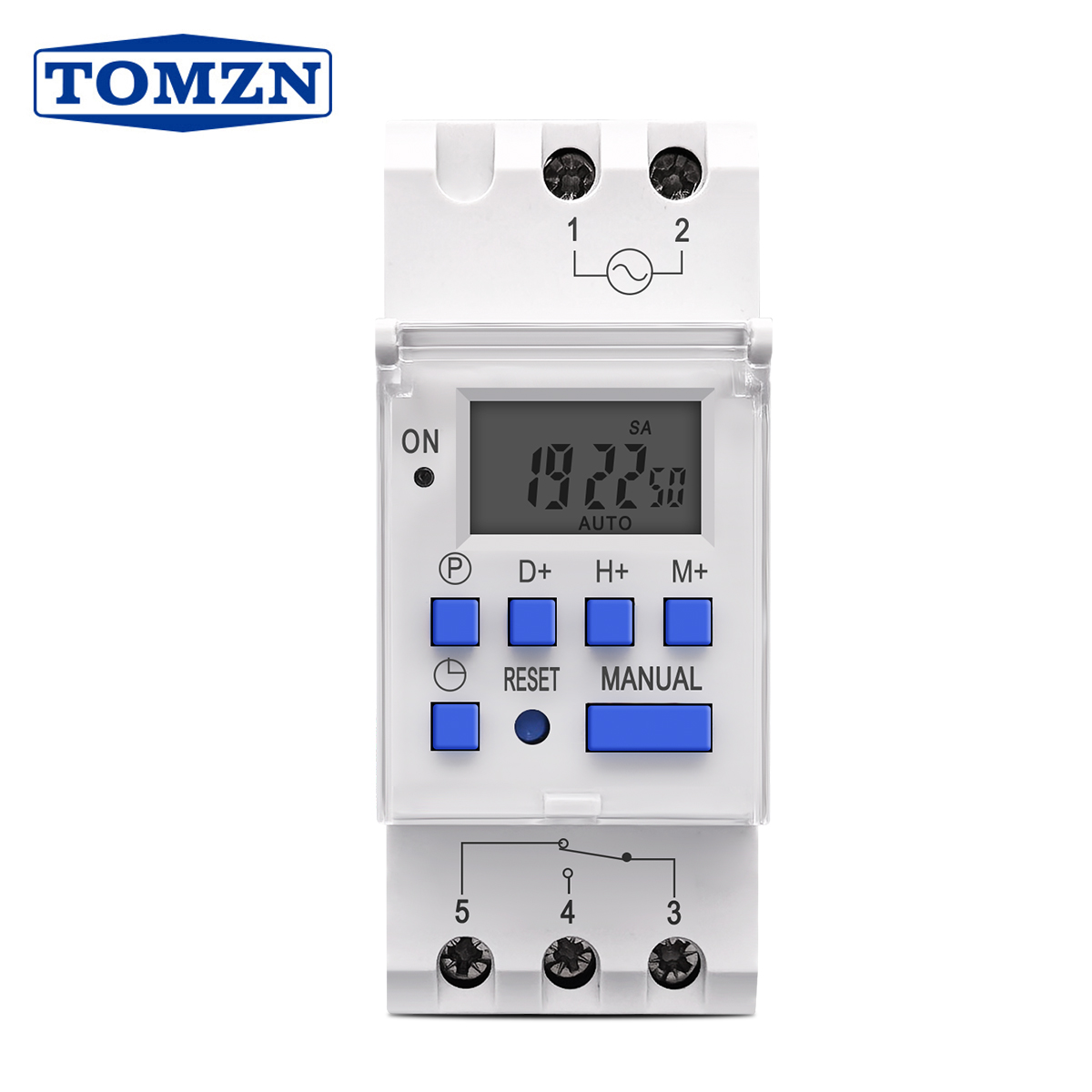
TOMZN Single Phase 7 Days Programmable Digital Timer Switch Relay 16A
Engineering Solar Disconnect Switches for Panama City’s Microclimates
Panama City represents one of Central America's most demanding operating environments for solar balance-of-system (BOS) switchgear. High relative humidity averaging 85% to 95%, saline sea spray blowing across Panama Bay, and prolonged thermal cycles demand extreme specifications for electrical contact reliability and mechanical isolation.
Engineering Reality Check: Unlike Alternating Current (AC) which naturally passes through zero volts sixty times per second, Direct Current (DC) produced by solar PV arrays maintains continuous voltage and current. When opened under load, high-voltage DC generates sustained, self-perpetuating electric arcs that can instantly melt non-specialized contacts. In Panama's humid maritime air, ionized arc pathways cool slower, escalating the threat of catastrophic fires. TMB solar disconnect switches integrate permanent magnetic blow-out coils and multi-split arc chute arrays to forcibly extinguish 1000V-1500V DC arcs in milliseconds.
Costa del Este & Punta Pacifica Luxury High-Rises
Rooftop solar arrays installed along Panama City's coastline face direct salt aerosol deposition and intense solar radiance. Commercial switchgear deployed here must incorporate flame-retardant V0-grade polycarbonate housings and silver-nickel alloy contact plates to mitigate dielectric puncture and salt crusting.
Protection Standard:IP66 / NEMA 4X
Operating Temperature:-25°C to +70°C
Switching Endurance:10,000 Cycles
Colón Free Trade Zone Logistics & Warehousing
High-capacity megawatt commercial installations over vast metallic warehouse roofs generate expansive string runs with peak open-circuit voltages reaching 1200V. Our switches deliver non-polarized, bidirectional disconnection capable of interrupting high fault currents without flashover.
Rated Working Voltage:Up to 1200V DC
Contact Structure:Double-Break Rotary
Locking Mechanism:Padlockable OFF Handle
Panama Canal Authority (ACP) Maritime Infrastructure
Critical operations around Miraflores and Pedro Miguel Locks mandate auxiliary solar microgrids with immediate automatic emergency cutoff. TMB rapid disconnect switches interface seamlessly with remote shunt trips and fire department safety protocols to isolate circuits during emergencies.
Disconnect Speed:< 3 Milliseconds
Certifications:CE, TÜV, IEC 60947-3
Busbar Integrity:99.9% Electrolytic Copper
Specification & Standards Matrix
Engineering Parameters: Panama-Certified DC Disconnect Switches
Review the comprehensive technical criteria required by local engineering inspectors (ASEP regulations and NFPA 70 / NEC standards) compared across our core product classes.
Parameter / Feature
TMB Rotary DC Isolator Series
TMB DC Molded Case (MCCB)
Standard Generic Switchgear
Rated Insulation Voltage (Ui)
1500V DC
1000V DC
500V DC (Prone to breakdown)
Arc Quenching Technology
Multi-Stage Chute + Permanent Magnets
De-ion Arc Grid Splitters
Air Gap Only (Severe fire risk)
Marine Anti-Corrosion Rating
Passivated Silver / 316 Stainless Screws
Tin-Plated High-Conductivity Copper
Zinc-Plated Mild Steel (Oxidizes rapidly)
Enclosure Protection Class
IP66 Polycarbonate UV-Resistant
IP40 / Modulated for IP65 Enclosure
IP20 or Basic Plastic
Rated Operational Current (Ie)
16A, 25A, 32A, 40A, 55A (DC-PV2)
63A, 100A, 125A, 250A
Derates drastically above 35°C
Compliance Documentation
CE Marking, TÜV Rheinland Factory Audit
CE, IEC 60947-2, CCC
Unverified test reports
Market Evolution 2025-2030
Key Technological Trends Driving Solar Protection in Central America
Driven by national decarbonization goals and the modernization of electrical frameworks enforced by the Autoridad Nacional de los Servicios Públicos (ASEP), Panama's solar market is shifting from primitive residential setups to hardened, smart-controlled installations.
1. Transition to High-Voltage 1500V String Architecture
Commercial solar projects in the Colón Free Zone and Tocumen logistics hubs are universally moving toward 1500V DC systems to reduce cable copper mass and balance-of-system costs. This requires heavy-duty DC switches with broader contact gaps and reinforced insulation to withstand high open-circuit surges during lightning storm seasons.
2. Rapid Shutdown (RSD) & Emergency Automation
Modern building codes in Central America increasingly mirror NEC 690.12 requirements for rapid module-level shutdown. Solar disconnectors must now integrate low-voltage auxiliary contacts and remote-trip capabilities to automatically disengage the rooftop PV array in under thirty seconds when grid power is lost or an emergency switch is pulled.
3. Hybrid Solar-Storage & Dual ATS Integration
Frequent power flickers in outlying suburban and industrial zones around Panama City have accelerated the pairing of solar arrays with high-discharge lithium iron phosphate (LiFePO4) energy storage. Installers combine our DC battery isolation switches with Dual Power Automatic Transfer Switches (ATS) to provide uninterrupted microgrid resilience.
Verified Manufacturing Excellence
Zhejiang TMB Electric Co., Ltd.
Originating from Liushi Town, Wenzhou — China's Low-Voltage Capital
Supply Chain Advantage
Located in Huabei Village, Liushi, our factory sits directly inside the world's most concentrated low-voltage production cluster. From specialized silver contacts to flame-retardant housings, all core component tooling and metallurgical forming occur within a 5 km radius, ensuring unmatched delivery speed and component control.
Stringent Quality Control
Our 5,700 m² plant is verified on-site by TÜV Rheinland. Every batch of solar disconnect switches and DC circuit breakers undergoes comprehensive dielectric withstand tests, calibrated trip curve validations, temperature-rise evaluations, and mechanical switching life tests before packaging.
Tailored OEM / ODM for the Americas
We assist electrical distributors and solar EPCs across Central America with customized pole configurations, bilingual English/Spanish safety labeling, specialized combiner box wiring, and custom-branded private label runs starting from flexible minimum order quantities (MOQ from 5 units).
Procurement & Engineering Intelligence
Frequently Asked Questions by Panama City Solar Contractors
Essential technical answers concerning local grid code compliance, installation requirements, shipping logistics, and customs documentation for importing solar disconnect gear into Panama.
Why can't we use standard AC breakers as DC disconnects in Panama?
AC current alternates and crosses zero voltage, naturally extinguishing electrical arcs. Direct Current (DC) from solar arrays has continuous voltage without a zero-crossing. If an AC breaker is opened under DC loads, the continuous arc burns across the contacts, destroying the switch and causing electrical fires. Disconnects must be certified DC-PV1 or DC-PV2 rated switches with magnetic arc blowout chambers.
How should the switch be sized for high ambient heat in Panama City?
When mounted on rooftop structures in Panama City, ambient temperatures inside electrical enclosures can easily surpass 55°C. Switchgear must be rated to at least 1.25 times the array's short-circuit current (Isc) and continuous open-circuit voltage (Voc) at lowest historical temperatures, factoring in thermal derating curves to prevent nuisance tripping and contact fatigue.
Are TMB solar disconnect products compatible with Panama electrical standards?
Yes. Electrical authorities in Panama, including ASEP and the technical review board of the Fire Department (Benemérito Cuerpo de Bomberos de la República de Panamá), require adherence to standards derived from IEC 60947-3 or UL 98B. Our DC disconnects hold CE certifications, conform to IEC international protocols, and pass strict factory third-party audits by TÜV Rheinland.
What shipping options and lead times are available for Panama City?
We ship directly to the Port of Balboa (Pacific side) or the Port of Manzanillo / Colón Container Terminal (Atlantic side) via ocean freight with a transit time of 22 to 30 days. For urgent engineering samples or spare parts, air freight delivers directly to Tocumen International Airport (PTY) in 5 to 7 business days. Full export customs documentation (commercial invoices, packing lists, CE declarations, certificates of origin) is supplied.
What enclosure material is ideal for seaside installations around Panama Bay?
For coastal installations within 3 kilometers of the Pacific coast or Caribbean shoreline, we strongly recommend polycarbonate or fiberglass-reinforced polyester enclosures rated IP66 with UV stabilization. Metal enclosures, even if powder-coated, can blister and corrode over time due to high salt spray concentrations and persistent tropical humidity.
Can we request custom pre-wired combiner boxes with disconnects?
Yes, our engineering line specializes in custom-assembled PV combiner boxes (1-in 1-out, 2-in 2-out, up to 16 strings). We configure them with DC rotary disconnects, rated gPV fuses, and Type 2 DC Surge Protective Devices (SPDs) configured specifically to your inverter's maximum input voltage and string current design.
Ready to Secure Your Solar Infrastructure in Panama?
Contact our engineering desk today for single-line diagram reviews, bulk OEM distribution pricing, and comprehensive technical datasheets tailored to Central American commercial and residential projects.