High-Accuracy DIN Rail Energy Meters & Programmable Switching Relays
Engineered by Zhejiang TMB Electric Co., Ltd. for rapid integration into single-phase 220V/230V and three-phase 380V/400V Northern Thai distribution switchboards.
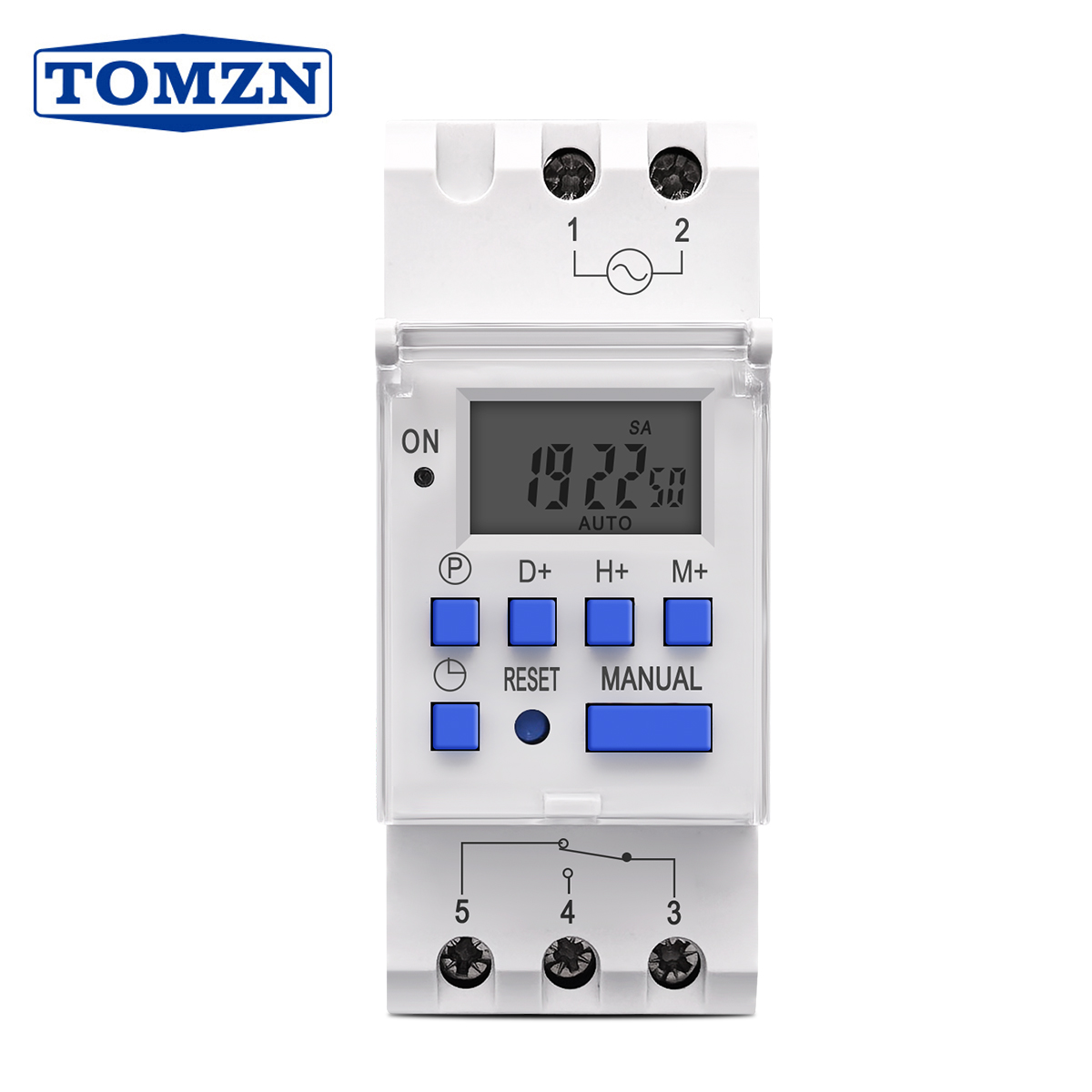
TOMZN 1NO 1NC Single Phase 7-Day Programmable Digital Timer
- Voltage: AC 220V/230V (12V-48V DC optional)
- Rated Current: 16A continuous resistive
- 16 ON/OFF cycles per week, LCD digital display
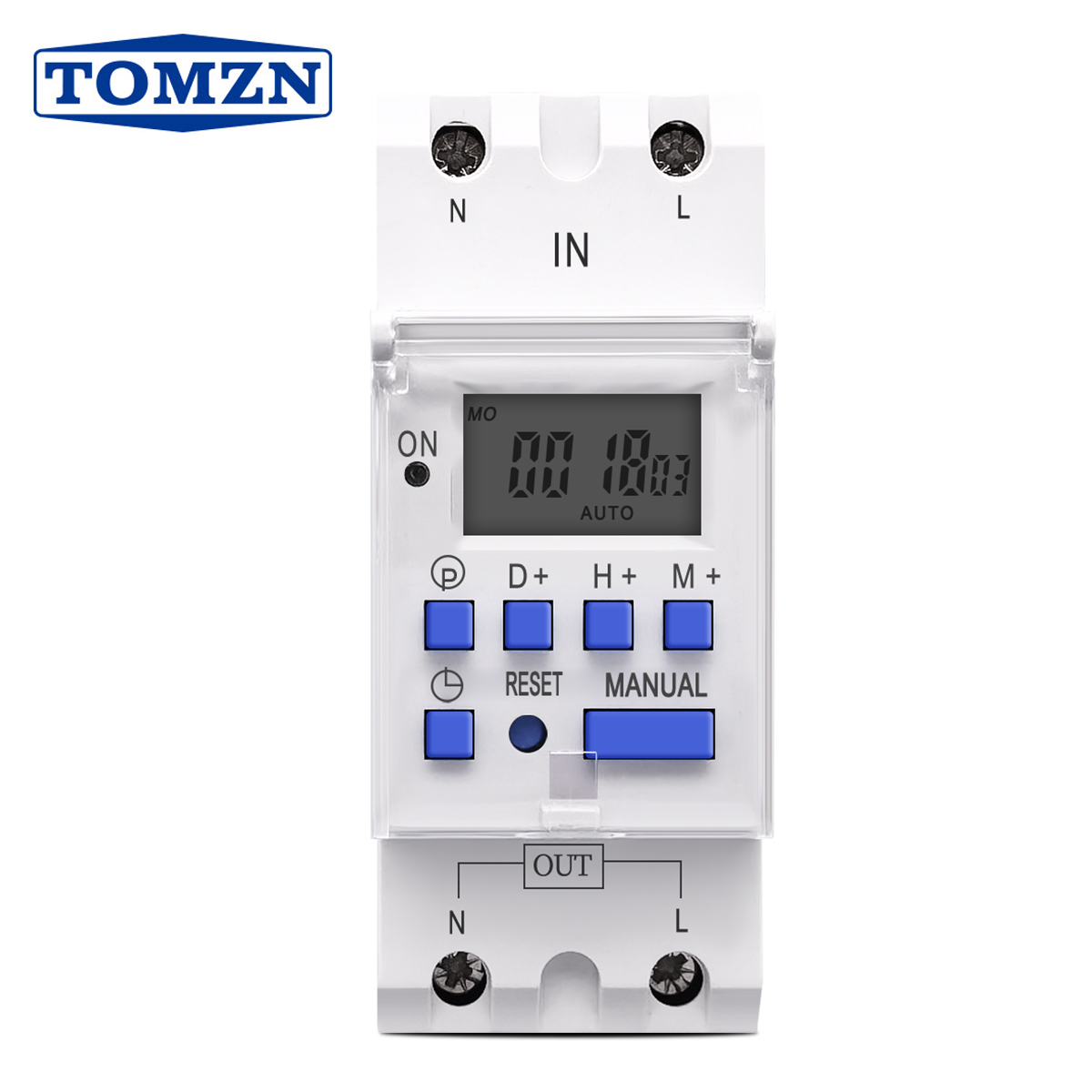
TOMZN New Type Single Phase Digital Modular Timer Relay
- High-durability internal relay contacts
- DIN 35mm standardized snap installation
- Lithium reserve battery, anti-blackout memory

TOS6-40 Bluetooth 40A Time Control & Countdown Switch
- Rated: AC85-265V wide range, 40A direct switching
- App-controlled Bluetooth local parameter setup
- Infinite loop timing, countdown interval mode
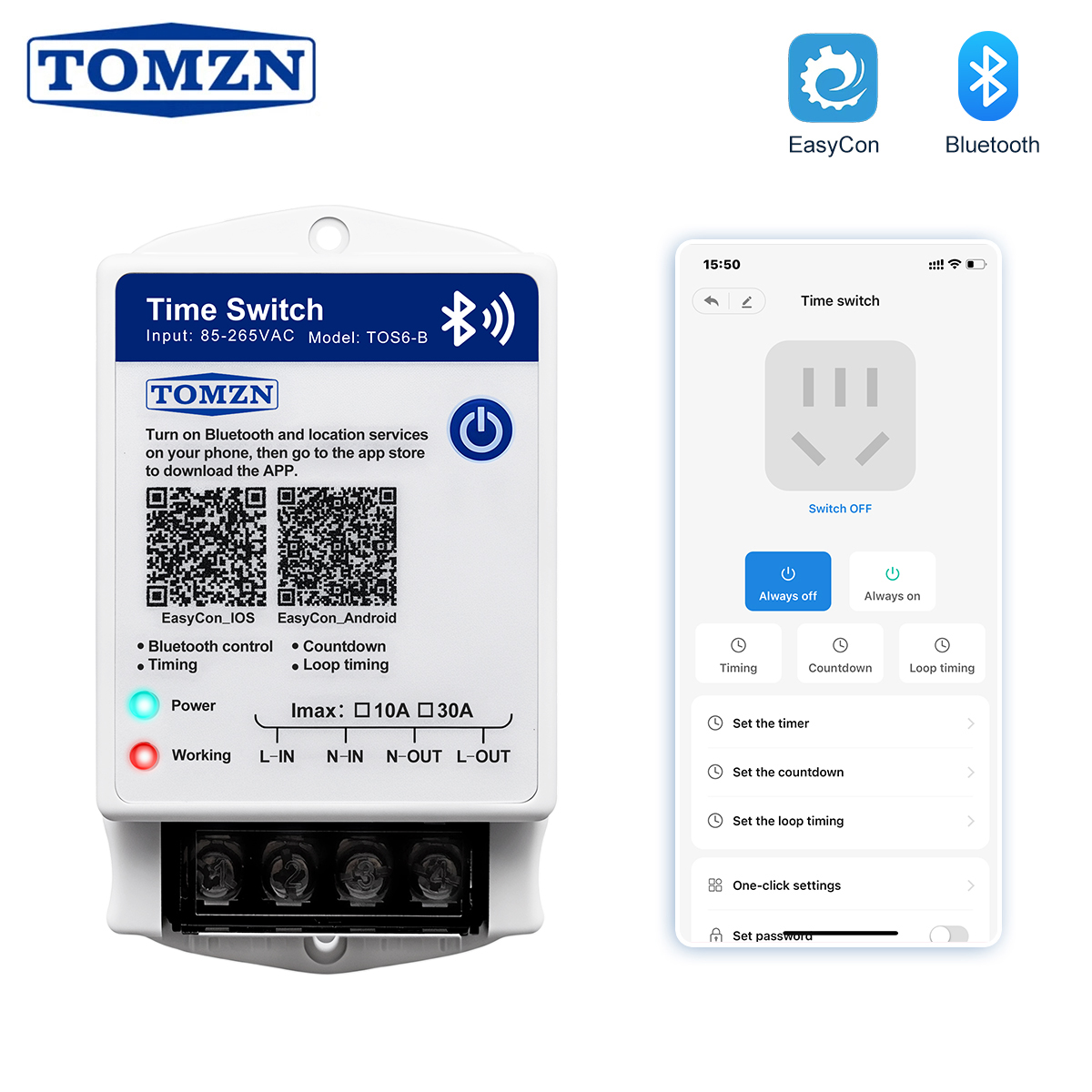
TOMZN EasyCon Bluetooth Smart Timer Switch 10A/30A
- Wall & DIN rail versatile installation form
- 28 programmable timing groups via Bluetooth
- Industrial optical isolation, transient suppression

TORT7 10-in-1 Asymmetric Cycler Time Delay Relay Switch
- Adjustment scale: 0.1s to 10 days ultra-wide span
- 10 selectable operating modes (cycler, pulse, delay)
- Compact 18mm 1-Module DIN layout enclosure

TOMZN TOS7-B Bluetooth Smart DIN Switch 40A/63A
- App-controlled heavy load switching (up to 63A)
- 28 daily scheduling groups + cycle repeat timer
- Visual operational indicator LED status arrays

TOB9e-63M WiFi Smart DIN Rail Breaker with Real-Time kWh
- Real-time metering: Voltage, Current, Active Power, kWh
- Remote load disconnecting via Cloud Smart App
- Over/under voltage and current threshold trips

Modular 63A/80A Adjustable Voltage Protector with kWh Meter
- Integrated dual LED: Voltage, Amperage & Cumulative Energy
- Automatic line recovery timer (1s to 500s adjustable)
- Essential defense against rural sub-station voltage drops
Whitepaper: DIN Rail Metering Architecture for Northern Thailand's Dynamic Low-Voltage Grid
As the primary economic and cultural hub of Northern Thailand, Chiang Mai presents an intricate low-voltage power distribution topology. Fed by the Provincial Electricity Authority (PEA) 22kV and 33kV medium-voltage distribution feeders traversing mountainous terrain, the downstream 400V three-phase and 230V single-phase secondary networks experience severe voltage variations, frequent lightning-induced line transients, and high seasonal peak demands. For electrical system integrators, commercial panel builders, and solar EPCs in Chiang Mai, selecting certified DIN rail energy meters directly impacts revenue assurance, equipment lifespan, and fire protection integrity.
A standard residential or commercial DIN rail meter destined for the Chiang Mai market cannot simply mirror devices deployed in temperate climates. Northern Thailand experiences ambient temperatures exceeding 40°C during the pre-monsoon dry season, accompanied by high relative humidity levels fluctuating past 90% during monsoon storms. Heat build-up within enclosed polycarbonate or sheet-metal distribution boards mounted on external perimeters causes standard metering shunt resistors to drift significantly, invalidating IEC Class 1.0 accuracy. Consequently, industrial buyers demand factory-direct sourcing from proven Chinese manufacturers capable of supplying tropicalized, bi-directional energy meters equipped with heavy-duty current transformers (CTs) or high-grade manganin shunts featuring temperature coefficients below 20 ppm/°C.
Chiang Mai Power Quality Profile: PEA Grid Realities
The PEA grid across districts such as Mueang Chiang Mai, Hang Dong, San Sai, and Mae Rim is characterized by extensive feeder lengths originating from major sub-stations. In rural agricultural zones and elevated foothill resorts, end-of-line voltage often sags to 185V AC during high evening irrigation or air-conditioning cooling loads, followed by inductive rebound surges surpassing 260V AC when heavy commercial chillers trip offline. Zhejiang TMB Electric Co., Ltd. addresses this operational vulnerability by engineering multifunction DIN rail meters that integrate continuous voltage protection relays withClass 1 active energy measurement (IEC 62053-21 compliant), preventing both under-voltage burnout of inductive compressor motors and catastrophic dielectric breakdown.
Technical Specifications Matrix: Standard DIN Meters vs. TMB Tropicalized Solutions
To assist M&E procurement consultants and commercial electrical contractors throughout Chiang Mai, the engineering analysis below outlines the structural and metrological distinctions between off-the-shelf basic sub-meters and Zhejiang TMB Electric’s precision modular DIN rail instruments:
| Performance Parameter | Generic Commodity Din Meters | TMB Tropicalized Industrial Series | Impact on Chiang Mai Installations |
|---|---|---|---|
| Metering Accuracy Standard | Class 2.0 (±2.0% error margin) | IEC 62053-21 Class 1.0 / Class 0.5S | Prevents dispute in multi-tenant commercial & villa leasing billing |
| Internal Current Sensor | Standard copper wire shunt | Laser-welded Electron-beam Manganin Shunt | Zero thermal drift under prolonged 40°C+ ambient outdoor panel heat |
| Dielectric Withstand Voltage | 2.0 kV AC at 50Hz for 1 min | 4.0 kV AC (1.2/50µs impulse up to 6kV) | Survives severe northern mountain thunderstorm induced surges |
| Housing Flame Retardancy | Standard ABS or generic blend | UL94-V0 Polycarbonate Self-Extinguishing | Eliminates flame spread during sustained extreme over-current arcs |
| Communication Protocols | None or proprietary non-standard | Modbus-RTU (RS485) / Tuya WiFi / Bluetooth | Seamless link to resort BMS, solar inverters, and EMS gateways |
| Protection Features | Pure kWh counter only | Over/Under Voltage, Overcurrent, Leakage | Reduces distribution board footprint by combining meter and protector |
High-Value DIN Rail Meter Applications Across Chiang Mai
Targeted solutions engineered to resolve real-world electrical management challenges across Northern Thailand’s predominant economic sectors.
Eco-Resorts & Boutique Hotels (Mae Rim / Hang Dong)
Chiang Mai’s thriving boutique hospitality sector relies on distributed villa architecture where each bungalow features independent air-conditioning and water heating. TMB’s smart WiFi and RS485 DIN rail meters enable central reception desks to accurately sub-meter electricity consumption, automatically disconnect idle circuits between guest check-outs, and monitor baseline consumption to pinpoint defective variable-refrigerant-flow (VRF) compressor units.
Smart Highland Agriculture & Hydroponics (Doi Saket)
Modern high-yield strawberry, melon, and medicinal cannabis cultivation across Chiang Mai’s mountain perimeters demands strict scheduled fertigation, deep-well water pumping, and supplemental growth lighting. Utilizing TMB’s 10-in-1 TORT7 timer relays coupled with precision single-phase DIN kWh meters ensures water pumps cycle without overheating, while recording specific pump energy efficiency against water yield volumes.
Specialty Coffee Roasteries & Processing (Fang / Mae Wang)
Chiang Mai produces Thailand's finest Arabica coffee. Coffee washing stations, mechanical drying kilns, and industrial electric roasters utilize heavy three-phase inductive loads. Unbalanced phase currents or sub-station undervoltage can burn out high-torque motor windings. TMB’s 3P+N DIN rail monitoring meters with built-in current limiters safeguard expensive roastery machinery from thermal catastrophe during processing seasons.
Commercial Rooftop Solar & Microgrids (San Kamphaeng)
Commercial factories, international schools, and artisan workshops across Chiang Mai are aggressively adopting commercial rooftop photovoltaic systems. Under PEA regulations, strict bi-directional monitoring and Zero-Export power throttling are enforced. TMB DIN rail bidirectional energy meters communicate active export/import kWh over Modbus directly to grid-tied inverters, preventing unauthorized feedback into the PEA distribution grid.
Digital Nomad Hubs & Co-Living Complexes (Nimman / Chang Phueak)
Chiang Mai is an international focal point for remote digital workers. Multi-tenant co-working offices and long-stay serviced apartments demand real-time tenant transparency for utility split-billing. Integrating TOB9e-63M smart breakers enables facility managers to generate individualized digital energy invoices via mobile apps, drastically reducing sub-meter tampering and manual meter-reading labor costs.
EV Charging Sub-Metering & Heavy Backup Power (Superhighway Corridor)
With EV adoption accelerating along Chiang Mai’s Superhighway artery, commercial properties are installing dual-port AC wallboxes. TMB’s high-amperage 80A/100A DIN rail meters combined with dual-power automatic transfer switches (ATS) ensure EV charging stations accurately log energy dispensing while shedding loads instantly when switching to standby diesel generation during grid outages.
Chiang Mai Market Trends & Regulatory Alignment (2025–2030)
The electrical landscape of Chiang Mai is undergoing rapid modernization driven by Thailand's National Energy Plan and smart city initiatives spearheaded by the Digital Economy Promotion Agency (depa). Sourcing decisions for DIN rail energy meters must account for three structural shifts dominating Northern Thailand:
1. PEA Grid Modernization & Time-of-Use (TOU) Metering
The Provincial Electricity Authority is actively rolling out advanced metering infrastructure (AMI) across Chiang Mai's commercial districts. Under TOU tariff schemes, peak electricity rates apply from 09:00 to 22:00 on weekdays, with significantly lower off-peak rates overnight and during weekends. TMB’s programmable digital timer switches and smart multi-rate DIN meters allow commercial facilities in Chiang Mai to automatically schedule energy-intensive operations—such as cold storage pull-downs, commercial water pumps, and laundry dryers—strictly during off-peak windows, yielding documented power bill reductions of 22% to 35%.
2. Tropical Monsoon Moisture Ingress & Lightning Mitigation
Chiang Mai’s mountainous basin topography creates intense atmospheric convection, making the province one of Thailand’s most lightning-prone territories. Lightning strikes hitting overhead medium-voltage distribution poles induce lethal transient voltages along secondary customer drops. TMB designs its DIN rail meters with integrated Metal Oxide Varistors (MOVs) and transient voltage suppression diodes capable of absorbing high-energy transients. Furthermore, internal PCBA boards undergo secondary conformal dip coating, safeguarding logic chips against fungal growth and surface leakage currents caused by 95% monsoon humidity.
3. Rapid Proliferation of Distributed Solar + Battery Storage (BESS)
With high solar irradiance averaging 5.0 to 5.4 kWh/m²/day across the Chiang Mai valley, commercial entities are integrating lithium battery energy storage systems (BESS). This requires modular sub-meters that accurately measure bidirectional power flows (import vs. export) and interface seamlessly with hybrid inverter control cards over RS485 RTU protocols at 9600/19200 baud rates without communication packet dropouts.
Manufacturing Authority: Why Chiang Mai Importers Partner with Zhejiang TMB Electric
Based in Huabei Village, Liushi Town, Wenzhou—universally recognized as China’s low-voltage electrical capital—Zhejiang TMB Electric Co., Ltd. represents 24 years of manufacturing discipline. Operating within the world’s most concentrated electrical component ecosystem, our production base eliminates intermediate supply friction: precision silver contact welding, high-temperature copper terminals, flame-retardant injection moldings, and precision magnetic tripping mechanisms are all produced within a 5-kilometer operational radius.

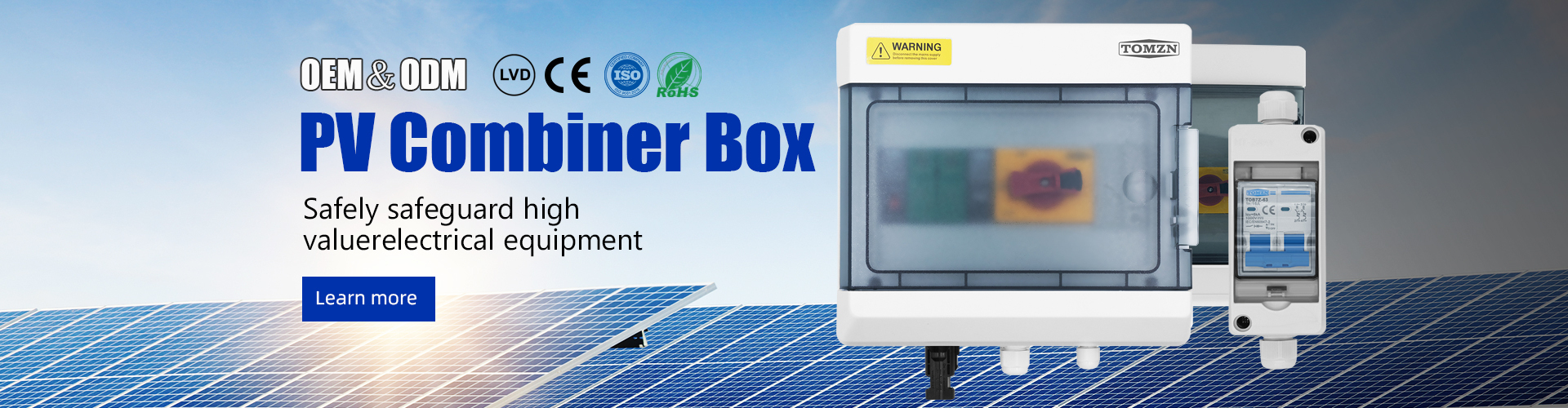

TÜV Rheinland Verified
Factory premises, manufacturing capacity, and legal standing independently inspected on-site by TÜV Rheinland auditors.
Certified Conformity
Complete product catalogs carry CE, RoHS, and ISO9001 compliance documentation matching Thai customs and EPC specifications.
OEM & ODM Flexibility
Custom laser-etched faceplates, private branding, custom firmware registers, and localized Thai voltage/frequency calibration.
Agile Low MOQ
Trial orders starting from just 5 pieces enable Chiang Mai contractors to validate performance in the field prior to volume procurement.
Frequently Asked Questions: Sourcing DIN Rail Meters for Northern Thailand
Direct technical answers addressing engineering standards, import logistics, and local compatibility for electrical contractors in Chiang Mai.
Are TMB DIN rail energy meters compatible with the Provincial Electricity Authority (PEA) 230V/400V grid standards?
How do TMB instruments withstand the high humidity and fungal corrosion of Chiang Mai's monsoon season?
Can TMB smart meters integrate into local building management systems (BMS) in Chiang Mai hotels?
What is the typical shipping lead time and customs route from Wenzhou to Chiang Mai?
Does Zhejiang TMB Electric support private labeling (OEM) and custom packaging for Thai distributors?
Why is a combined voltage protector and energy meter superior to standalone sub-meters in rural Chiang Mai?
Upgrade Your Northern Thailand Projects With Certified Industrial DIN Rail Meters
Direct manufacturer supply, TÜV Rheinland verified production, comprehensive CE certifications, and flexible low trial MOQs for Chiang Mai electrical contractors, panel builders, and solar EPCs.
Send an Inquiry